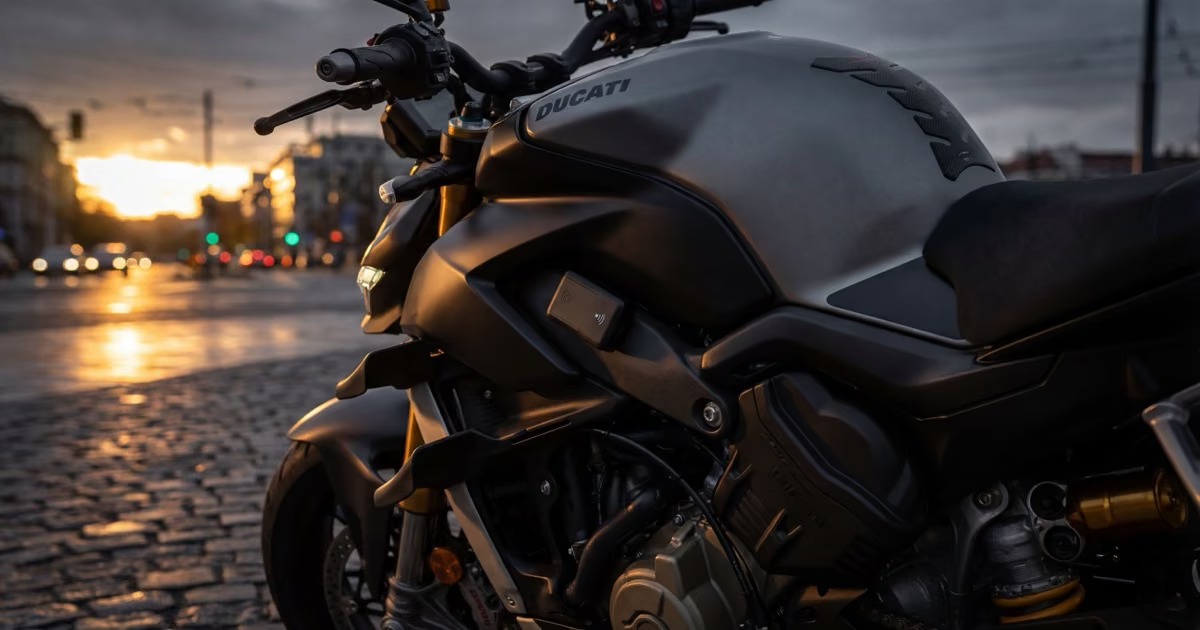
The Monimoto 9 is the best GPS tracker for motorcycle theft protection in 2026. Its key fob auto-arms the tracker when you walk away, and it calls your phone within 10 seconds of unauthorized movement. For a budget option, the TKSTAR TK905 costs around $50 with a BYOD SIM. Add an Apple AirTag 2 as a $29 backup layer on every setup.
A motorcycle parked outside is a target. The NICB motorcycle theft report counted over 44,000 motorcycles stolen in one year, with only 42% recovered. A disc lock slows a thief down. A GPS tracker tells you where your bike is heading in real time.
I tested seven motorcycle GPS trackers over the past six months, swapping them between a Kawasaki Z650 and a Honda CB500F. This guide ranks them by what matters most for theft recovery: alert speed, concealment options, battery life, and what you will actually pay over three years.
- Monimoto 9 auto-arms via key fob and calls your phone within 10 seconds — no app checking needed, IP68 weatherproof, 12-month battery
- 3-year total cost ranges from $35 (AirTag alone) to $822 (Family1st with monthly subscription) — Monimoto 9 lands at roughly $272 for 3 years
- TKSTAR TK905 at around $50 is the lowest-cost real GPS tracker — but requires your own SIM card and basic technical setup
- AirTag 2 is not a GPS tracker and should not be your only defense — use it as a hidden $29 backup layer alongside a dedicated GPS device
- A GPS tracker can qualify you for a 10-20% motorcycle insurance discount — check with your insurer before buying
The Best Motorcycle GPS Trackers at a Glance
| Tracker | Type | Battery | Subscription | 3-Year Cost |
|---|---|---|---|---|
| Monimoto 9 | Dedicated moto GPS | 12+ months | $2.85/mo | ~$272 |
| Invoxia Cellular GPS | No-sub GPS | 4-6 months | Free yr 1, then $120/yr | ~$370 |
| TKSTAR TK905 | BYOD SIM GPS | 60-90 days | SIM cost (~$5-10/mo) | ~$230-410 |
| Family1st Portable GPS | 4G LTE GPS | 2 weeks | $22/mo (or $17/mo annual) | ~$642-822 |
| Apple AirTag 2 | Bluetooth (Layer 2) | 1 year (CR2032) | None | ~$35 |
| Bouncie | OBD-II GPS | Vehicle-powered | $8/mo | ~$378 |
| LandAirSea 54 | Magnetic GPS | 2 weeks active | $15/mo (annual) | ~$570 |
Real GPS vs Bluetooth: Why Motorcycles Need Both Layers
How GPS Trackers Work on a Motorcycle
A dedicated motorcycle GPS tracker contains a cellular modem and a SIM card (or eSIM). When your bike moves, the tracker sends GPS coordinates over the cell network to a server, which pushes an alert to your phone. What matters most is alert speed. Monimoto 9 sends a phone call within 10 seconds of unauthorized movement. Some trackers take 2 to 3 minutes. In a real theft, those extra minutes can be the difference between catching a thief at the next traffic light and losing them on the highway.
Every GPS tracker requires cellular coverage to report. If a thief loads your motorcycle into a metal shipping container or drives into a tunnel, the tracker goes silent until it regains signal. That is where the second layer comes in. For a deeper comparison of the two technologies, see our guide on Bluetooth vs GPS trackers.
Why AirTag Is Layer 2, Not Layer 1
An AirTag does not have GPS or a cellular modem. It uses Bluetooth to ping nearby iPhones in the Apple Find My network, which then relay its location. That system works well in urban areas with dense iPhone traffic. In a rural area or a closed garage, updates can take hours.
Apple's unwanted tracking alerts also work against theft recovery. After 8 to 24 hours, the AirTag starts beeping to warn the person carrying it. A thief who hears it can rip it off. That is why an AirTag works best as a hidden backup, not your primary defense. For a detailed breakdown of using AirTags on bikes, read our guide on AirTag for motorcycle theft.
Monimoto 9: Best Overall Motorcycle GPS Tracker
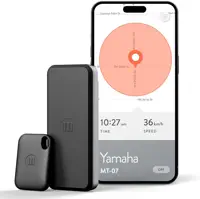
The Monimoto 9 was built specifically for motorcycles, and it shows. The key fob system is what sets it apart from every other tracker in this guide. You carry the fob on your keychain. When you walk away from your bike, the tracker auto-arms within 3 minutes. When you return with the fob in your pocket, it silently disarms. No app toggling, no geofence setup, no forgetting to arm it.
If someone moves your bike without the key fob nearby, Monimoto does not just send a push notification. It calls your phone. In my testing, that call came within 10 seconds of the first vibration sensor trigger. Push notifications can sit unread for minutes. A phone call gets your attention immediately.
The tracker is IP68-rated, meaning it handles rain, snow, and road spray without a case. The replaceable battery lasts 12 months or more depending on how many alerts it triggers. At $2.85 per month for the cellular subscription, the 3-year total cost comes to roughly $272. That is less than most competitors. For a deep dive on specs and installation, see our full Monimoto 9 review.
 Top Pick
Monimoto 9
- Key fob auto-arm means you never forget to activate it
- Phone call alerts within 10 seconds of movement
- IP68 weatherproof, designed for motorcycle vibration
- Lowest 3-year cost among dedicated GPS trackers (~$272)
- $169 upfront is the highest device price in this guide
- Requires monthly subscription ($2.85/mo)
- Key fob adds another item to carry
Invoxia Cellular GPS Tracker: Best for Seasonal Riders
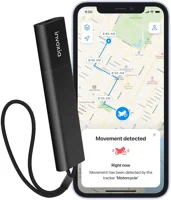
The Invoxia Cellular GPS Tracker includes one year of free cellular service with the purchase price. No credit card required, no trial to cancel. After the first year, you pay $120 per year to continue. For riders who store their bike over winter and only ride six months a year, that first free year is a strong deal.
It is about the size of a USB drive, with a rechargeable battery that lasts 4 to 6 months between charges. The Invoxia supports tilt detection and geofencing, so you get alerts if someone tips your bike over or moves it outside a defined zone. In my testing, geofence alerts arrived within 30 seconds of crossing the boundary. I liked the tilt detection especially. On one occasion, a delivery driver bumped the CB500F in a parking lot, and the Invoxia pinged me within a minute.
The main limitation is the subscription after year one. At $120 per year, the 3-year total reaches about $370. If you want a head-to-head with Monimoto, see our Invoxia vs Monimoto comparison. For the full spec breakdown, read our Invoxia GPS Tracker review.
Invoxia Cellular GPS Tracker
- 1 year free cellular service included
- Tilt detection catches tip-overs and tow attempts
- Compact enough to hide in tight spaces
- GPS + Wi-Fi + Bluetooth for indoor/outdoor accuracy
- $120/yr after the first year adds up
- 4-6 month battery requires regular charging
- No phone call alerts, push notifications only
TKSTAR TK905: Best Budget Motorcycle Tracker
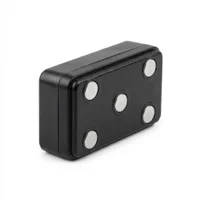
The TKSTAR TK905 costs around $50, making it the lowest-cost real GPS tracker in this guide. The catch: you need to supply your own SIM card. That means buying a prepaid data SIM from a carrier like T-Mobile or AT&T (usually $5 to $10 per month for the minimal data a GPS tracker uses).
The 5,000mAh battery lasts 60 to 90 days in standby, which is more than enough for most riders. The TK905 uses a magnetic mount, so you can attach it to any metal surface on your frame. I mounted it under the seat cowl of the Z650 with a zip tie as a backup. Setup involves inserting the SIM, downloading a third-party tracking app, and sending a few SMS commands to configure the tracker. It took about 20 minutes, and the included instruction sheet is not great. Budget for some patience.
If you want even more battery life, the TK905B variant packs a 10,000mAh battery for roughly 100 days of standby. Both models use 4G networks. For a full walkthrough of setup and performance, see our TKSTAR TK905 review.
 Best Value
TKSTAR TK905
- ~$50 device cost is the cheapest real GPS option
- 5,000mAh battery lasts 60-90 days
- Strong magnetic mount sticks to any metal frame
- 10,000mAh TK905B variant available for extended use
- Requires your own SIM card and manual configuration
- Third-party tracking app is basic and ad-supported
- IP65 splash resistance is lower than IP68 competitors
Family1st Portable GPS Tracker: Best Real-Time Alerts
The Family1st Portable GPS Tracker runs on 4G LTE with update intervals as frequent as every 10 seconds. That is the fastest polling rate in this group. If you are tracking a stolen motorcycle in real time and feeding coordinates to police, that frequency matters. Most competitors update every 30 seconds to 3 minutes.
The device itself costs around $30, the lowest upfront price here. The subscription is where it gets expensive: $22 per month on a monthly plan, or $17 per month on an annual plan. Over three years, that adds up to $642 to $822. The 2-week rechargeable battery also means more maintenance than a Monimoto or TKSTAR.
Family1st makes sense if you want the tightest possible location updates and are willing to pay the premium. For most riders though, Monimoto's 10-second phone call alert gives you roughly the same theft response window at a fraction of the ongoing cost. For a detailed breakdown, see our Family1st GPS Tracker review.
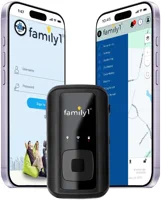
Family1st Portable GPS Tracker
- 10-second update interval, fastest in this group
- ~$30 device cost, lowest upfront price
- 4G LTE with SOS button
- Speed and geofence alerts included
- $22/mo subscription is the most expensive long-term
- 2-week battery requires frequent charging
- 3-year cost reaches $642-$822
Apple AirTag 2: Best $29 Backup Layer
Let me be direct: an AirTag is not a motorcycle GPS tracker. It does not have GPS, does not have cellular, and cannot send you real-time alerts. But at $29 with no subscription, it is the cheapest insurance you can add to any motorcycle security setup.
The AirTag 2 uses Bluetooth to communicate with nearby iPhones in Apple's Find My network, which includes over 2 billion devices worldwide. In dense urban areas, that network provides location updates every few minutes. In rural areas, updates may take hours or not come at all.
Hide one under your seat or inside a frame cavity, ideally in a waterproof mount like the Elevation Lab TagVault Surface. The AirTag 2 is IP67 rated and handles motorcycle engine heat well, as we confirmed in our AirTag heat resistance testing. If a thief disables your primary GPS tracker, the AirTag might be the thing that leads police to a chop shop two days later. For the full AirTag vs dedicated GPS debate, check our AirTag vs GPS tracker comparison.
AirTag's anti-stalking feature alerts anyone near an unknown AirTag after 8-24 hours. A thief who hears the beeping may find and discard it. This is why you need a primary GPS tracker as your first line of defense.
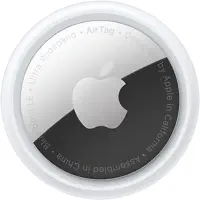
Apple AirTag 2
- $29, no subscription, 1-year battery
- Find My network covers 2 billion+ Apple devices
- Small enough to hide in tight motorcycle spaces
- IP67 water resistance handles rain and road spray
- Not a GPS tracker, no real-time alerts
- Anti-stalking beep warns thieves after 8-24 hours
- Unreliable in rural or low-iPhone-density areas
Bouncie: Best for Trike and Can-Am Riders
The Bouncie GPS Tracker plugs into an OBD-II diagnostic port. That limits its usefulness right away: most two-wheeled motorcycles do not have an OBD-II port. Trikes, Can-Am Spyders, and some touring bikes with diagnostic ports are the exceptions.
If your ride does have the port, the upside is real. Bouncie draws power from the vehicle's electrical system, so there is no battery to charge or replace. Updates come every 15 seconds, and the $8 per month subscription is among the lowest for a GPS tracker with that polling rate. You plug it in and forget about it.
No OBD-II port? Skip this one and look at the other six trackers in this guide. For the full feature breakdown, see our Bouncie GPS Tracker review.
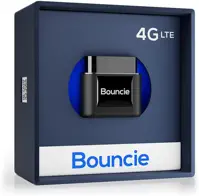
Bouncie GPS Tracker
- Vehicle-powered, no battery to charge or replace
- 15-second updates, excellent polling rate
- $8/mo is competitively priced for GPS tracking
- Trip history and driving behavior reports
- Requires OBD-II port, not available on most motorcycles
- Easy to unplug if a thief opens the diagnostic port
- Does not work when the vehicle is off on some models
LandAirSea 54: Best Magnetic Mount Option
The LandAirSea 54 is a magnetic GPS puck that sticks to any metal surface. For motorcycles with exposed steel frames, you can attach it underneath a fender or behind an engine guard in seconds. No zip ties, no adhesive, no drilling.
It runs on 4G LTE with a subscription starting at $15 per month on an annual plan. The trade-off for that magnetic convenience is battery life: only about 2 weeks in active tracking mode, the shortest among battery-powered trackers in this guide. If you need extended standby, the TKSTAR TK905 or Monimoto 9 are better choices.
The real appeal of the LandAirSea 54 is portability. I swapped it between the Z650 and a friend's car in about five seconds. If you ride different bikes or want to move a tracker between vehicles, the magnetic puck makes that effortless. For the full performance review, see our LandAirSea 54 review.
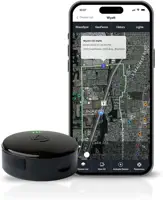
LandAirSea 54
- Magnetic mount attaches in seconds, no tools needed
- Compact and portable, easy to swap between vehicles
- ~$30 device cost, low upfront investment
- 4G LTE with geofence and speed alerts
- 2-week battery life is the shortest in this guide
- $15/mo subscription adds up to ~$570 over 3 years
- Magnetic mount may not hold on all motorcycle surfaces
Where to Hide a GPS Tracker on Your Motorcycle
A GPS tracker only works if a thief cannot find it. Here are the four best hiding spots I have used across different bikes.
Under the Seat
The most common spot and the easiest for battery access. Most motorcycle seats lift off with a key or a single bolt. Tuck the tracker into the foam lining or strap it to the seat pan with a zip tie. The downside: experienced thieves check here first. For similar vehicle hiding strategies, see our guide on hiding an AirTag in a vehicle.
Inside the Fairing or Side Panel
Sport bikes and touring motorcycles with full fairings offer excellent concealment. Remove a side panel, mount the tracker with adhesive or a zip tie, and replace the panel. The plastic shell protects the tracker from weather and vibration. This spot is harder for a thief to access quickly.
Frame Cavity or Headstock
Some motorcycle frames have hollow sections near the headstock or under the tank. These are the hardest spots to find, but also the hardest to access for battery swaps. A compact tracker like the Invoxia or an AirTag fits here. Wrap it in foam to dampen vibration.
Handlebar Tube
If you remove a bar-end weight, many handlebars have a hollow tube that fits an AirTag snugly. The metal tube may reduce Bluetooth signal range slightly, but in our testing the AirTag still connected to nearby iPhones through the handlebar without issues. This spot is nearly undetectable without disassembling the bar ends.
Use two trackers in two different hiding spots. A GPS tracker under the seat for real-time alerts, and an AirTag deep in the frame for long-term recovery if the primary tracker is found and removed.
3-Year Total Cost Comparison
Device price is misleading without factoring in subscription costs. Here is what each tracker actually costs over three years of ownership.
| Tracker | Device | 3-Year Subscription | Total |
|---|---|---|---|
| Monimoto 9 | $169 | $102.60 | ~$272 |
| TKSTAR TK905 | $50 | $180-360 (SIM) | ~$230-410 |
| Invoxia Cellular GPS | $130 | $240 (yr 2-3) | ~$370 |
| Bouncie | $90 | $288 | ~$378 |
| LandAirSea 54 | $30 | $540 | ~$570 |
| Family1st | $30 | $612-792 | ~$642-822 |
| AirTag 2 (backup) | $29 | $0 + ~$6 batteries | ~$35 |
The TKSTAR TK905 can be the cheapest GPS tracker if you find a low-cost SIM plan, but the experience depends on your carrier. Monimoto 9 costs more upfront but delivers the lowest predictable 3-year total among dedicated motorcycle trackers. Pairing either with a $29 AirTag as a backup layer adds minimal cost for significant extra coverage. For more no-subscription options, see our roundup of GPS trackers with no monthly fee.
Insurance Discounts and Theft Recovery
Can a GPS Tracker Lower Your Motorcycle Insurance?
Yes. Many insurers offer a 10-20% discount on comprehensive premiums for motorcycles equipped with approved GPS tracking devices. The discount varies by insurer and state. Progressive, State Farm, and Allstate have all offered anti-theft device discounts in recent years. According to ValuePenguin's analysis of motorcycle insurance discounts, a tracker combined with a physical lock can save $50 to $150 per year depending on your coverage level. Always call your agent and ask specifically which devices qualify before buying.
Motorcycle Theft Statistics
According to NICB data, over 44,268 motorcycles were stolen in a recent reporting year, and only 42% were recovered. RevZilla's analysis of the theft data confirms Honda is the most targeted brand, followed by Yamaha and Kawasaki. California, Texas, and Florida are the top three states for motorcycle theft. In major cities, theft rates have risen 8-12% over the past two years. A GPS tracker does not prevent theft, but it raises your recovery odds significantly. Police are far more responsive when you can give them live coordinates rather than a description of your bike.
Choose Monimoto 9 if...
- You want a tracker built specifically for motorcycles
- You prefer phone call alerts over push notifications
- You want the lowest 3-year subscription cost
- You ride year-round and want automatic arming
Choose TKSTAR TK905 if...
- Your device budget is under $60
- You are comfortable setting up a SIM card
- You want a long-battery magnetic tracker
- You do not need instant phone call alerts
Bottom Line
For serious motorcycle theft protection, the Monimoto 9 is the best overall GPS tracker. The key fob auto-arming system eliminates human error, and the phone call alert gets your attention within 10 seconds. At $272 over three years, it is the most cost-effective dedicated motorcycle tracker.
If budget is tight, start with a TKSTAR TK905 at around $50 plus a low-cost SIM card. You lose the polish of Monimoto's app and the auto-arming fob, but you get real GPS tracking on your motorcycle for less than dinner for two.
Regardless of which GPS tracker you choose, add an AirTag 2 as a $29 backup layer. Hide it in a different spot than your primary tracker. A two-tracker setup with a GPS device plus an AirTag maximizes your recovery odds if your motorcycle is ever stolen.
FAQ
Do motorcycle GPS trackers work without a subscription?
Most motorcycle GPS trackers require a cellular subscription to transmit location data. The Invoxia Cellular GPS includes one free year of service, after which you pay $120 per year. The TKSTAR TK905 uses a BYOD SIM, so you pay a carrier directly rather than the tracker company. The only tracker in this guide with truly zero ongoing cost is the AirTag 2, but it is a Bluetooth tracker, not a GPS tracker.
Can an AirTag replace a GPS tracker on a motorcycle?
No. An AirTag does not have GPS or a cellular modem. It relies on nearby iPhones to relay its Bluetooth signal, which means location updates can be delayed by minutes or hours. It also triggers anti-stalking alerts after 8 to 24 hours, warning a thief that a tracker is present. Use an AirTag as a hidden backup alongside a dedicated GPS tracker, not as your only defense.
Where is the best place to hide a GPS tracker on a motorcycle?
The four best hiding spots are under the seat, inside a fairing or side panel, in a frame cavity near the headstock, and inside a hollow handlebar tube. Under the seat is easiest for battery access but also the first place a thief checks. Inside the fairing or frame cavity provides better concealment. Use two trackers in two different spots for maximum security.
How long do motorcycle GPS tracker batteries last?
Battery life varies widely. The Monimoto 9 lasts 12 months or more on replaceable batteries. The TKSTAR TK905 lasts 60 to 90 days on its 5,000mAh rechargeable battery. The LandAirSea 54 and Family1st both last about 2 weeks in active tracking mode. The Bouncie draws power from the vehicle and has no battery to charge. Choose based on how often you are willing to swap or recharge batteries.
Will a GPS tracker lower my motorcycle insurance premium?
Many insurers offer 10-20% discounts on comprehensive premiums for motorcycles with approved GPS trackers or anti-theft devices. The exact discount depends on your insurer, state, and coverage level. Call your insurance agent before purchasing a tracker to confirm which devices qualify and how much you can save. Some insurers require an approved device list while others accept any GPS tracker.
Do GPS trackers work if a motorcycle is in a metal shipping container?
No. A metal shipping container blocks GPS signals and cellular reception. The tracker will lose contact until the container is opened or the motorcycle is moved outside. This is why a two-tracker approach matters. A GPS tracker reports the last known location before signal loss, and a hidden AirTag may reconnect to the Find My network when the container is opened at the destination.
Can thieves detect or jam a motorcycle GPS tracker?
GPS jammers exist but are illegal in the United States under federal law. Most opportunistic motorcycle thieves do not carry jamming equipment. A well-hidden tracker under a fairing or inside a frame cavity is very difficult to find without disassembling the bike. Using two trackers in separate locations reduces the risk of both being discovered. Professional theft rings may use signal detectors, but this is uncommon for street-level motorcycle theft.