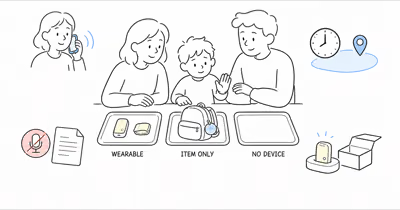
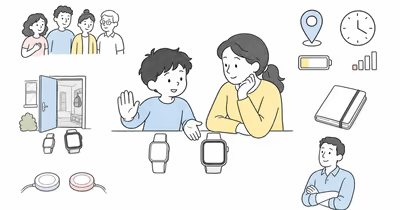
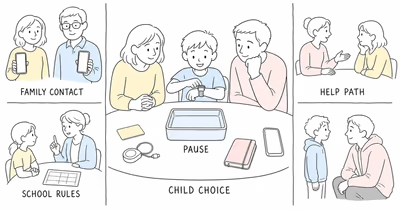
The old page promised a simple choice by diagnosis, size, price, and battery. It also treated silent voice access and non-removable wear as automatic advantages. Those shortcuts hide participation, privacy, service continuity, and the human response behind every device event.
This is a current-source editorial comparison, not a hands-on, clinical, legal, school, or emergency-response test.
- Availability changes the question. Life360 currently says the Jiobit line remains out of stock and that it will continue servicing existing subscriptions.
- Neither system proves safety. A location, boundary event, voice connection, or button press still depends on hardware, power, service, settings, delivery, and a person who responds.
- The help paths are different. Jiobit has a wearer Alert Button and a separate caregiver-app SOS path on eligible service; AngelSense can be configured for a guardian Call Request or direct call.
- Voice and secure wear need strong boundaries. One-way audio, school use, precise location access, hidden placement, and non-removable attachments require participation, authority, privacy, and setting review.
- A missing-child response never waits for the app. Use the applicable official process immediately.
⇄ Head-to-head
Current AngelSense vs existing-owner Jiobit service
ANGELSENSE
AngelSense GPS4 or Watch
JIOBIT / LIFE360
Existing Jiobit Smart Tag service
- +Current GPS4 and Watch options use a caregiver app and cellular service
- +Provider documentation covers location, alerts, voice, and configurable help controls
- +Guardian permissions and school schedules can narrow some access
- +Multiple wearing options allow an individualized, reversible fit trial
- +Life360 says existing Jiobit subscriptions will continue to be serviced
- +Current support documents Care Teams, Trusted Places, tracking, Live Mode, and an Alert Button
- +Eligible service may include a separate caregiver-app SOS path through Noonlight
- +Small hardware may suit some transparent, removable wearing routines
- −Coverage, charge, settings, wear, subscription, and human response remain prerequisites
- −One-way and auto-answer voice create privacy and bystander concerns
- −Non-removable attachment can raise consent, comfort, restraint, and emergency-removal questions
- −Provider update and battery figures aren't guarantees in a real routine
- −Life360 says the current Jiobit line remains out of stock
- −Ordinary tracking, Live Mode, boundaries, and battery are conditional
- −The wearer Alert Button, caregiver SOS, and public response are different workflows
- −Existing support doesn't guarantee replacement hardware or future service duration
- ·Assess when a family needs a currently offered caregiver-managed system
- ·Test exact hardware, voice permissions, attachment, school rules, and response
- ·Don't choose it from diagnosis or marketing claims alone
- ·Audit it when the family already owns supported Jiobit hardware
- ·Confirm device generation, membership, account, app, battery, help controls, and exit path
- ·Don't treat stale listings or the current pet-product redirect as a child-device buy path
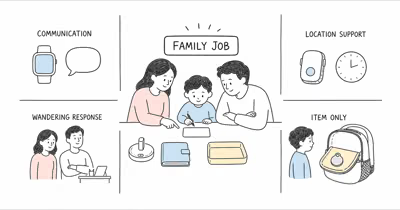
Start With Availability and the Family Job
According to Life360’s current Jiobit purchase guidance, the current line remains out of stock and existing subscriptions will continue to be serviced. On this audit date, the Jiobit site’s shop path led to a Life360 Pet GPS product, not a clearly identified new Jiobit child-tracker listing.
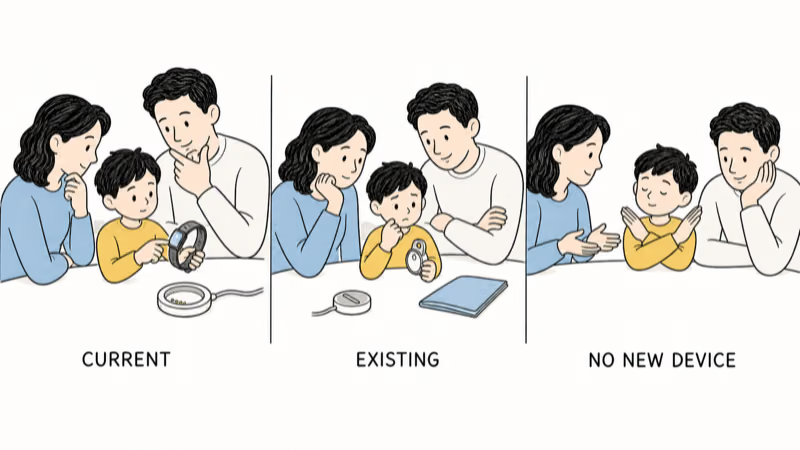
That creates two different decisions: a family can assess the current AngelSense system, or an existing Jiobit owner can assess whether their hardware, membership, account, app, support, and response chain still work. A marketplace listing isn’t proof that a new Jiobit can be activated, supported, or used for the stated purpose. The current AngelSense fit review provides the corresponding hardware, privacy, and response checklist.
Define one bounded job such as: “During an agreed trip home, two named caregivers receive a delayed-arrival event, confirm context, and one person responds.” Avoid “always know,” “prevent wandering,” or “guarantee rescue.”
Documented Capabilities and Preconditions
AngelSense states that its current GPS4 and Watch hardware use 4G LTE service alongside GPS data, app access, location and alert tools, voice, and configurable help controls in its device specifications. The provider’s update and maximum battery figures are capabilities under stated conditions, not independent performance guarantees.
Life360’s existing-owner Jiobit material documents a service around Care Teams, Trusted Places, ordinary tracking, Live Mode, battery status, a wearer Alert Button, and eligible caregiver-app SOS. It doesn’t make the hardware a phone, supervision service, or promise of future replacement inventory. The existing-owner Jiobit fit review keeps device support separate from new-device availability.
For either path, verify the exact hardware, account, service region, carrier coverage, software, permissions, power, attachment, allowed viewers, responder, backup, and offboarding procedure.
How Should Families Read Location and Alerts?
Read the timestamp, uncertainty, device state, and last human confirmation before the dot.
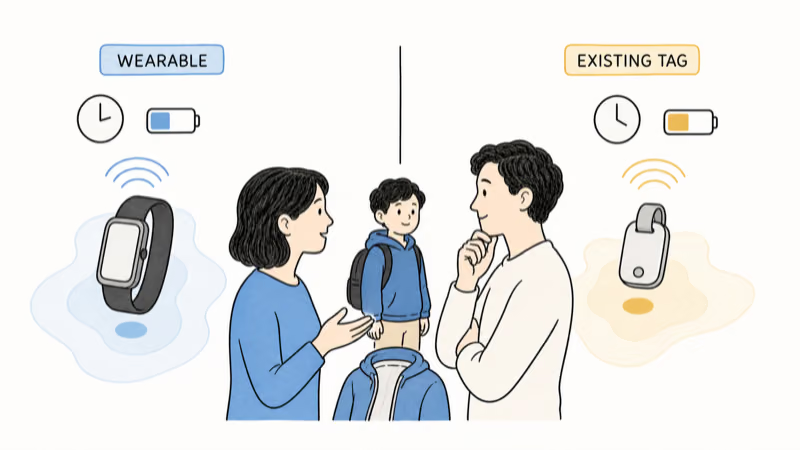
Life360 states that ordinary Jiobit tracking away from a caregiver can update around every 15 minutes in its tracking guide. Live Mode is a separate on-demand state and may be unavailable at a Trusted Place, while connected to a Care Team member, in a power-saving condition, or without a usable connection. A timeline isn’t a continuous route.
Jiobit Trusted Places and AngelSense place alerts are device rules, not building walls or proof of arrival, supervision, or departure. Signal, satellite view, Wi-Fi, Bluetooth proximity, boundary size, movement, settings, software, battery, device separation, and delivery can create a late, early, generalized, false, or absent event. The family location-safety guide starts with human confirmation and fallback rather than a dot.
For scale rather than a device benchmark, GPS.gov states that smartphones are typically accurate within 4.9 meters under open sky and perform worse near buildings, bridges, and trees. That figure is not an AngelSense or Jiobit performance claim.
Confirm with the child, school, transport provider, caregiver, or responsible adult. Don’t enter private property, confront anyone, or delay official action because of an app point.
Voice, Alert Button, SOS, and Public Response Are Different
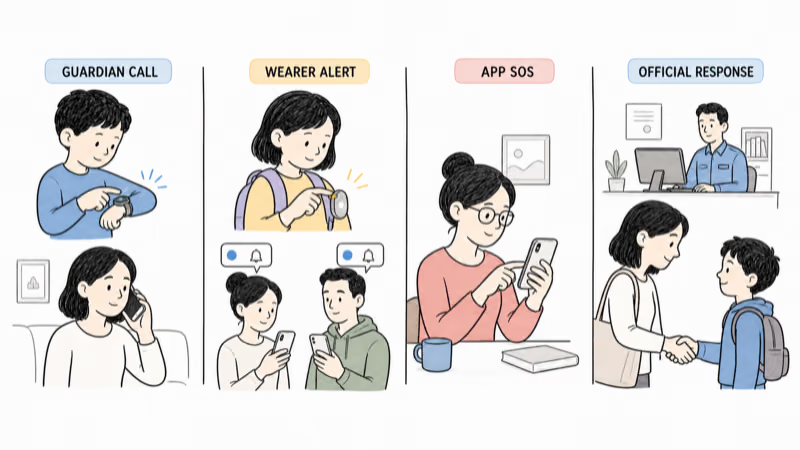
AngelSense’s SOS Call Button guide describes a configurable direct call to one voice-authorized guardian. Other settings can send a Call Request instead. A missed guardian call isn’t automatic rerouting to emergency services.
Jiobit’s Alert Button lets the wearer double- or triple-click the device logo to notify selected Care Team members; its optional device alarm is disabled by default. That is different from Jiobit SOS, which the caregiver starts in the app and which Life360 says can connect eligible service to Noonlight for emergency coordination.
Write each chain separately: who initiates, who receives, whether the wearer gets feedback, who picks up, what happens when they don’t, and when the family uses the applicable official process. Don’t test a public-response path with a staged emergency.
Wear, School, Charging, and Privacy Control the Fit
Small, secure, or sensory-friendly doesn’t settle consent or comfort.
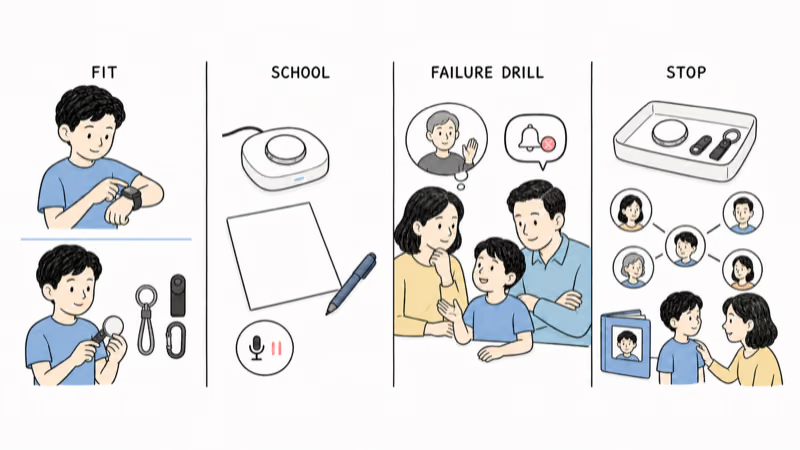
Let the child see, handle, accept, and help choose the device and attachment. Test pressure, rubbing, heat, circulation, snagging, distress, sound, stigma, removal, charging, and emergency removal. Don’t hide a tracker in a shoe, waistband, coat, bag, or accessory to defeat objection; don’t use a non-removable fastener as a default answer to refusal. A school enrollment, diagnosis, family relationship, or guardian label doesn’t settle participation, authority, privacy, or setting policy.
AngelSense’s one-way voice guidance says authorized guardians can begin an auto-answered call and that the Watch doesn’t display an incoming or active one-way call. Audio may capture classmates, staff, family, or bystanders. Keep it off until child notice, purpose, callers, school or care-setting permission, privacy, retention, and applicable law are resolved.
Precise location is sensitive. Limit viewers, use least privilege, secure account recovery, review notifications, and set a removal date.
Run a Reversible Trial and Failure Drill
Test ordinary routines, not a crisis.
For AngelSense, test the exact device, attachment, child participation, app permissions, location age, indoor gaps, voice disabled by default where required, configured button behavior, missed alert, unavailable guardian, low battery, no coverage, separation, and account offboarding.
For an existing Jiobit, test device generation, active membership, Care Team access, a Trusted Place crossing, ordinary tracking versus Live Mode, Alert Button feedback, eligible SOS setup without initiating a false emergency, low battery, unavailable caregiver, lost phone, replacement limitations, cancellation, and data deletion.
Stop the trial when the plan fails.
End it for objection, discomfort, unapproved audio, unreliable charging, ambiguous help controls, unsupported hardware, or a failed response chain. Keep identification, communication, supervision, school procedures, current records, and official response independent of both devices.
What If Jiobit Support or Hardware Ends?
Existing-subscription support is useful current information, not a perpetual-service guarantee. Record the device generation, account owner, membership renewal, support contact, warranty or replacement status, data export or deletion path, and the date the family will reassess.
If activation, replacement hardware, app access, charging, coverage, alerts, or support becomes unreliable, don’t stretch the old unit into a critical role. Return to the family job and compare current categories: a managed location wearable, a communication watch, a monitored help service where appropriate, and non-device supports. The current child location-system guide keeps those jobs separate.
Bottom Line
AngelSense may fit a transparent, agreed family plan when current hardware, service, voice, wear, school rules, charging, privacy, named response, and fallback survive a real trial. It isn’t automatically right because of a diagnosis or a longer feature list.
An already-owned Jiobit may remain useful while its exact device, membership, app, support, tracking modes, help controls, battery, privacy, and exit path still work. Life360’s current out-of-stock notice means this is not a reliable new-Jiobit purchase recommendation.
If a child is missing or in immediate danger, use the applicable official process immediately. Don’t wait for either system.
FAQ
Can I buy a new Jiobit for a child now?
Life360 currently says the Jiobit line remains out of stock while existing subscriptions continue to be serviced. A stale marketplace page or Jiobit’s current pet-product shop redirect doesn’t prove child-device inventory, activation, warranty, or support. Verify the exact unit and service directly before paying.
Will an existing Jiobit still work?
Life360 says it continues to service existing subscriptions, but any family’s result still depends on supported hardware, device generation, account, membership, app, coverage, battery, settings, and service state. Confirm replacement and exit options rather than assuming indefinite support.
Is AngelSense automatically better for a child with autism?
No. Diagnosis doesn’t determine participation, sensory fit, authority, privacy, school permission, communication needs, attachment safety, charging reliability, or human response. Evaluate the exact child, setting, system, and fallback without a diagnosis-based winner.
Does AngelSense update faster than Jiobit everywhere?
Don’t turn provider figures into a guarantee. AngelSense lists updates from every 10 seconds, while Jiobit documents ordinary tracking and a separate Live Mode. Hardware, service, signal, buildings, settings, power, software, and device separation determine whether either point is useful.
Do the Jiobit and AngelSense buttons call emergency services?
Not by default as one shared workflow. Jiobit’s wearer Alert Button notifies selected Care Team members; eligible caregiver-app SOS can connect to Noonlight. AngelSense can use a guardian Call Request or configured direct call. Verify initiation, recipient, pickup, backup, and separate official response.
Can AngelSense one-way voice be used at school?
Only after the purpose, child notice, authorized callers, bystander privacy, school policy, authority, retention, and applicable law are resolved. AngelSense documents school-related disabling because one-way voice may capture people who didn’t choose the system.
What should a family test before relying on either system?
Test participation, attachment, exact service, permissions, location age, signal gaps, alerts, button behavior, voice limits, charging, school rules, an unavailable responder, privacy, account recovery, offboarding, no-device backup, and the point for official escalation.