Choose Vyncs if you want a permanent, powered tracker with no monthly fee and the lowest long-run cost. Choose the SpyTec GL300 if you need a portable, hidden battery tracker with 5-second updates and no annual lock-in.
Vyncs and the SpyTec GL300 solve the same problem two completely different ways. Vyncs plugs into your car’s OBD-II port and draws vehicle power, billing annually with no monthly fee. The SpyTec GL300 is a pocket-sized, battery-powered tracker you can hide anywhere, paid month to month. Geotab’s OBD-II history overview confirms that, since 1996, “OBD-II becomes mandatory for all cars manufactured in the United States.” That single fork, powered versus portable, decides almost everything else.
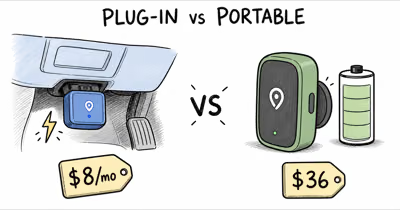
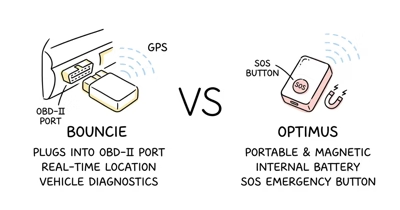
- Vyncs draws power from the OBD-II port and never needs recharging; the SpyTec GL300 runs 2-plus weeks per charge before you have to retrieve and recharge it.
- Vyncs bills annually with no monthly fee, starting around $99.99/year for the Basic plan; the GL300 runs from about $34.95/month with no annual commitment.
- The GL300 reports as fast as every 5 seconds; Vyncs updates roughly every 60 seconds on its standard plan.
- Vyncs only fits vehicles with a 1996-or-newer OBD-II port; the GL300 works on cars, bikes, equipment, or anything you can attach it to.
- Over two years a powered OBD tracker like Vyncs is cheaper, but the GL300 wins on concealment and flexible placement.
Vyncs vs SpyTec GL300: At a Glance
⇄ Head-to-head
Vyncs vs SpyTec GL300

- +Draws power from the OBD-II port -- never needs recharging
- +No monthly fee; annual billing keeps long-run cost lowest
- +Reads vehicle diagnostics and trouble codes directly
- +Trip history, geofencing, and driving alerts included
- +Sets up in seconds by plugging into the port
- +Portable and battery-powered -- hide it anywhere
- +Reports as often as every 5 seconds
- +Roughly 2.5-week battery life per charge
- +Month-to-month subscription, no annual lock-in
- +Works on any vehicle, bike, or asset
- −Only fits 1996+ vehicles with an OBD-II port
- −Roughly 60-second updates on the standard plan
- −Annual billing only -- no true month-to-month
- −Sits at the port; not a concealed install
- −Must retrieve and recharge the battery periodically
- −From $34.95/mo is pricier long-term than annual OBD billing
- −No vehicle diagnostics or trouble-code reading
- −Concealment depends on finding a hidden, dry spot
- ·Best for a permanent, set-and-forget vehicle tracker
- ·Best when you want no recharging and no monthly fee
- ·Best if you also want engine diagnostics
- ·Best for the lowest two-year cost of ownership
- ·Best for covert, hidden tracking
- ·Best for the fastest real-time updates
- ·Best for non-OBD assets like trailers or motorcycles
- ·Best when you want no annual commitment
How Do Power and Update Speed Differ?
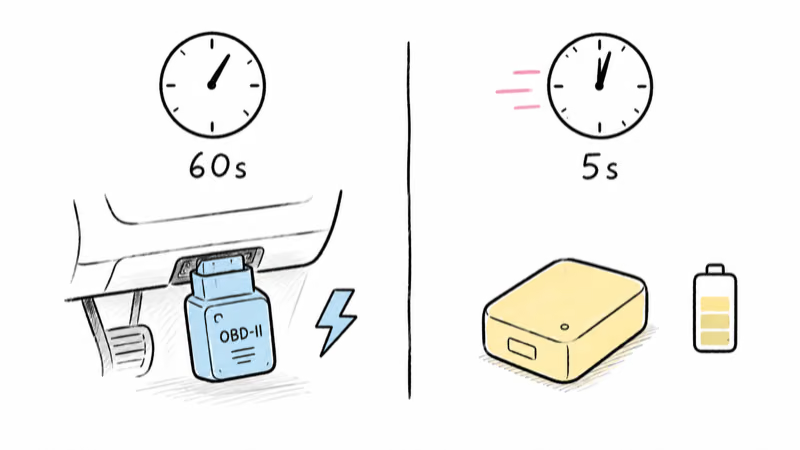
This is the first fork in the decision, and it sets everything else.
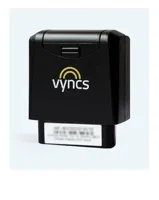
Vyncs plugs into the OBD-II port and runs on vehicle power. According to Geotab’s history of onboard diagnostics, 1996 is the year “OBD-II becomes mandatory for all cars manufactured in the United States,” so every modern car carries the port Vyncs needs. That powered design means there is no battery to charge as long as the device stays plugged into the port.
The tradeoff is update cadence. On the standard plan, Vyncs refreshes position roughly every 60 seconds, fine for trip logging and theft recovery but a beat behind for live, second-by-second following.
SpyTec’s GL300 flips both variables. It carries its own battery, so it can hide in a glovebox, under a seat, or on a non-OBD asset like a trailer. At its tightest setting, it reports as fast as every 5 seconds, the quickest cadence in this matchup.
That speed and portability cost you maintenance. The 2.5-week battery life means you eventually have to find the device, pull it out, and recharge it. Faster updates drain the battery quicker, so runtime drops noticeably at the most aggressive polling settings.
For a permanently installed, never-touch-it tracker, Vyncs wins. For real-time following and flexible placement, the GL300 wins.
Subscription Cost and the No-Monthly-Fee Angle
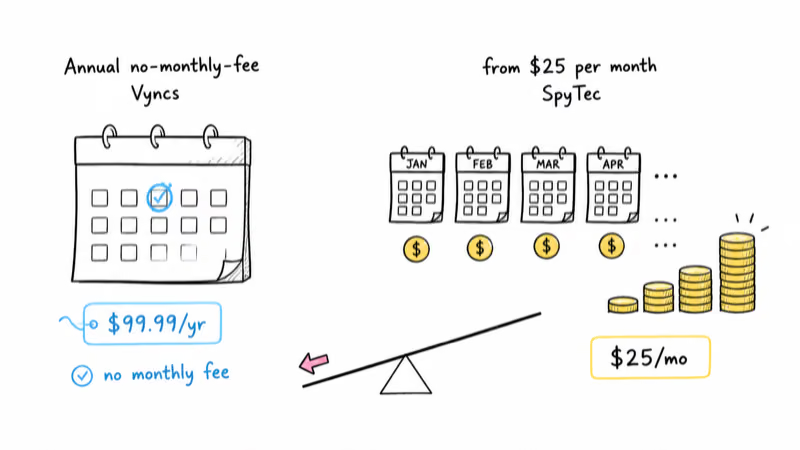
Vyncs leans hard on its “no monthly fee” pitch, and it’s a real cost advantage if you keep the device long term.
You pay an annual plan instead of a recurring monthly charge. Basic-tier service runs about $99.99/year, which works out to roughly $8.33/month equivalent, and there’s no contract churn to track. The first year of service typically ships with the device. Vyncs publishes its tiers on its pricing page, and the structure rewards drivers who plan to keep one vehicle tracked for years.
The SpyTec GL300 bills the opposite way. Service starts from $34.95/month with no annual commitment. That flexibility is the whole point of a portable tracker, but it adds up: twelve months of GL300 service costs several times a year of Vyncs Basic.
If you want a deeper breakdown of how OBD billing compares across brands, our best OBD GPS tracker guide ranks the no-monthly-fee options. And if Vyncs is on your shortlist, the head-to-head in our Bouncie vs Vyncs comparison covers its plan tiers in detail.
For lowest long-run cost, Vyncs wins decisively. For short-term or seasonal use, the GL300’s month-to-month flexibility is worth the premium.
Concealment: Hidden Battery vs Exposed OBD Port
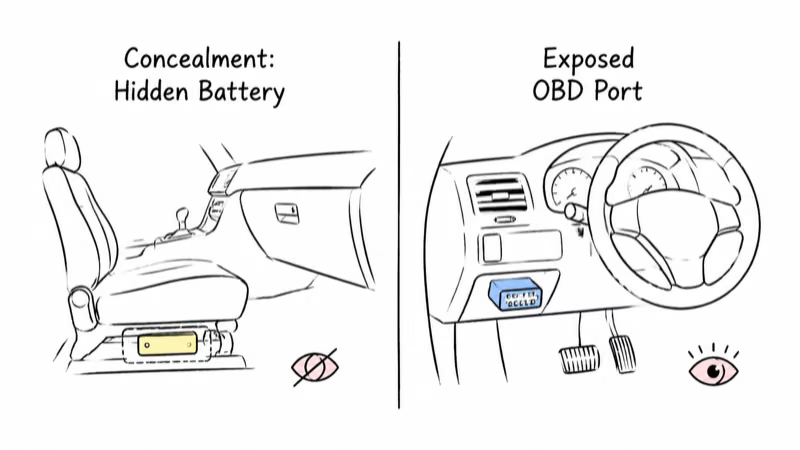
Concealment is the GL300’s home turf, and it’s a genuine limitation for Vyncs.
The GL300 is a compact battery brick with no wires. You can drop it in a console, tuck it under a seat, or magnet-mount it in a waterproof case under the chassis. Because nothing tethers it to the car’s electronics, placement is unlimited as long as the spot stays dry and in cellular range. That makes it the better choice for covert tracking or following an asset that isn’t a vehicle at all.
Vyncs is the opposite by design. It has to occupy the OBD-II port under the dashboard, so anyone who looks there will see it. You can’t relocate it without losing power, and you can’t conceal it the way you’d hide a battery tracker. For owner-installed tracking that’s no secret, that’s fine, but for covert use it’s simply the wrong tool.
If hidden placement is your priority, our SpyTec GPS tracker review walks through real concealment spots and battery-saving settings. The GL300 clearly wins this round.
Diagnostics, Alerts, and Everyday Use
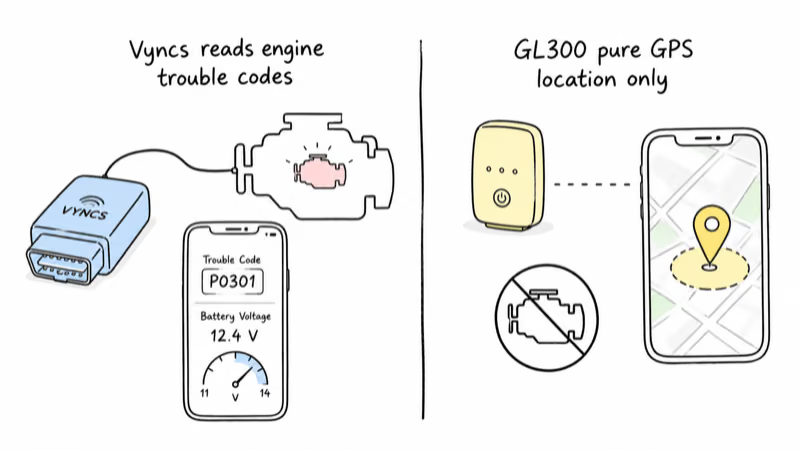
Plugging into the OBD-II port gives Vyncs one capability the GL300 simply can’t match: it reads your car’s brain.
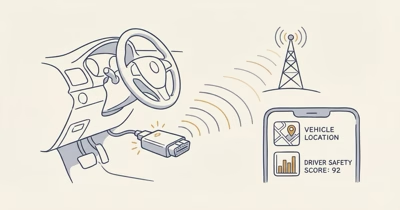
Vyncs pulls diagnostic trouble codes, battery voltage, and trip-level fuel data straight from the engine computer, on top of the GPS basics like geofencing, speed alerts, and trip history. If your check-engine light comes on, Vyncs can tell you which code triggered it. That diagnostic layer turns the tracker into a light vehicle-health monitor.
The GL300 stays in its lane as a pure location device. You get live GPS, geofencing, and movement alerts, but no engine data. For most people who just want to know where the vehicle is, that’s plenty.
Both run on 4G LTE, so coverage depends on cellular signal rather than the device. If you’re weighing these against magnetic battery trackers from other brands, our SpyTec vs Tracki comparison looks at how the GL300 stacks up in that portable category.
Should You Choose Vyncs or the SpyTec GL300?
The full audience-fit checklist lives in the head-to-head widget at the top of this article, but the short version is clean.
Buy Vyncs if your tracker should be permanent, powered, and cheapest over time. The OBD-II install means no recharging, the annual billing means no monthly fee, and the diagnostics are a useful bonus. The catch is the 60-second cadence and the fact that it can’t be hidden.
Buy the SpyTec GL300 if you need portability, concealment, or the fastest updates. The 5-second reporting and hide-anywhere design win, as long as you’ll recharge it.
For the broader landscape of vehicle tracking, including hardwired and magnetic alternatives, browse our GPS tracker hub. Tom’s Guide’s hands-on GL300 review reported that the battery tracker holds up well for portable, real-time monitoring across mixed highway and city driving.
Bottom Line
Vyncs and the SpyTec GL300 aren’t really competitors so much as two answers to one question. If you want a permanent, powered, no-monthly-fee tracker for a car you own and plan to keep, Vyncs is the cheaper, lower-maintenance pick. The annual plan starting near $99.99/year and the simple OBD-II install make it a true set-and-forget device, and because it runs on vehicle power you never have to remember to retrieve and recharge it the way you would a battery tracker.
If you need to hide a tracker, follow a vehicle in real time, or track something without an OBD-II port, the GL300’s portable battery and 5-second updates win. You pay from $34.95/month and recharge every couple of weeks for that placement freedom.
Decide on power versus portability first, and the rest of the choice falls into place. The California Air Resources Board OBD-II fact sheet states that the standard is required on 1996-and-newer vehicles, which is why a port-powered tracker like Vyncs is even possible on modern cars.
FAQ
Does Vyncs really have no monthly fee?
Yes, but it’s annual billing, not free. Vyncs charges a yearly plan starting around $99.99 for the Basic tier instead of a recurring monthly fee. The first year of service usually ships with the device, and you renew annually after that. It’s cheaper than month-to-month billing over time, but you still pay for service.
Which tracker updates location faster?
The SpyTec GL300. It can report as often as every 5 seconds at its tightest interval, which is the fastest cadence in this comparison. Vyncs refreshes roughly every 60 seconds on its standard plan. For live, second-by-second following, the GL300 is the better choice; for trip logging and theft recovery, Vyncs’s slower cadence is usually fine.
Can I hide a Vyncs tracker like the GL300?
Not really. Vyncs has to stay plugged into the OBD-II port under the dashboard, so it’s visible to anyone who looks there. The GL300 is a battery device with no wires, so you can conceal it almost anywhere that stays dry and within cellular range. For covert tracking, the portable GL300 is the better fit.
Does the SpyTec GL300 need recharging?
Yes. The GL300 runs about 2.5 weeks per charge depending on how often it reports. Faster update intervals drain the battery quicker, so heavy real-time use shortens that runtime. You’ll periodically need to retrieve the device and recharge it, which is the main maintenance tradeoff compared to a powered OBD tracker.
Will Vyncs work on any car?
Vyncs works on gas-powered vehicles built in 1996 or later that have a standard OBD-II port, which covers most US cars, trucks, and SUVs. Some diesels and heavy-duty trucks may need an adapter, and many electric vehicles lack a standard OBD-II port. The GL300 has no such limit because it isn’t tied to the port.
Which is cheaper over two years?
Vyncs, in most cases. Its annual plan starting near $99.99/year is far less than twelve-plus months of the GL300’s roughly $34.95/month service. Over two years the powered OBD tracker is the lower total cost of ownership. The GL300 only wins on price if you use it for short, seasonal stretches and cancel between them.
Can either tracker read engine trouble codes?
Only Vyncs. Because it plugs into the OBD-II port, Vyncs reads diagnostic trouble codes, battery voltage, and fuel data straight from the vehicle computer. The GL300 is a pure GPS device with no connection to the engine, so it can’t report check-engine codes or vehicle health. If diagnostics matter to you, Vyncs is the only option here.