Ownership is the hinge. The same $30 device is an anti-theft tool on the car in your name and a criminal act on your neighbor’s bumper. Which one you committed is decided by state statute, and the statute rarely cares about your reasons.
- The title and the lease are the dividing line. California Penal Code 637.7 exempts the registered owner, the lessor, and the lessee, and makes tracking anyone else a misdemeanor.
- Texas charges it as a Class A misdemeanor under Penal Code 16.06, with the owner’s or lessee’s effective consent available only as an affirmative defense you have to prove.
- Marriage isn’t consent. If the car is titled solely to your spouse, you’re a non-owner under most tracking statutes no matter what the marriage certificate says.
- The Jones ruling constrains police, not your ex. It made warrantless government GPS installation a search in 2012; private conduct is judged under state criminal law instead.
- Bluetooth tags warn the target, cellular trackers don’t. iPhones have flagged unknown Find My accessories since iOS 14.5, while a hardwired GPS unit gives no alert at all.
Who Owns the Car Decides Almost Everything
Nearly every state tracking statute is built around one question, and it isn’t whether you had a good reason. It’s whether the person whose car you touched consented, and consent is defined by paperwork.
According to California Penal Code section 637.7, no person or entity may use an electronic tracking device to determine the location or movement of a person. Subsection (b) then lifts that ban where the vehicle’s registered owner, lessor, or lessee has consented. Violations are misdemeanors, and licensed investigators risk the license on top of it.
Texas writes the same idea as a standalone offense. Penal Code section 16.06 states that a person commits an offense by knowingly installing a tracking device on a motor vehicle owned or leased by another, graded as a Class A misdemeanor, which in Texas reaches up to a year in county jail and a $4,000 fine.
Note the asymmetry buried in the Texas version: the owner’s consent is an affirmative defense, not an element the prosecution has to disprove. You can be charged first and argue consent later, with the burden on you.
So the practical test is short:
- Is your name on the title or the lease? If yes, you’re in the exempted class in most states.
- Is the car jointly titled? Co-owners are generally owners, but a car titled solely to your spouse or partner is not your car for this purpose.
- Did the owner consent in writing? Verbal permission evaporates the moment a relationship sours, which is exactly when these cases get filed.
The National Conference of State Legislatures maintains a state-by-state table of statutes on private use of location tracking devices, and it’s the right first stop before you assume your state resembles California’s.
When Is Tracking Your Own Vehicle Legal?
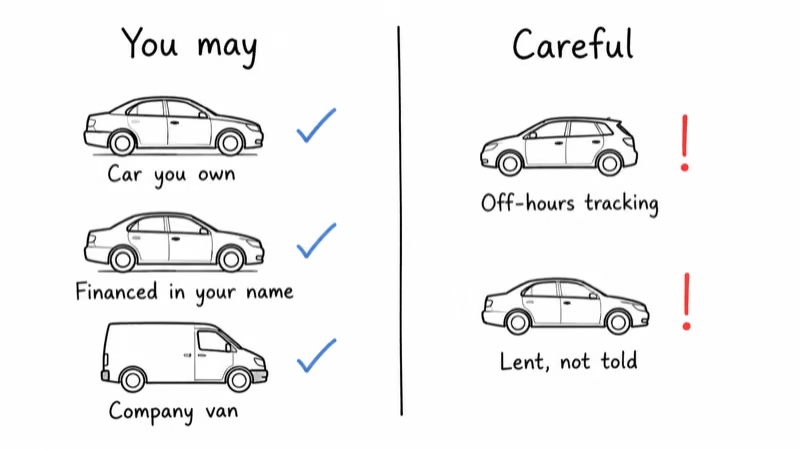
This is the easy case, and it’s most of the market. A tracker on a car you own, financed in your name, or lease yourself sits inside the owner exemption that the statutes above write explicitly.
Theft recovery is the clearest use. If your truck is stolen, a tracker you installed on your own property gives police an address instead of a description, and our roundup of the best anti-theft GPS trackers for a car covers the hardware that survives a determined thief.
Fleet and company vehicles follow the same ownership logic with an employment layer on top. The business owns the van, so the business may track the van. Several states separately require employers to notify workers before electronic monitoring, and a written policy in the handbook is cheaper than litigating the question later.
Where owners get into trouble is scope creep. Two patterns recur:
- Tracking the person instead of the asset. A company vehicle tracked around the clock, including on an employee’s own time, invites a privacy claim even where the hardware is lawfully installed.
- Lending the car and keeping watch. Handing your car to an adult friend for a week and monitoring it without telling them is the fact pattern that turns an owner’s tracker into a harassment complaint.
If you’re installing on your own vehicle, our walkthrough on how to install a GPS tracker in a car covers power sources and placement without pretending concealment from other drivers is the goal.
The Statutes That Do the Real Work
Federal law isn’t where a private tracking case usually lands. There’s no general federal statute that says “don’t put a tracker on a stranger’s car,” which surprises people who assume Washington covers it.
What federal law does reach is a pattern of conduct. The federal stalking statute at 18 U.S.C. 2261A criminalizes using an electronic communication service or system of interstate commerce to engage in a course of conduct intended to harass, intimidate, or place a person under surveillance, where that conduct causes reasonable fear or substantial emotional distress.
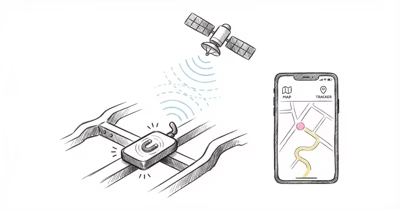
The statute never names GPS or trackers. A cellular unit reporting someone’s location over a carrier network can still be the instrument of the offense.
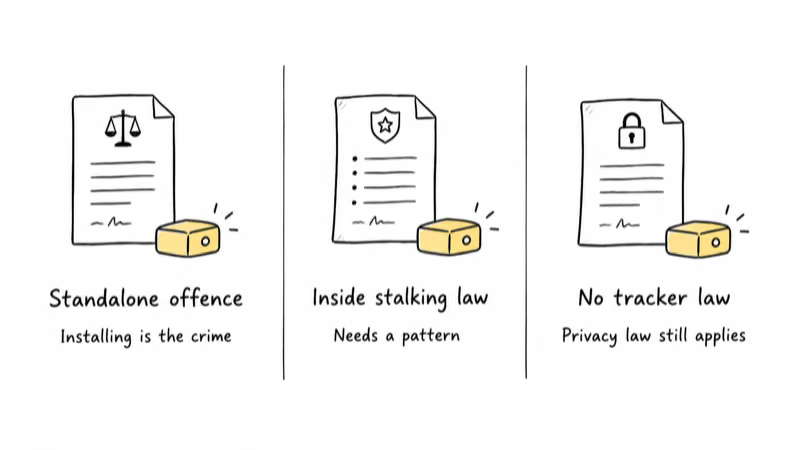
State law is where the specific prohibition lives, and it splits into three rough shapes:
- Standalone installation offenses. Texas-style provisions that make the act of installing on another’s vehicle a crime by itself, no stalking pattern required.
- Tracking folded into stalking statutes. States that treat location tracking as one way of committing stalking, which usually requires proving intent and a course of conduct.
- States with no tracker-specific statute. General privacy, harassment, and stalking law still applies, so “my state has no GPS law” is not the safe conclusion it sounds like.
Two more wrinkles catch people out. Licensed private investigators don’t get a blanket pass; where an exception exists it typically still requires the vehicle owner’s written consent or a court order. For a rental car, check the rental agreement as well; it may separately restrict attaching or using tracking equipment.
Can You Track a Spouse, Teen, or Employee?
These three questions drive most of the search traffic on this topic. Their answers are not the same.
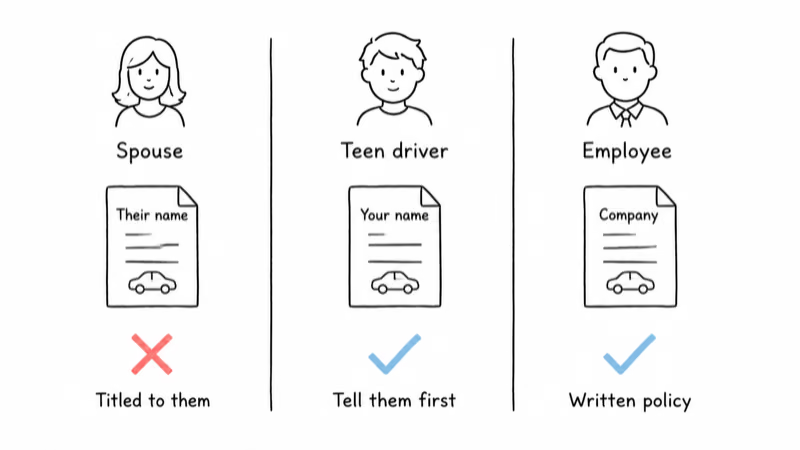
A spouse or partner. If the car is titled solely in their name, you’re a non-owner, and the statutes don’t carve out an exception for marriage. Prosecutors have charged spouses under these provisions, and family court treats covert tracking as evidence about you rather than about them. Community property arguments are worth raising with a lawyer, not testing with a magnet-mount tracker.
A teen driver. If you own the car your 16-year-old drives, you’re the owner, and tracking it falls inside the exemption. The harder question isn’t legal. Told-in-advance tracking changes driving behavior; discovered-later tracking mostly changes the relationship, and families who write the rule down before handing over the keys tend to keep both.
An employee. Track the vehicle you own, in working hours, under a written policy the worker has already seen and signed.
Off-hours tracking of a take-home vehicle is the part that generates claims. One line runs through all three cases: covert tracking of an adult who hasn’t consented is the fact pattern anti-stalking law was written for, and our guide to how trackers get misused for stalking shows what that looks like from the target’s side.
What Police Need That You Don't Have
Plenty of blog posts cite Jones as though it settled private tracking. It didn’t, and the confusion is worth clearing up because it cuts both ways.
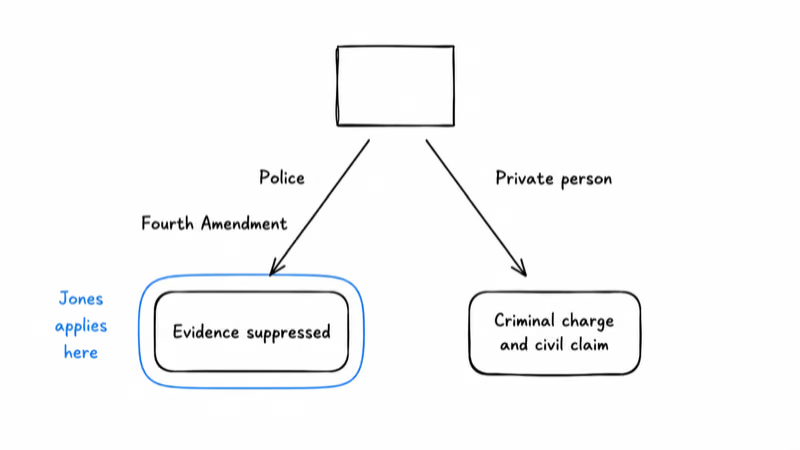
The Court in United States v. Jones found that 28 days of GPS monitoring, starting with agents attaching the device to a Jeep, amounted to a Fourth Amendment search. The judgment was unanimous, issued January 23, 2012.
Justice Scalia rested it on a narrow trespass theory: the government’s physical occupation of private property to obtain information is a search. The Court declined to resolve whether long-term monitoring separately violates a reasonable expectation of privacy, and Justice Alito, joined by three colleagues, would have decided it on the duration instead.
The operative word is government. The Fourth Amendment restrains state actors, so the remedy in Jones was suppression of evidence in a criminal prosecution.
A private individual who plants a tracker faces state criminal charges and civil liability, not a suppression motion. That distinction has a practical edge for anyone thinking about a divorce or custody dispute: evidence gathered from an unlawfully placed tracker tends to arrive with its own liability attached, and the party who installed it often spends the hearing explaining the installation rather than the affair.
If You Find a Tracker on Your Own Car
The reverse situation is more common than most drivers expect, and the first instinct, ripping the device off and throwing it away, is usually the wrong one.
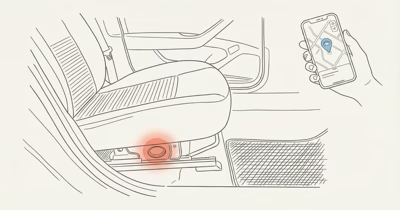
Start with what your phone already told you. Apple’s support page on what to do when an unknown AirTag or Find My accessory is traveling with you documents the alert that iPhones have produced since iOS 14.5, and Apple’s Personal Safety guide adds that holding an iPhone or any NFC-capable Android phone near the tag opens a page showing its serial number and partial owner contact details. That page is evidence.
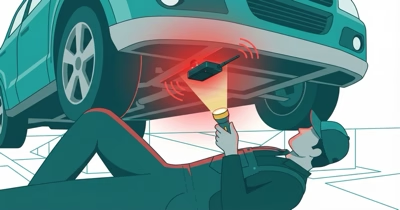
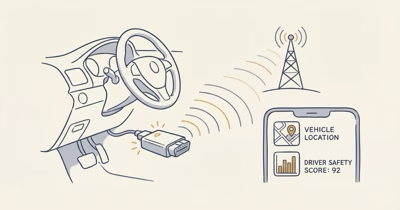
Cellular GPS units are the harder case, because they announce nothing. They’re typically hardwired, magnet-mounted in a wheel well, or plugged into the OBD-II port under the dash, and finding one is a physical search rather than a notification. Our walkthrough on how to detect a hidden GPS tracker on a car covers the sweep in order, and the AirTag-specific version lives in finding an AirTag hidden in your car.
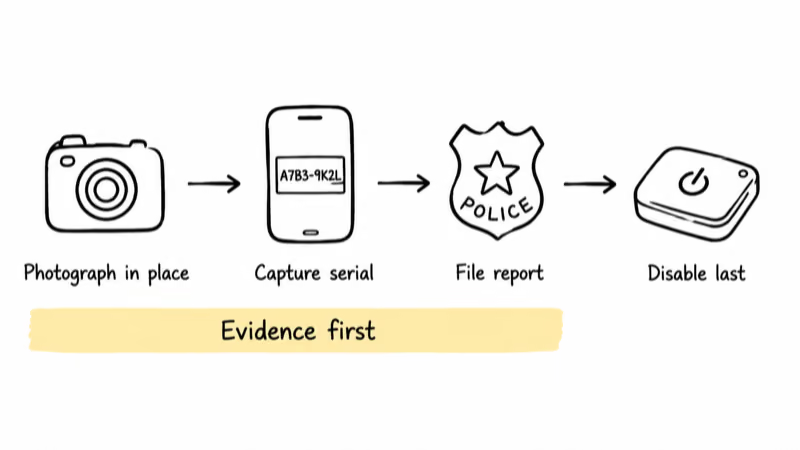
If you believe someone is tracking you, sequence matters:
- Photograph the device in place before touching it, including where it was mounted.
- Capture the serial number and any owner details the tap-to-read page returns, plus a screenshot of the alert itself.
- Call local police and file a report; Apple states it can work with law enforcement on requests involving its products, and you may need to hand over the device and its serial number.
- Then disable it, using the instructions Apple provides, once the record exists.
Android users get the parallel alert through Google’s tracker detection, and our note on the Find Hub unknown tracker alert explains what that notification does and doesn’t tell you. If you feel unsafe, contact police before you start experimenting with the device.
Bottom Line
The legal question is narrower than it looks: track what you own, and get written consent for anything else. State statutes like California’s 637.7 and Texas’s 16.06 hang their exemptions on the registered owner, the lessor, and the lessee, and no marriage, suspicion, or good motive moves you into that group. If you found a tracker rather than placed one, document it before you remove it and take the serial number to the police.
FAQ
Is it legal to put a GPS tracker on your own car?
In general, yes. State tracking statutes are written around consent from the vehicle's registered owner, lessor, or lessee, and California Penal Code 637.7 spells that exemption out directly. If the car is titled or leased in your name, installing a tracker for theft recovery sits inside that exemption. The analysis changes if another person drives the car and you're really tracking them rather than the asset.
Can I put a tracker on my spouse's car?
Not safely, and often not lawfully. If the vehicle is titled solely to your spouse, you're a non-owner under most tracking statutes, and marriage is not written in as an exception. Several states treat non-consensual installation as a standalone offense, and family courts routinely take a dim view of covert tracking. Talk to a lawyer in your state before acting, not afterward.
What are the penalties for illegally tracking a vehicle?
They vary by state and by how the conduct is charged. Texas grades unlawful installation of a tracking device as a Class A misdemeanor, which carries up to a year in county jail and a fine of up to $4,000. California treats a 637.7 violation as a misdemeanor and adds license revocation exposure for regulated investigators. Where tracking is charged as stalking instead, the exposure is usually higher.
Does United States v. Jones make private GPS tracking illegal?
No. Jones held that the government's attachment of a GPS device to a vehicle and its use to monitor movements is a Fourth Amendment search, decided 9-0 in January 2012. The Fourth Amendment constrains state actors, so the ruling governs police conduct and evidence suppression. A private person who installs a tracker is judged under state criminal statutes and civil law instead.
Can my employer track a company vehicle I drive?
Usually yes, because the employer owns the vehicle. The friction comes from scope and notice rather than ownership: several states require employers to tell workers about electronic monitoring, and tracking a take-home vehicle outside working hours draws privacy claims even where the installation was lawful. A written, acknowledged monitoring policy resolves most of these disputes before they start.
Do I get an alert if someone puts a tracker on my car?
Only for Bluetooth item trackers. Apple documents an alert for unknown AirTags, AirPods, and Find My network accessories traveling with you, a feature present since iOS 14.5, and Android offers a comparable unknown tracker notification. Cellular GPS units produce no alert at all, so a hardwired or OBD-II tracker has to be found by physical inspection rather than by notification.
Should I remove a tracker I find on my car right away?
Document it first. Photograph the device where it was mounted, capture the alert and any serial number or partial owner details your phone returns when you tap the tag, then contact local police with that record. Apple states it can assist law enforcement with requests involving its products, and you may be asked to provide the device and serial number. Disable it after the evidence exists.