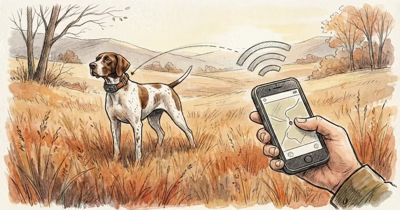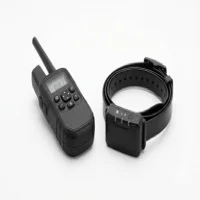
Both systems track and train hunting dogs across the same 9-mile range with no monthly fee, so the real choice is your interface: Dogtra runs through your phone, Garmin through a dedicated handheld. Dogtra’s official page confirms the Pathfinder 2 uses a “no monthly subscription required” app that refreshes your dog’s location every 2 seconds, the update speed serious upland hunters expect when a dog is running hard through heavy cover.
- The Dogtra Pathfinder 2 costs around $400 versus $700 for the Garmin Alpha 300, a $300 gap before any collar add-ons.
- Both track up to 9 miles with no subscription, but Dogtra tracks 21 dogs while Garmin caps at 20.
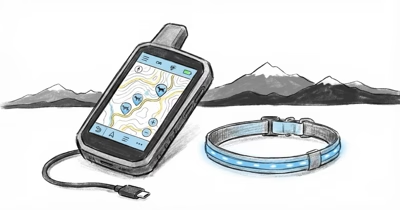
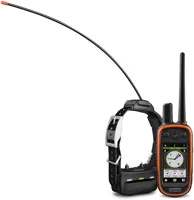
- Dogtra uses your phone as the display; Garmin ships a standalone 3.5-inch touchscreen handheld with preloaded topo maps.
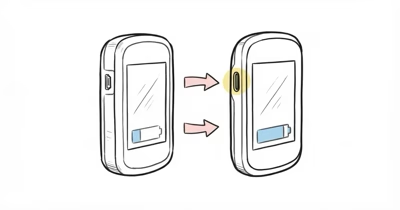
- The Garmin Alpha 300 runs up to 55 hours per charge; the Pathfinder 2 depends on your phone’s battery in the field.
- Dogtra offers 100 stimulation levels versus Garmin’s 18, giving finer e-collar control for precise training.
Dogtra Pathfinder 2 vs Garmin Alpha 300 at a Glance
Here is every difference side by side. The core split is interface, not capability. Dogtra’s official Pathfinder 2 page confirms it works with a “no monthly subscription required” app, “tracking up to 21 dogs within a 9-mile range” at a “2-second refresh rate.”
Garmin’s Alpha 300 instead delivers a dedicated handheld. Its press release announced the new series offers “nearly three times the battery life” of the prior generation, a jump to 55 hours per charge. The practical takeaway is simple: similar range, two very different ways to see your dogs.
⇄ Head-to-head
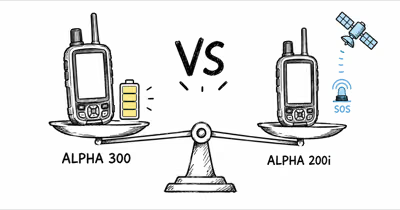
Dogtra Pathfinder 2 vs Garmin Alpha 300
- +Around $400, roughly $300 less than the Alpha 300
- +Tracks 21 dogs with a 2-second GPS refresh rate
- +100 stimulation levels for fine training control
- +No subscription ever, free app with offline maps
- +IPX9K extreme waterproof collar rating
- +Rugged standalone 3.5-inch touchscreen handheld
- +Up to 55-hour battery, no phone dependency
- +Preloaded TopoActive maps with terrain contours
- +20-dog capacity and 18 stimulation levels
- +inReach SOS compatible on the 300i variant
- −Uses your phone as the display, draining its battery
- −No standalone handheld if your phone dies in the field
- −No preloaded topographic maps or property boundaries
- −Bluetooth pairing can need re-syncing after app closes
- −Around $700, a $300 premium over the Pathfinder 2
- −Fewer stimulation levels (18 vs 100)
- −Heavier kit to carry than a phone-only setup
- −Satellite imagery and some maps need a subscription
You want the lowest cost, no subscription, and prefer an app on a phone you already carry.
You want a rugged dedicated handheld, long battery, and topo maps for serious backcountry hunts.
Both systems share the fundamentals here. They each deliver 9-mile tracking, integrated e-collar training, and no recurring fee for core tracking, so the real differences cluster around how you see your dogs in the field and how much weather your gear can survive over a long season. If you are weighing a phone-free option more broadly, our best GPS collars for hunting dogs guide covers the wider field of standalone-handheld systems and dedicated tracking radios worth your money.
Do You Want a Phone App or a Rugged Handheld?
This is the question that decides the whole purchase. The Dogtra Pathfinder 2 replaces a dedicated handheld with your smartphone. Dogtra’s product page states that the app requires “iOS 14 or Android 7.0 and above” with Bluetooth 5.0, and works offline so the map runs with “no signal required.”
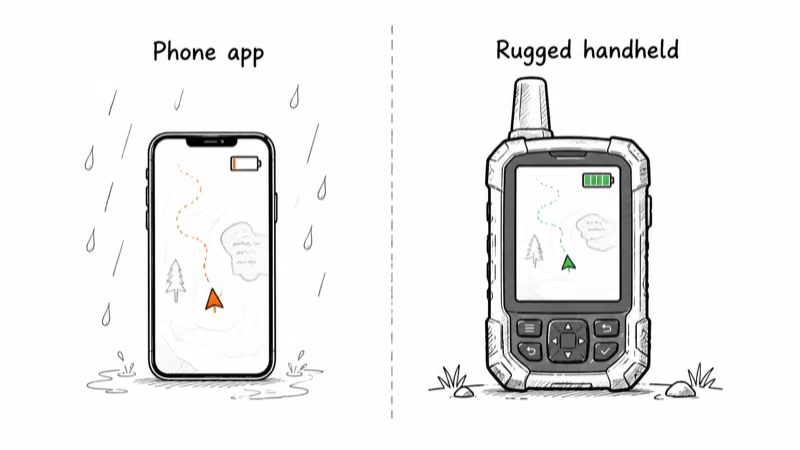
That cuts both ways. The upside is price and weight, since you carry a phone you already own. The cost is exposure: your phone now lives in the rain, and its battery becomes your tracking battery.
The Garmin Alpha 300 takes the opposite approach with a dedicated tool. It ships a rugged 3.5-inch touchscreen handheld built for the field, with up to 55 hours of battery per charge, so a dead phone never ends your hunt. The trade-off is simple: you carry a second device and pay extra for it.
A real-world field test from Gun Dog’s Pathfinder2 review captured the tension well, praising that “The mapping system on the app works even when not in cell service” while warning “You have to pull your phone out of your pocket too often if you want to see the maps.” That single sentence is the entire phone-versus-handheld debate.
Which Has the Better Range Spec?
On paper, this is a tie. Both the Pathfinder 2 and the Alpha 300 advertise a 9-mile range, and according to Garmin’s official Alpha 300 page the handheld tracks dogs “up to 9 miles” with compatible collars.
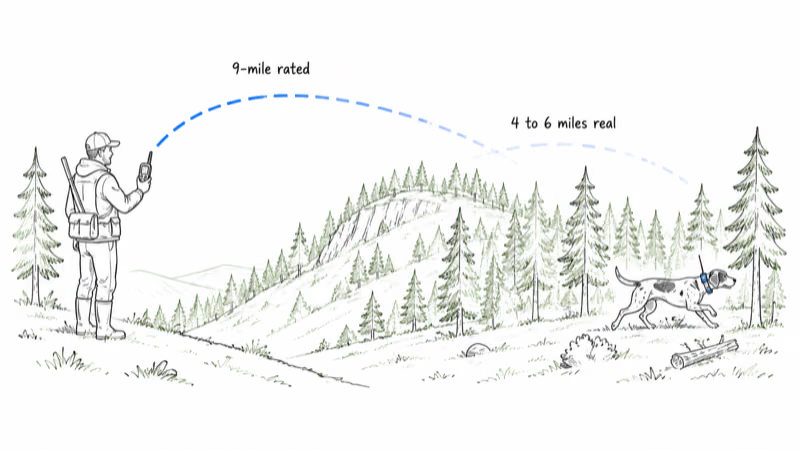
Field range is shorter for both when terrain gets involved. In rolling timber and hilly ground, line-of-sight matters more than the spec sheet. Neither brand can beat physics: trees, ridges, and valleys block radio.
Dogtra edges ahead on update speed: its 2-second refresh rate narrowly beats the Alpha 300’s roughly 2.5-second update.
Garmin’s advantage is the antenna and the standalone radio. Its large removable antenna is the better design for marginal terrain, though both systems are still constrained by line of sight. A separate Tom’s Guide field experiment on dog GPS, where the writer strapped a tracker to a running dog, is a useful reminder that real distances covered by an off-leash dog routinely exceed what owners expect.
Cost of Ownership and Subscriptions
Cost is where the Dogtra Pathfinder 2 makes its strongest case. At around $400, it lands roughly $300 below the $700 Garmin Alpha 300, and neither charges a subscription for core tracking.
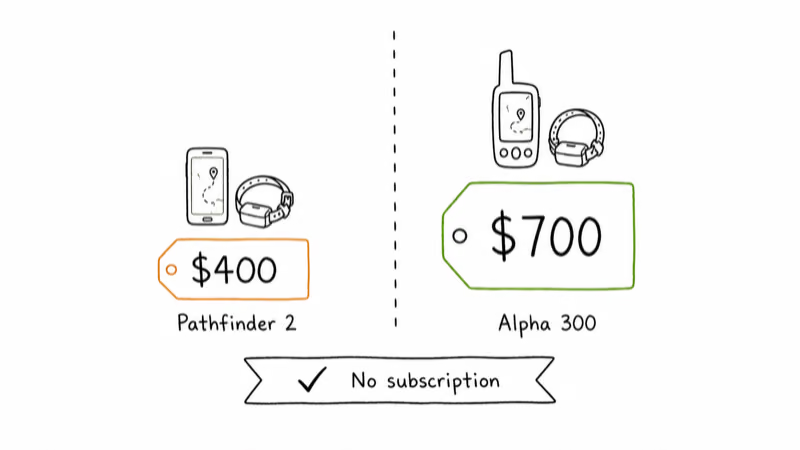
That $300 gap can fund a second collar or a full season of shells. Garmin’s pricing reflects the hardware you are buying: a rugged handheld, a brighter display, and preloaded maps. Some Garmin features, such as BirdsEye satellite imagery and certain map layers, do require a subscription, so factor that in if you want satellite overlays on top of the included TopoActive maps.
If a no-fee setup is your priority, our no-subscription dog GPS tracker guide ranks the wider field.
Training Control and E-Collar Levels
For training control, Dogtra’s 100 stimulation levels give far finer adjustment than Garmin’s 18 levels. If you run a sensitive dog and want micro-steps between corrections, that resolution matters in the field.
For many hunters, 18 levels is plenty. Garmin’s stimulation, tone, and vibration modes cover standard upland training, so the practical difference between the two collars is granularity of correction, not the basic command set.
Who Should Buy Each System
Pick the Dogtra Pathfinder 2 if you hunt weekends, want the lowest entry cost, and are comfortable running your phone as the display. It tracks 21 dogs, refreshes every 2 seconds, carries an IPX9K-rated collar, and never charges a monthly fee. For weekend upland work, it covers the job for hundreds less.
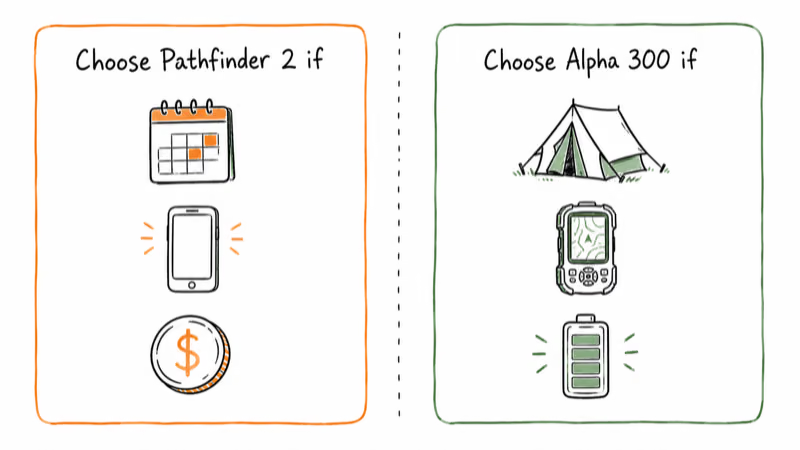
Pick the Garmin Alpha 300 for multi-day trips, hard backcountry, or any hunt where you don’t want a phone in the weather. The standalone handheld, 55-hour battery, and preloaded topo maps justify the premium.
If you want the deeper single-product breakdown, our full Garmin Alpha 300 review covers field performance, and our best GPS trackers for pets roundup places both systems against the wider market.
Bottom Line
The Dogtra Pathfinder 2 and Garmin Alpha 300 track the same 9 miles with no subscription, so the decision comes down to interface and durability. Dogtra wins on price and training resolution by running through a phone you already own, while Garmin wins on ruggedness, battery, and maps by handing you a standalone handheld. App-first weekend hunters should save the $300 and buy Dogtra. Multi-day backcountry hunters who can’t risk a dead phone should pay up for the Alpha 300.
FAQ
Does the Dogtra Pathfinder 2 require a subscription?
No. The Dogtra Pathfinder 2 uses a free app with no monthly subscription required, confirmed on Dogtra’s official product page. Your only cost is the hardware. The app also supports offline maps, so you can track and train without cell signal in the field.
Does the Garmin Alpha 300 work without cell service?
Yes. The Alpha 300 uses direct GPS satellite signals and radio frequencies between the handheld and collar, so it does not need Wi-Fi or cellular coverage. You can track and train dogs in remote wilderness with no cell signal. Core tracking carries no subscription, though some map and satellite imagery features do.
How many dogs can each system track?
The Dogtra Pathfinder 2 tracks up to 21 dogs from one phone, while the Garmin Alpha 300 tracks up to 20 dogs from its handheld. Both display multiple dogs on the map at once. For most hunters running a small pack, either capacity is more than enough.
Which has the longer battery life?
The Garmin Alpha 300 has a clear edge with up to 55 hours per charge on its dedicated handheld. The Pathfinder 2 has no handheld of its own, so its runtime depends entirely on your smartphone’s battery. On multi-day hunts, carry a power bank if you choose the Dogtra system.
Is the Dogtra collar more waterproof than Garmin’s?
Yes, on paper. The Pathfinder 2 collar carries an IPX9K rating, which covers high-pressure and high-temperature water jets, while the Alpha 300 handheld is rated IPX7 for brief immersion. Both handle rain, mud, and creek crossings without issue during normal hunting use.
Can I train dogs with both systems or only track?
Both systems combine GPS tracking with e-collar training in one package. The Dogtra Pathfinder 2 offers 100 stimulation levels plus tone and vibration, while the Garmin Alpha 300 offers 18 stimulation levels. Dogtra gives finer correction steps, but Garmin’s levels are sufficient for most training.
Which is better for a first-time hunting dog owner?
The Dogtra Pathfinder 2 is the easier entry point. It costs around $300 less, uses a phone you already own, and carries no subscription. The Garmin Alpha 300 is the better long-term tool for serious or multi-day hunters who want a rugged standalone handheld and longer battery life.