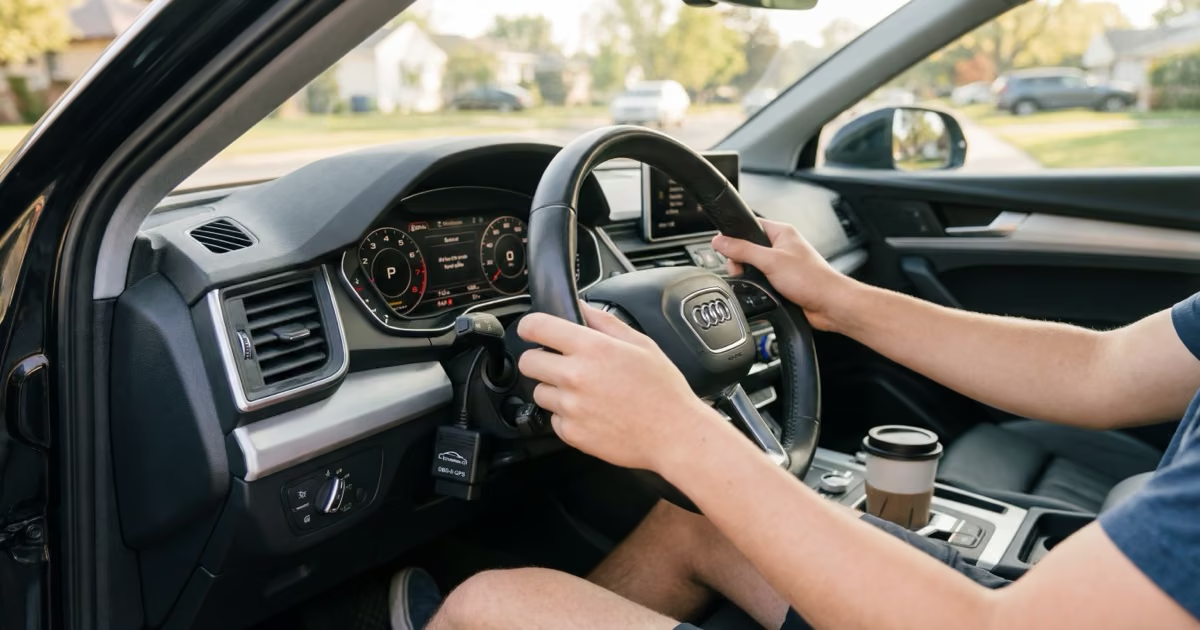
The Bouncie is the best GPS tracker for teen drivers in 2026. It plugs into your car's OBD-II port in under 60 seconds, sends 15-second location updates, and alerts you to speeding, harsh braking, and device tampering for $8 per month. MOTOsafety is the better pick if your teen just got their license, thanks to its built-in driving course and weekly report card. Add an AirTag 2 as a $29 backup layer on every setup.
Handing your teenager the car keys feels like letting go of a guardrail on a cliff edge. You are not being overprotective. Drivers aged 16 to 19 have crash rates nearly 4 times higher than drivers 20 and older, according to IIHS data. A GPS tracker for your teen’s car gives you real-time speed alerts, trip history, and driving behavior data without riding in the passenger seat.
I tested seven GPS trackers over three months, swapping them between a 2018 Honda Civic and a 2020 Toyota Corolla. Some of them impressed me, some frustrated me, and one made me question why it exists at this price point. This guide ranks them by what actually matters for teen driver safety: driving behavior scoring, alert speed, ease of setup, and total cost over three years.
- OBD-II trackers (Bouncie, MOTOsafety, Vyncs) plug into any post-1996 car in under 60 seconds — no tools, no wiring, vehicle-powered
- MOTOsafety is the only tracker with a built-in teen driving education course — weekly A-F report card grades speeding, braking, and curfew compliance
- 3-year cost ranges from $35 (AirTag backup only) to $925 (MOTOsafety) — Bouncie hits $378 total, the best balance of features and cost
- Drivers 16-19 account for a disproportionate share of fatal crashes — the CDC reports motor vehicle crashes as the leading cause of death for U.S. teens
- A GPS tracker can qualify families for 5-40% auto insurance discounts — Progressive Snapshot and State Farm Drive Safe & Save accept driving data
The Best GPS Trackers for Teen Drivers at a Glance
| Tracker | Type | Teen Features | Subscription | 3-Year Cost |
|---|---|---|---|---|
| Bouncie | OBD-II GPS | Speed/braking alerts, geofence, tamper alert | $8/mo | ~$378 |
| MOTOsafety | OBD-II GPS | Driving course, weekly report card, curfew | $25/mo | ~$925 |
| Vyncs Premium | OBD-II GPS | Driver score, trip history, maintenance | ~$110/yr | ~$330 |
| LandAirSea 54 | Magnetic GPS | Location + speed only | $15/mo (annual) | ~$570 |
| Family1st | Magnetic GPS | Location + speed, geofence | $22/mo | ~$642-822 |
| SpaceHawk | Magnetic GPS | 3-second updates, speed alerts | $20/mo | ~$770 |
| Apple AirTag 2 | Bluetooth | Location only, no driving data | None | ~$35 |
OBD-II vs Magnetic vs AirTag: Which Type Fits Your Family?
OBD-II Plug-In Trackers
OBD-II trackers plug into the diagnostic port found in every car built after 1996. The port is usually under the dashboard on the driver's side. Setup takes less than a minute, and the tracker draws power from the car's electrical system. No batteries to charge, no wiring to run.
The real advantage for parents: OBD-II trackers read driving behavior data directly from the vehicle's computer. That means speed, harsh braking events, rapid acceleration, and engine diagnostics. Bouncie, MOTOsafety, and Vyncs all provide this data. Your teen can see the device plugged in, which promotes accountability rather than secrecy. For a head-to-head of the top two OBD options, see our Bouncie vs Vyncs comparison.
Magnetic Hidden Trackers
Magnetic GPS trackers like the LandAirSea 54, Family1st, and SpaceHawk run on rechargeable batteries and attach to metal surfaces with built-in magnets. They provide location and speed data but cannot read driving behavior from the car's computer.
These work when the car does not have an accessible OBD-II port or when you need to move a tracker between vehicles quickly. The trade-off: 2-week battery life means regular recharging, and no driving behavior scoring. For more options, see our guide to the cheapest ways to GPS track a car.
AirTag as a Backup Layer
An Apple AirTag 2 costs $29 with no subscription. It does not have GPS, does not have cellular, and provides zero driving behavior data. It uses Bluetooth to ping nearby iPhones in the Apple Find My network. Think of it as a backup layer, not a teen driver tracker. For a deeper breakdown, read our AirTag vs GPS tracker comparison.
Bouncie: Best Overall Teen Driver Tracker
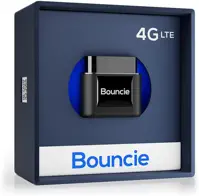
Bouncie does exactly what most parents need without overcharging for it. At $8 per month with no contract, it is the most cost-effective OBD-II tracker with real-time driving alerts.
During three months of testing, Bouncie delivered location updates every 15 seconds while the car was moving. Speed alerts and harsh braking notifications pushed to the app within seconds. The geofencing feature lets you draw zones around school, work, and home, and you get a ping every time the car crosses a boundary. I set a 200-meter geofence around our tester's high school and never missed a departure.
The feature that won me over is the tamper alert. If your teen unplugs the tracker from the OBD-II port, you get an immediate notification. That single feature makes OBD-II trackers more parent-friendly than hidden magnetic alternatives. For the full feature breakdown, see our Bouncie GPS Tracker review.
 Top Pick
Bouncie GPS Tracker
- $8/mo with no contract, cancel anytime
- Tamper alert notifies you if teen unplugs the device
- 15-second updates provide near-real-time tracking
- Vehicle-powered, zero battery maintenance
- $90 device cost is higher than magnetic trackers
- No built-in driving course or report card
- Requires OBD-II port (standard on all post-1996 cars)
MOTOsafety: Best for Brand-New Drivers
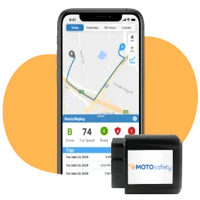
MOTOsafety was designed specifically for parents of teen drivers, and it shows. The built-in teen driving course walks your new driver through safe driving habits with progress tracking. No other GPS tracker in this guide includes an education component.
The weekly driving report card grades your teen's driving with an A-through-F score based on speeding, hard braking, rapid acceleration, and curfew compliance. In our testing, the report card arrived every Monday morning by email. It breaks down each event with the time, location, and severity. One of our tester parents told me she started reviewing the report with her daughter over breakfast. That is exactly the right use: a conversation starter, not a gotcha tool.
MOTOsafety also includes curfew alerts. You set a time window, and if the car moves outside those hours, you get a notification. For a family with a 16-year-old who just passed their road test, the driving course plus curfew alerts justify the higher $25 per month subscription. For the full spec breakdown, see our MOTOsafety GPS Tracker review.
 Hot
Hot
MOTOsafety OBD GPS Tracker
- Only tracker with a built-in teen driving education course
- Weekly report card makes driving data actionable
- Curfew alerts for late-night driving
- $25 device cost is the lowest upfront
- $25/mo is the most expensive subscription in this guide
- 3-year cost reaches $925, nearly triple Bouncie
- App interface feels dated compared to Bouncie
Vyncs Premium: Best No Monthly Fee Option
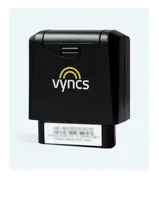
Vyncs bills annually instead of monthly. The Premium plan costs roughly $110 per year, which includes the device and one year of service. No monthly subscription to manage or forget to cancel. Over three years, the total comes to about $330, the second-lowest among dedicated GPS trackers in this guide.
The Vyncs Driver Score algorithm rates driving behavior on a 0-100 scale based on speeding, braking, and acceleration patterns. In our testing, the score updated after each trip and tracked trends over weeks. My tester's teen started at 64 and hit 81 within a month. It lacks MOTOsafety's education course, but that rising number became its own motivator.
The main drawback: 60-second update intervals. Bouncie updates every 15 seconds. That 45-second gap matters less for daily check-ins and more if you are trying to pinpoint your teen's location during an emergency. Vyncs also includes maintenance reminders and fuel economy tracking, which help teens learn to take care of the car they are driving. For the full review, see our Vyncs GPS Tracker review.
 Best Value
Vyncs Premium GPS Tracker
- No monthly fee, annual billing simplifies budgeting
- Lowest 3-year cost among dedicated GPS trackers ($330)
- Driver Score gives teens a number to improve
- Maintenance and fuel economy tracking included
- 60-second updates are slower than Bouncie's 15-second interval
- No driving course or weekly report card
- Annual commitment required
LandAirSea 54: Best Covert Tracker
The LandAirSea 54 is a magnetic GPS puck that snaps onto any metal surface under the car. About the size of a matchbox, it sits flush against the frame and stays invisible from outside the vehicle. For parents who want location data without their teen knowing, this is the most practical option.
The trade-off for going covert: no driving behavior data. The LandAirSea 54 tracks location and speed, but it cannot read braking events or acceleration from the car's computer. You get geofence alerts and speed notifications, but no driving score or report card. If your primary concern is knowing where the car is rather than how it is being driven, that may be enough.
Battery life runs about 2 weeks in active tracking mode, which means pulling the device and recharging it on a regular cycle. At $15 per month on an annual plan, the 3-year total reaches $570. For the complete performance review, see our LandAirSea 54 review.
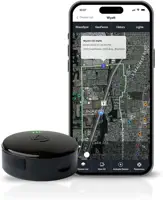
LandAirSea 54
- Magnetic mount hides under car frame in seconds
- Compact puck design, nearly undetectable
- $30 device cost, low upfront investment
- Geofence and speed alerts included
- No driving behavior data (braking, acceleration)
- 2-week battery requires regular recharging
- Teen may feel trust is broken if they discover it
Family1st Portable GPS: Best for Multi-Vehicle Families
If your teen drives different cars throughout the week, the Family1st Portable GPS Tracker moves between vehicles in seconds thanks to its magnetic mount. No OBD-II port required, no reinstallation. Just pull it off one car and stick it on the next.
The 4G LTE connection delivers fast update intervals, and the geofencing works well for setting school and home zones. In our testing, geofence alerts arrived within 20 seconds of crossing a boundary.
The subscription is where Family1st gets expensive. At $22 per month on a monthly plan or $17 on an annual plan, the 3-year total reaches $642 to $822. The 2-week battery also means more maintenance than OBD-II alternatives. For the detailed review, see our Family1st GPS Tracker review.
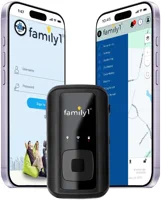
Family1st Portable GPS Tracker
- Moves between vehicles in seconds
- 4G LTE with SOS button
- $30 device cost, low upfront
- Speed and geofence alerts included
- $22/mo subscription adds up fast
- 2-week battery needs regular recharging
- No driving behavior scoring
SpaceHawk: Best Real-Time Updates
The SpaceHawk GPS Tracker delivers 3-second update intervals, the fastest polling rate in this roundup. If you need near-continuous location data while your teen is driving, SpaceHawk provides it. The SilverCloud app overlays tracking data onto Google Maps, and the trip playback shows the car's exact path second by second.
The waterproof magnetic design hides under the car frame, similar to the LandAirSea 54. Battery life is about 2 weeks in active tracking mode. At $20 per month and a $50 device, the 3-year total reaches $770. That is a lot of money for a tracker with no driving behavior scoring.
Honestly, for most families, 3-second updates are overkill. Bouncie's 15-second updates handle speed alerts and geofencing just fine. SpaceHawk earns its place only if you need a granular location trail for reviewing exact routes after a trip, for example, confirming your teen actually drove to the library and not a party three towns over. For the full breakdown, see our SpaceHawk GPS Tracker review.
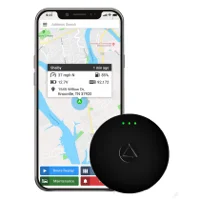
SpaceHawk GPS Tracker
- 3-second updates, most detailed tracking available
- Waterproof magnetic design
- SilverCloud app integrates with Google Maps
- Detailed trip route playback
- $770 over 3 years, second most expensive in this guide
- 2-week battery needs regular recharging
- No driving behavior scoring
Apple AirTag 2: Best $29 Backup Layer
Let me be blunt: an AirTag is not a teen driver tracker. It has no GPS chip, no cellular modem, and zero driving behavior data. It will not tell you if your teen is speeding or braking hard. What it can do is sit in the glove box or under a seat as a $29 backup with no subscription.
The AirTag 2 uses Bluetooth to ping nearby iPhones in Apple's Find My network. In dense suburban and urban areas, that network provides location updates every few minutes. If the car is parked at a friend's house or a shopping mall, you can see roughly where it is from the Find My app. For a detailed comparison of these two technologies, see our guide on Bluetooth vs GPS trackers.
One thing parents need to know: Apple's unwanted tracking alerts will notify your teen's iPhone after 8 to 24 hours that an unknown AirTag is traveling with them. If your teen has an iPhone, they will eventually find out. That makes the AirTag a better fit as a known backup than a secret tracker. For more on using AirTags in vehicles, see our AirTag for car guide.
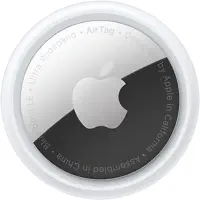
Apple AirTag 2
- $29, no subscription, 1-year battery
- Find My network covers 2 billion+ Apple devices
- Fits in a glove box, center console, or under a seat
- Zero maintenance beyond annual battery swap
- No GPS, no driving behavior data, no speed alerts
- Anti-stalking alerts notify your teen after 8-24 hours
- Location updates depend on nearby iPhones
Privacy vs Safety: Having the Right Conversation
Here is the part nobody wants to talk about. You can buy the best GPS tracker on the market, and if you install it the wrong way, it will damage your relationship with your teenager more than it protects them.
Why Tracking Without Trust Backfires
Teens who discover a hidden tracker on their car do not think "my parents care about me." They think "my parents do not trust me." That reaction is hard to undo. Research from the CDC on teen driver risk factors confirms that parental involvement is one of the strongest protective factors for teen driver safety, but involvement works best when it is transparent.
An OBD-II tracker like Bouncie or MOTOsafety is visible. Your teen knows it is there. That visibility reframes the tracker as an accountability tool rather than a surveillance device. The Progressive teen driving survey found that teens who knew they were being monitored drove more carefully than those who did not.
Setting Boundaries Together
The approach that worked best in our tester families: involve your teen in the decision. Let them help choose the tracker. Set speed thresholds together. Agree on geofence zones and curfew times. A teen who helps define the rules is far more likely to follow them than one who gets a tracker imposed without explanation.
Frame the tracker as a coaching tool, not a punishment. MOTOsafety's weekly report card works well here because it gives your teen a score to improve. "You got a B+ this week, let's see if you can hit an A" lands differently than "I saw you went 72 in a 55 zone."
Consider a graduated plan. Start with full monitoring in the first six months of driving. As your teen builds a track record of safe behavior, dial back the alerts. Fewer geofences. Higher speed thresholds. The goal is not permanent surveillance. It is building enough safe habits that the tracker becomes unnecessary.
When Covert Tracking Makes Sense
There are situations where discreet monitoring is justified. If you suspect your teen is engaging in dangerous behavior like street racing, driving under the influence, or consistently lying about their whereabouts, a hidden magnetic tracker like the LandAirSea 54 can provide the evidence you need to intervene.
This should be a temporary measure with a specific goal, not open-ended surveillance. Legally, parents generally have the right to track a minor's vehicle if they own the car. But having the legal right to do something and having it be the right thing to do are not the same. Use covert tracking to confirm a specific concern, then sit down and have the conversation.
3-Year Total Cost Comparison
Do not look at the device price on the box and think you know what a GPS tracker costs. Subscription fees over three years dwarf the upfront investment for every tracker except the AirTag.
| Tracker | Device | 3-Year Subscription | Total |
|---|---|---|---|
| Vyncs Premium | Included | $330 (3 x $110/yr) | ~$330 |
| Bouncie | $90 | $288 | ~$378 |
| LandAirSea 54 | $30 | $540 | ~$570 |
| Family1st | $30 | $612-792 | ~$642-822 |
| SpaceHawk | $50 | $720 | ~$770 |
| MOTOsafety | $25 | $900 | ~$925 |
| AirTag 2 (backup) | $29 | $0 + ~$6 batteries | ~$35 |
Vyncs costs the least among dedicated trackers on a 3-year basis, but Bouncie offers more features per dollar with faster updates and tamper alerts. MOTOsafety is the most expensive option, but its driving course and report card add value that no other tracker matches. For more no-subscription options, see our car GPS tracker no monthly fees guide.
Insurance Discounts for Teen Drivers
If you have not added your teen to your auto insurance yet, brace yourself. The average annual increase is $2,000 to $3,000 depending on your state. A GPS tracker can help claw some of that money back through usage-based insurance programs.
Usage-Based Insurance Programs
Progressive Snapshot, State Farm Drive Safe & Save, and Allstate Drivewise all offer 5-40% discounts based on driving data. These programs monitor speed, braking, mileage, and time of day. Some accept data from third-party OBD-II trackers like Bouncie and Vyncs in addition to their own devices.
The discount potential is significant. A teen driver paying $3,000 per year could save $150 to $1,200 annually with a usage-based discount. That more than covers the cost of any GPS tracker in this guide.
Stacking Discounts
Many insurers offer a good student discount of 5-25% that stacks with usage-based savings. If your teen maintains a B average and drives safely with GPS data to prove it, the combined discounts can cut insurance costs by 20-50%. Call your insurer before buying a tracker to confirm which devices qualify and which discounts you can combine.
Teen Driving Statistics: Why Monitoring Matters
NHTSA young driver safety data shows that drivers aged 16 to 19 are involved in a disproportionate number of fatal crashes relative to their share of the driving population. In 2023, 2,611 people were killed in crashes involving teen drivers. IIHS teen crash statistics confirm that this age group has crash rates nearly 4 times higher than drivers 20 and older.
The risk is not evenly distributed. Crash rates are highest in the first few months after getting a license and drop steadily with experience. Nighttime driving is particularly dangerous: the fatal crash rate for teens at night is roughly 4 times the daytime rate. Curfew alerts on trackers like MOTOsafety and Bouncie directly address this risk.
Distracted driving accounts for roughly 58% of teen crashes, according to SafeWise's vehicle tracker guide. A GPS tracker will not physically stop your teen from looking at their phone. But during our testing, the teens who knew about the tracker consistently drove more carefully than during an unmonitored baseline week. Knowing that hard braking and speeding events are being logged creates a mental speed bump before bad decisions. For younger children, our best GPS tracker for kids guide covers wearable options.
Choose Bouncie if...
- You want the best value for real-time teen driving alerts
- Tamper alerts matter (teen cannot secretly unplug it)
- You prefer no-contract monthly billing at $8/mo
- Your teen already has some driving experience
Choose MOTOsafety if...
- Your teen just got their license and needs coaching
- You want a weekly driving report card to review together
- Curfew alerts are a priority for your family
- The built-in driving course justifies the higher cost
Bottom Line
For most families, Bouncie is the best GPS tracker for teen drivers. It delivers 15-second updates, speed and braking alerts, geofencing, and tamper notifications for $8 per month with no contract. The 3-year cost of $378 is the best balance of features and price.
If your teen just passed their road test, MOTOsafety is worth the premium. The built-in driving course and weekly report card give brand-new drivers structure and accountability that no other tracker provides. Yes, it costs $925 over three years. But its education tools can help build safe habits during the most dangerous period of your teen's driving career.
If cost is your biggest constraint, Vyncs Premium at $330 for three years gets you driver scoring and trip history with no monthly fee to manage. And regardless of which tracker you choose, have an open conversation with your teen about why it is there. A GPS tracker works best as a coaching tool your teen knows about, not a secret surveillance system they resent.
FAQ
Can my teen disable or unplug an OBD-II GPS tracker?
Yes, any OBD-II tracker can be unplugged from the port. Bouncie sends a tamper alert the moment the device is disconnected, so you will know immediately. MOTOsafety and Vyncs also log disconnect events. If this is a concern, have a conversation with your teen about the tracker before installing it. Teens who understand the purpose are less likely to tamper with it.
Do GPS trackers for teen drivers require a monthly subscription?
Most do. Bouncie charges $8 per month, MOTOsafety charges $25 per month, and magnetic trackers like LandAirSea 54 charge $15 per month. Vyncs Premium avoids monthly billing by charging roughly $110 per year. The only tracker with no subscription at all is the AirTag 2, but it is a Bluetooth tracker with no driving behavior data.
Is it legal to put a GPS tracker on your teenager's car?
In the United States, parents generally have the legal right to place a GPS tracker on a vehicle they own and their minor child drives. Laws vary by state, so check your local regulations. If the vehicle is registered in your teen's name or your teen is 18 or older, the legal situation may be different. When in doubt, consult your state's motor vehicle or privacy laws.
What is the best GPS tracker for a new teen driver?
MOTOsafety is the best option for a brand-new teen driver. It is the only GPS tracker with a built-in teen driving education course and a weekly A-through-F report card. The course walks new drivers through safe habits, and the weekly scores give families a structured way to discuss driving performance. Bouncie is a better pick for teens with some driving experience who need monitoring without the educational component.
Can a GPS tracker lower my teen's car insurance?
Yes. Usage-based insurance programs like Progressive Snapshot, State Farm Drive Safe & Save, and Allstate Drivewise offer 5-40% discounts based on driving data. Some programs accept data from third-party OBD-II trackers. Combined with a good student discount of 5-25%, the total savings can offset the cost of the GPS tracker and then some. Contact your insurer to confirm which devices and programs qualify.
Does an AirTag work as a teen driver tracker?
An AirTag works as a basic location check, but it is not a teen driver tracker. It has no GPS, no cellular modem, and provides no speed alerts, driving behavior data, or geofencing. It relies on nearby iPhones to relay its Bluetooth signal. Apple's anti-stalking feature also notifies your teen's iPhone that an unknown AirTag is traveling with them. Use an AirTag as a $29 backup alongside a dedicated GPS tracker, not as your primary monitoring tool.
How do driving behavior scores work on GPS trackers?
OBD-II trackers like Bouncie and Vyncs read data from your car's onboard computer. They measure speed relative to speed limits, hard braking force, rapid acceleration events, and cornering intensity. Vyncs assigns a 0-100 Driver Score that updates after each trip. MOTOsafety uses an A-through-F grading system with weekly report cards. Magnetic trackers like LandAirSea 54 and SpaceHawk can only track speed and location because they are not connected to the vehicle's computer.