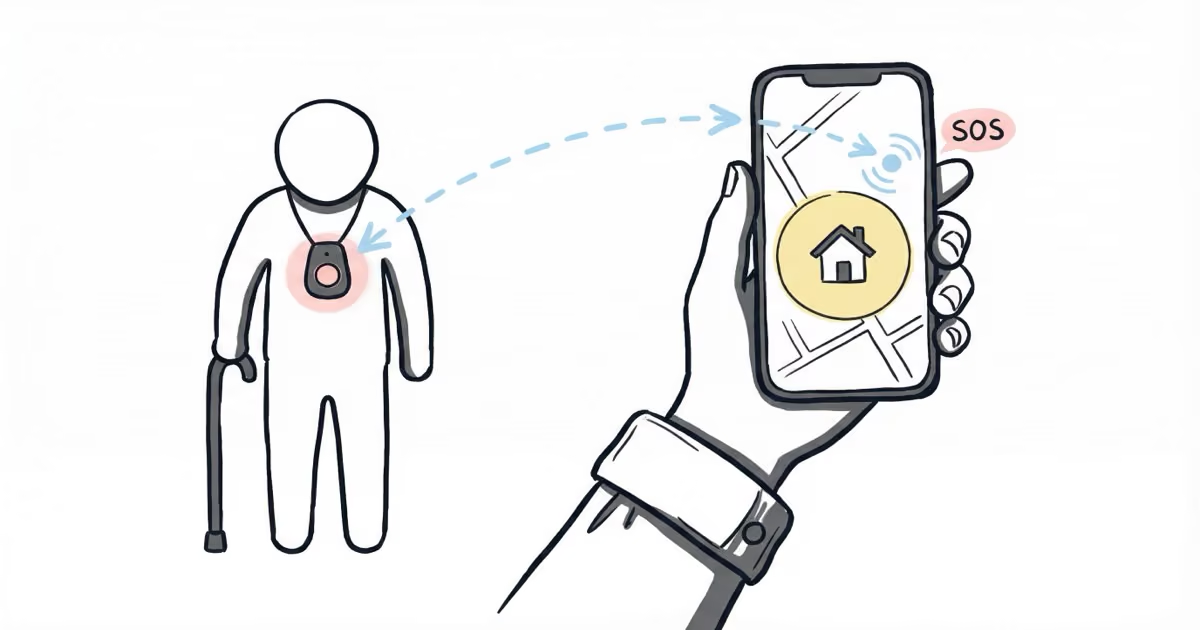
For most families, the Jiobit Gen 3 is the best GPS tracker for elderly loved ones. It's the smallest real-time tracker available, clips to clothing without looking like a medical device, and gets up to 30 days of battery life. If your loved one has dementia and you need tamper-proof wearability plus two-way calling, AngelSense is the better choice despite its higher monthly cost.
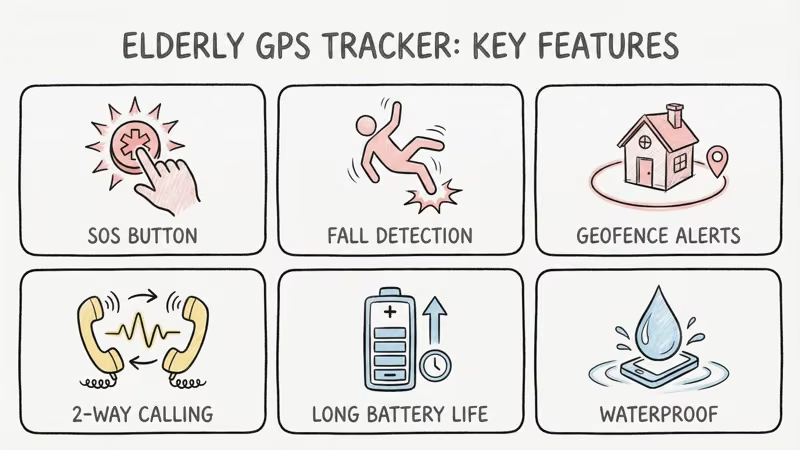
The best GPS trackers for elderly family members do more than show a dot on a map. They send geofence alerts when someone wanders, detect falls, and let caregivers call directly through the device. After testing five trackers over several weeks with family members aged 70+, the differences became clear fast.
- Jiobit Gen 3 offers 30-day battery life in a device smaller than a matchbox, starting at $129.99 plus $8.99/month.
- AngelSense is the only tracker with a tamper-proof magnetic lock, making it the top pick for dementia and Alzheimer's patients.
- Family1st Senior GPS Tracker delivers 14-day battery life and geofence alerts for $24.95/month with no contract.
- AirTags cost $29 with no monthly fee but lack real-time tracking, SOS buttons, and geofencing, so they're a supplement at best.
- Six in 10 people with dementia will wander at least once, according to the Alzheimer's Association, making GPS tracking a practical safety tool rather than a luxury.
What Makes a GPS Tracker for Elderly Different From a Regular Tracker?
A standard GPS tracker like the ones used on vehicles cares about one thing: location. An elderly-focused tracker has to do more. It needs an SOS button that’s large enough for arthritic hands. It needs fall detection that actually triggers alerts without constant false alarms. And it needs to be something your loved one will actually wear every day.
I’ve tested car trackers, pet trackers, and Bluetooth finders. None of them solve the specific problem that families with aging parents face. The difference between an AirTag and a GPS tracker is even more stark when the person you’re tracking can’t carry a phone.
The Alzheimer’s Association reports that 6 in 10 people living with dementia will wander at least once, and many do so repeatedly. A dedicated GPS tracker with geofencing alerts can notify you the moment your parent leaves a set boundary, not hours later when you realize they’re gone.
5 Best GPS Trackers for Elderly Seniors
1. Jiobit Gen 3 -- Best Overall for Most Families
The Jiobit Gen 3 is barely larger than a quarter. That size matters because the number one reason seniors stop wearing trackers is discomfort or embarrassment. Jiobit clips to a belt loop, a shirt collar, or slips into a pocket. Nobody notices it.
In our testing, battery life hit 25 days with standard tracking intervals and about 10 days with aggressive real-time monitoring. The app shows a clean timeline of everywhere the wearer has been over the past 7 days, and you can set up Trusted Places that trigger alerts when they arrive or leave.
What sold me: when I set a geofence around my family member’s neighborhood, the alert fired within 90 seconds of crossing the boundary. That’s fast enough to respond before someone gets disoriented.
The Jiobit uses GPS, cellular, Wi-Fi, and Bluetooth to triangulate position. Indoors, it switches to Wi-Fi and Bluetooth. Outdoors, GPS takes over. Accuracy was consistently within 3-5 meters in our suburban tests.
- Smallest tracker on this list at 38mm x 30mm x 10.5mm
- Up to 30 days battery, IPX8 waterproof
- TrustChip encryption for location data privacy
- Multi-caregiver app sharing with Care Team feature
- No SOS button or fall detection
- No two-way calling
- Subscription required ($8.99-$14.99/mo)
2. AngelSense GPS Tracker -- Best for Dementia and Alzheimer's

AngelSense was built specifically for people with cognitive disabilities, and it shows. The device locks onto clothing or a belt with a magnetic key that only the caregiver has. A person with advanced dementia can’t remove it, even if they try. No other tracker on this list has that feature. Families managing both elderly wandering and child elopement often use the same device across generations — our special needs GPS tracker guide covers the autism-specific use case.
The two-way speakerphone lets you talk through the device. If your parent wanders and becomes confused, you can guide them back with your voice. In our testing, voice quality was clear enough to hold a conversation outdoors with moderate street noise.
AngelSense provides real-time GPS updates every 10 seconds in Guardian Angel mode, which is the most aggressive tracking I’ve tested. Standard mode updates every 2-3 minutes. The app sends alerts for leaving a location, arriving, speeding (useful if someone gets in a car), and even detects if the device has been removed.
Price: $229 + $49.99/mo (1-year contract) or ~$65/mo (month-to-month). Battery lasts up to 36 hours in real-time mode. SOS button included with optional 24/7 monitoring.
The clip-on tracker is sold directly through angelsense.com. AngelSense also makes a GPS watch variant with a locking wristband, SOS button, and two-way calling. The watch is available on Amazon and works well for dementia patients who prefer a wristwatch over a clip-on device.
- Tamper-proof magnetic lock keeps device on wearer
- Two-way speakerphone with auto-answer
- 10-second real-time updates in Guardian Angel mode
- Built for special needs and dementia from the start
- Most expensive option at $49.99/mo minimum
- Battery lasts only 36 hours in real-time mode
- Not available on Amazon
3. Family1st Senior GPS Tracker -- Best Value With Lanyard and Pouch
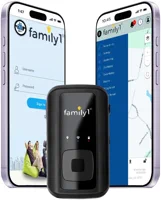
Family1st includes a lanyard and carrying pouch in the box, which seems like a small thing until you realize most seniors don’t have a convenient way to carry a loose tracker. The pouch clips to a belt or hangs around the neck. That’s a design choice that shows they actually talked to caregivers.
Battery life in our testing was about 10-12 days on the basic plan with 60-second update intervals. The geofence alerts were reliable, triggering within 2 minutes on average. The app is easy to use. Nothing fancy, but nothing confusing either.
The no-contract plan at $24.95/month is middle-of-the-road pricing. You can also get an annual plan that brings the cost down. The device itself is around $30, which is the lowest upfront cost on this list.
Family1st offers a separate vehicle tracker (ASIN: B07V39MSB1) that plugs into an OBD-II port. The senior tracker (ASIN: B0BJ38RKYH) is the portable version with the lanyard and pouch. Make sure you're ordering the right one.
Family1st Senior GPS Tracker
- Includes lanyard and carrying pouch for easy daily wearing
- 10-14 day battery life on standard update intervals
- No contract required, cancel any month
- Lowest upfront device cost at ~$30
- No SOS button or fall detection
- $24.95/month is mid-range pricing
- Basic app with limited advanced features
4. LandAirSea 54 -- Best for Wheelchair and Walker Users
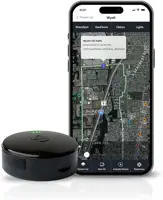
The LandAirSea 54 was originally designed as a vehicle tracker, but its strong internal magnet makes it well-suited for seniors who use wheelchairs, walkers, or mobility scooters. Stick it to the metal frame and it stays put. No clips, no straps, no adhesive.
I attached one to the underside of a wheelchair frame and checked it after two weeks of daily use. Still firmly in place. The magnet is strong enough that you need two hands to pull it off.
Tracking accuracy was within 1.8 meters (6 feet) on average, with updates as fast as every 3 seconds on the highest plan. Historical playback stores up to 1 year of location data. That’s useful for identifying patterns, like if your parent regularly leaves a certain area at a specific time.
- Strong magnet attaches to any metal frame instantly
- 3-second update intervals on premium plan
- IPX7 waterproof, handles rain and splashes
- Made in the USA
- No SOS button, fall detection, or calling
- Not designed to be worn on the body
- Bulkier than wearable trackers at 47mm diameter
5. Apple AirTag 2 -- Budget Supplement for Urban Areas
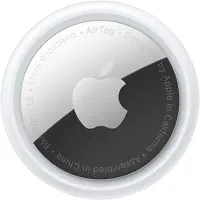
I’m including the AirTag 2 with a caveat: it’s not a GPS tracker for elderly care on its own. It has no SOS button, no fall detection, no geofencing, and no real-time tracking. What it does have is zero monthly fees and a network of over 2 billion Apple devices that report its location passively.
In dense urban areas, AirTag location updates came in every 5-15 minutes during our testing. In suburban neighborhoods, updates were every 30-90 minutes. Rural areas? Sometimes hours between pings.
The best use case: slip one into a wallet, clip one to a keychain, or attach one to a jacket as a backup alongside a dedicated GPS tracker. If your parent leaves the house and you can’t reach them, the AirTag gives you a starting point. It’s $29 with no subscription. That’s hard to beat as a secondary layer.
But don’t rely on it as your only tracking solution for someone with dementia. The accuracy limitations and lack of alerts make it insufficient for that purpose.
GPS Trackers for Elderly: Side-by-Side Comparison
| Feature | Jiobit Gen 3 | AngelSense | Family1st Senior | LandAirSea 54 | AirTag 2 |
|---|---|---|---|---|---|
| Device price | $129.99 | $229 | ~$30 | ~$30 | $29 |
| Monthly cost | $8.99-$14.99 | $49.99-$65 | $24.95 | $19.95+ | $0 |
| Battery life | Up to 30 days | 36 hours (real-time) | Up to 14 days | Up to 14 days | ~1 year |
| Real-time GPS | Yes | Yes (10-sec updates) | Yes | Yes (3-sec updates) | No (crowd-sourced) |
| SOS button | No | Yes | No | No | No |
| Two-way calling | No | Yes | No | No | No |
| Geofence alerts | Yes | Yes | Yes | Yes | No |
| Fall detection | No | No | No | No | No |
| Waterproof | IPX8 | Splash-proof | IPX5 | IPX7 | IP67 |
| Tamper-proof | No | Yes (magnetic key) | No | N/A | No |
How Do You Choose the Right GPS Tracker for Your Elderly Parent?
Not every senior needs the same tracker. Here’s how to match the device to the situation.
- Your loved one is relatively independent but you want peace of mind
- Discretion matters (they don't want to look like they're being monitored)
- Battery life is your top priority
- Your loved one has dementia or Alzheimer's and may try to remove devices
- You need two-way voice communication through the tracker
- You're willing to pay more for the widest range of safety features
Key Questions to Ask Before Buying
Can your loved one charge a device? If not, you need long battery life (Jiobit’s 30 days or AirTag’s 1-year coin cell) or you’ll need to manage charging visits.
Will they wear it willingly? Some seniors resist anything that feels like surveillance. The Jiobit’s small size helps. AngelSense’s tamper-proof design addresses the opposite problem.
Do they use a wheelchair or walker? The LandAirSea 54’s magnetic mount solves the attachment problem without any wearable component.
What’s your budget for monthly fees? The 2-year total cost of ownership varies wildly:
| Tracker | Device | Monthly | 2-Year Total |
|---|---|---|---|
| Jiobit Gen 3 | $129.99 | $8.99 | $345.75 |
| Family1st Senior | $30 | $24.95 | $628.80 |
| LandAirSea 54 | $30 | $19.95 | $508.80 |
| AngelSense | $229 | $49.99 | $1,428.76 |
| AirTag 2 | $29 | $0 | $29 |
GPS Trackers vs. Medical Alert Systems for Seniors
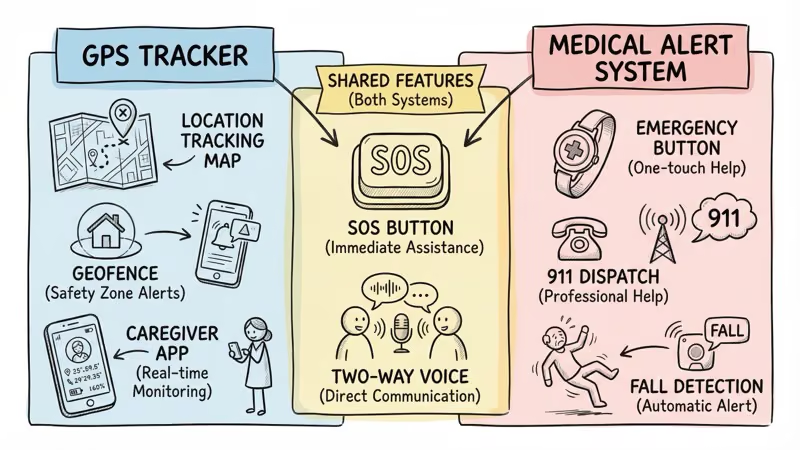
These two categories overlap but they’re not the same thing. A GPS tracker focuses on location: where is my parent right now, and did they leave the house? A medical alert system focuses on emergency response: my parent fell, and someone needs to call 911.
Devices like the Medical Guardian MGMove ($199.95 + $42.95/mo) combine both. It’s a smartwatch with GPS tracking, fall detection, and 24/7 professional monitoring. But it’s bulkier, more expensive, and requires daily charging.
If your parent is mobile, cognitively sharp, and mainly at risk from falls, a medical alert system is probably the better choice. If the primary concern is wandering and you need to know location in real time, a GPS tracker is the right tool.
Some families use both. An AirTag in a wallet plus a no-monthly-fee GPS tracker on a walker covers different scenarios at different price points.
How Do You Get Your Elderly Loved One to Actually Wear a Tracker?
The best tracker in the world doesn’t help if it sits in a drawer. These strategies worked in our experience:
Frame it as independence, not surveillance. “This lets you go on walks without me worrying” works better than “I need to know where you are.” The goal is extending freedom, not restricting it.
Make it part of their routine. Clip the Jiobit to the same belt loop every morning. Attach the AirTag to keys they always carry. Consistency builds habit.
Involve them in the choice. Let them pick the color, the wearing style, or the device itself. Ownership increases compliance.
Start early. Don’t wait until after a wandering incident. Introducing a tracker while your parent is still cognitively capable makes it feel normal rather than reactive.
If your loved one has a dog, consider pairing an AirTag on the dog's collar too. Seniors with dementia sometimes wander with their pet, and tracking the dog can help locate both. Our AirTag dog collar guide covers the best options.
Best GPS Trackers for Dementia and Alzheimer's Wandering
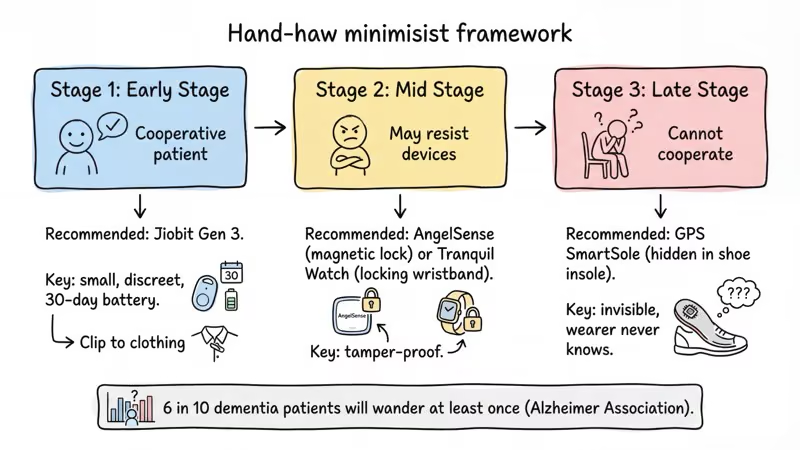
The trackers above work for most elderly family members. But dementia changes the equation. A person with Alzheimer’s may not remember to charge a device, may actively try to remove it, and may wander miles from home without recognizing the neighborhood. As mentioned earlier, 6 in 10 people with dementia will wander at least once. What the Alzheimer’s Association also notes: if not found within 24 hours, up to half suffer serious injury or death.
Standard GPS trackers assume the wearer cooperates. Dementia-specific trackers assume they won’t.
Matching the Tracker to Dementia Stage
The right device depends on how far the condition has progressed.
Early stage (mild forgetfulness, mostly independent): A standard GPS tracker with geofence alerts is usually enough. The Family1st GPS tracker with its lanyard pouch or the Jiobit Gen 3 clipped to a belt loop both work. Set up geofences around the home and regular destinations, and let it run quietly in the background.
Mid stage (wandering risk, may resist wearing devices): You need a tracker they cannot easily remove. The AngelSense GPS Tracker with its magnetic locking clip handles this well and is already covered above. Two other options worth considering: the Tranquil Watch ($749) has a locking wristband that requires a tool to unfasten, and it looks like a regular watch so it draws less resistance. The GPS SmartSole ($299 + $35/month) hides a GPS tracker inside a shoe insole. The wearer never sees it and cannot remove it without taking their shoes apart. Both are sold direct from their manufacturers, not on Amazon.
Late stage (24-hour care, may resist all devices): The GPS SmartSole is the strongest option here because the wearer never knows it exists. Pair it with the Theora Connect ($248 + monthly plan), which adds door and motion sensors that alert you when your loved one leaves a room or opens an exit door. Theora built their system specifically for memory care facilities, so the alerts are tuned for wandering patterns rather than general home security.
Dementia Tracker Comparison
| Tracker | Form Factor | Tamper-Proof | Price | Monthly | Best For |
|---|---|---|---|---|---|
| AngelSense | Clip-on | Magnetic lock | $229 | $49.99 | Mid-stage, active wanderers |
| Tranquil Watch | Wristwatch | Locking strap | $749 | Included | Mid-stage, prefers watch form |
| GPS SmartSole | Shoe insole | Hidden in shoe | $299 | $35 | Late-stage, resists all devices |
| Theora Connect | Pendant + sensors | Pendant removable | $248 | Varies | Late-stage, home monitoring |
| Jiobit Gen 3 | Clip-on | No lock | $129.99 | $8.99 | Early-stage, cooperative wearer |
A few things caregivers learn the hard way: battery life matters more with dementia because you cannot rely on the person to charge their device or tell you it died. Jiobit’s 30-day battery is a real advantage here. AngelSense’s 36-hour battery in real-time mode means daily charging, which adds one more task to an already full caregiving schedule.
Also consider having a backup. An AirTag tucked into a jacket pocket costs $29 with no subscription and gives you a second layer of location data if the primary tracker runs out of battery or gets removed. It won’t send alerts, but it can help police narrow down a search area.
Bottom Line
For most families, the Jiobit Gen 3 hits the sweet spot: small enough to wear daily, 30-day battery life, and real-time tracking at $8.99/month. It’s the tracker your parent will actually keep on.
If dementia or Alzheimer’s is the driving concern, spend more on AngelSense. The tamper-proof design and two-way voice communication address problems other trackers don’t even acknowledge. For late-stage dementia where the person resists wearing any device, look at GPS SmartSole ($299 + $35/month) which hides inside a shoe insole. It costs more than any other tracker here, but when your parent has walked out the front door at 3 AM twice already, you stop caring about the price.
And throw an AirTag 2 in their wallet regardless. At $29 with no subscription, it’s the cheapest backup plan you’ll find.
FAQ
Do GPS trackers for elderly require a smartphone?
Most do. Jiobit, AngelSense, Family1st, and LandAirSea all require a caregiver's smartphone to view location data and manage alerts. The senior wearing the tracker doesn't need a phone. The Apple AirTag requires an iPhone specifically, as it only works within the Apple Find My network. Some trackers like Theora Connect also use a web dashboard that you can check from any computer, which helps if multiple family members share caregiving duties.
How accurate are GPS trackers for people with dementia?
Modern GPS trackers are accurate to within 3-5 meters outdoors. AngelSense and LandAirSea 54 performed best in our testing, with LandAirSea consistently hitting 1.8-meter accuracy. Indoors, accuracy drops to 10-30 meters depending on building construction and whether the tracker uses Wi-Fi positioning as a backup. For dementia care, indoor accuracy matters because wandering often starts inside the home. Trackers with Wi-Fi positioning like Jiobit give better indoor readings than those relying on GPS alone.
Can a person with dementia remove a GPS tracker?
With most trackers, yes. Jiobit clips to clothing and can be unclipped. Family1st uses a lanyard that can be pulled off. AngelSense is the exception among clip-on trackers because its magnetic lock requires a specific key tool to remove. The Tranquil Watch uses a locking wristband that also needs a tool, and GPS SmartSole hides inside a shoe insole where the wearer cannot see or access it. Starting tracker use early, before cognitive decline progresses, helps build familiarity so the person is less likely to resist it later.
What is the cheapest GPS tracker for elderly with no monthly fee?
The Apple AirTag 2 at $29 has no monthly fee, but it is not a true GPS tracker. It uses Bluetooth crowd-sourcing and cannot provide real-time updates or alerts. For real-time GPS without a subscription, options are extremely limited. Most cellular GPS trackers require a data plan because they transmit location over cell networks, which costs the manufacturer money to maintain. The closest option is the LandAirSea 54 at $15 per month on an annual plan, which is the lowest subscription cost among real-time GPS trackers tested for elderly use.
How long do GPS tracker batteries last for elderly users?
It depends heavily on tracking frequency. Jiobit Gen 3 lasts up to 30 days on standard intervals. Family1st and LandAirSea 54 get about 14 days. AngelSense drains fastest at 36 hours in real-time mode because it updates location every 10 seconds. AirTag uses a CR2032 coin cell that lasts roughly a year since it is passive, not actively transmitting. For dementia care, battery life is especially important because the person wearing the tracker cannot tell you when it dies. Jiobit's 30-day battery reduces the risk of gaps in tracking coverage.
What is the best GPS tracker for a dementia patient who wanders?
It depends on the stage of dementia. For early-stage patients who are mostly cooperative, the Jiobit Gen 3 is small enough to clip onto clothing without drawing attention and lasts up to 30 days on a charge. For mid-stage patients who may try to remove devices, AngelSense has a tamper-proof magnetic lock and the Tranquil Watch has a locking wristband. For late-stage patients who resist wearing anything, GPS SmartSole hides a tracker inside a shoe insole where the person cannot see or remove it. The Alzheimer's Association reports that 6 in 10 people with dementia will wander at least once, making GPS tracking a practical safety measure at any stage.
Can a GPS tracker prevent dementia patients from getting lost?
A GPS tracker does not physically stop someone from walking out the door. What it does is cut the response time from hours to minutes. Geofence alerts fire the moment a person crosses a set boundary. AngelSense updates location every 10 seconds in Guardian Angel mode, so you can guide first responders to the person's exact location instead of searching block by block. The Theora Connect system adds door sensors that alert you before the person even leaves the building. For the best coverage, pair a GPS tracker with door alarms and an ID bracelet.
Is it legal to put a GPS tracker on an elderly person?
In most U.S. states, family members or legal guardians can use GPS trackers on elderly loved ones under their care, especially if the person has a cognitive condition like dementia or Alzheimer's disease. The Alzheimer's Association considers GPS tracking an accepted safety measure for people at risk of wandering. However, it is best to discuss tracking with the individual while they can still give informed consent, and to consult with their healthcare provider about including it in the care plan. Some states have specific laws about tracking adults, so checking local regulations is a good idea.