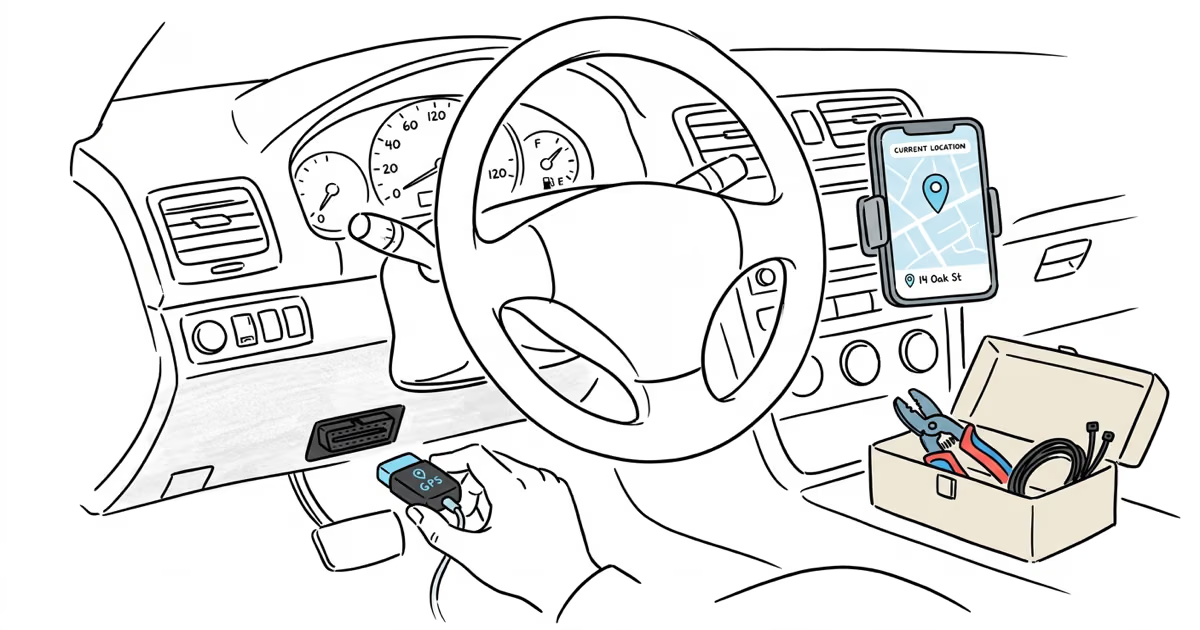
The easiest way to install a GPS tracker is with an OBD plug-in device like the Bouncie that takes under 30 seconds. Magnetic trackers attach to any metal surface and take about a minute. Hardwired trackers require connecting to a constant 12V power source and take 30 to 60 minutes.
Installing a GPS tracker in a car comes down to four methods, and the right one depends on how permanent you need the setup to be. We’ve installed all four types across multiple vehicles and timed each one from unboxing to first location ping. Here’s what actually works, what each method costs, and which trackers to use.
- OBD plug-in trackers install in under 30 seconds — push the device into the port below the steering wheel
- Magnetic trackers take about 60 seconds — charge, snap the magnet to metal, hide it
- Hardwired installs take 30 to 60 minutes — tap a constant 12V source with basic tools
- Metal shielding blocks GPS signal — placement determines tracking reliability
- Only track vehicles you own — unauthorized GPS tracking is illegal in most US states
Four GPS Tracker Installation Methods Compared
Each method serves a different goal. OBD trackers work best for open monitoring of a family car or fleet vehicle. Magnetic trackers are portable and move between cars.
Hardwired setups eliminate battery concerns entirely. Hidden placement matters when the tracker needs to stay invisible. The NICB reported that a vehicle is stolen every 32 seconds in the United States, which is why GPS trackers have become a standard theft-recovery tool alongside traditional alarms.
| Method | Install Time | Power Source | Skill Level | Best For |
|---|---|---|---|---|
| OBD Plug-in | 30 seconds | Vehicle OBD port | None | Teen monitoring, fleet tracking |
| Magnetic | 1 minute | Internal battery | None | Portable use, covert placement |
| Hardwired | 30-60 minutes | 12V constant power | Basic wiring | Permanent install, theft recovery |
| Hidden/Concealed | Varies | Battery or hardwired | Varies | Covert monitoring, asset protection |
Your goal narrows the choice fast. Want to monitor a teen driver’s speed? An OBD tracker like Bouncie delivers that data automatically.
Need covert placement? A magnetic tracker hidden under the frame is the standard approach. For fleet vehicles or theft recovery where the tracker must run indefinitely, hardwiring removes the battery limitation. If you’re a Turo host tracking rental cars, OBD plug-in is the most practical method since it installs in seconds between bookings.
Truck owners have extra considerations around 12V/24V compatibility and under-frame mounting. Our truck GPS tracker guide covers those specifics.
Tools and Supplies for Each Installation Method
OBD installation needs nothing beyond the tracker itself. Magnetic installation only requires the tracker and its charging cable. Hardwired installation is the only method that calls for tools: a fuse tap or add-a-fuse adapter ($5 to $10), wire strippers, a circuit tester or multimeter, zip ties for cable management, and electrical tape.
Pick up a fuse tap kit before starting a hardwire job. Under $10 at any auto parts store, and it keeps the installation reversible.
How to Install an OBD GPS Tracker
OBD installation is the fastest method. According to the OBD-II standard overview on Wikipedia, every car sold in the United States after 1996 has a standardized diagnostic port under the steering column. The tracker plugs directly into this port and draws power from the vehicle’s electrical system.
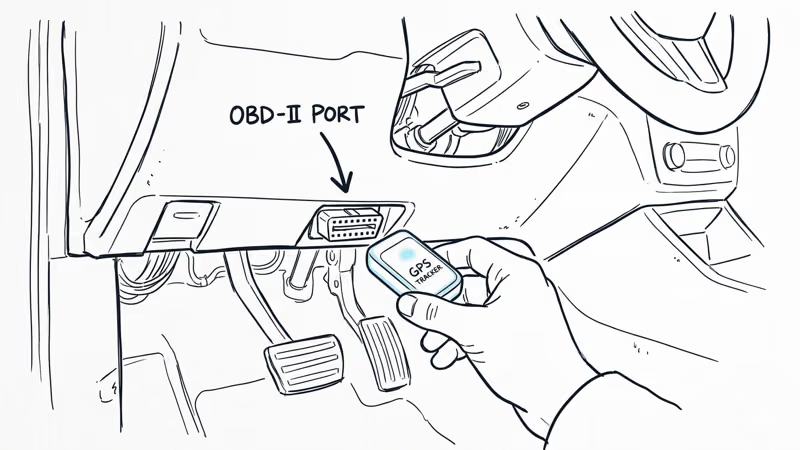
Step 1. Locate the OBD-II port. Sit in the driver’s seat and look under the steering column, near the pedals. On most cars (Honda, Toyota, Ford, Chevy), it’s within arm’s reach on the left side.
Step 2. Push the tracker into the port until it clicks. It only fits one way.
Step 3. Download the tracker’s app and create an account. Bouncie, MOTOsafety, and Vyncs each have their own app. Pair the device using the serial number printed on the tracker’s label.
Step 4. Wait for the first GPS fix. This usually takes 30 to 60 seconds. Drive a short distance to confirm the live map updates in real time.
The main limitation: anyone who knows where the OBD port is can unplug the tracker in seconds. If tamper detection matters, Bouncie sends an instant alert when the device is removed from the port.
 Top Pick
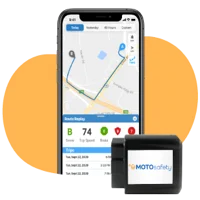
For parents monitoring a new driver, the MOTOsafety OBD tracker ($90 device, $22/month) generates weekly driving report cards. Our Bouncie vs MOTOsafety comparison covers the full trade-offs.
How to Install a Magnetic GPS Tracker
Magnetic trackers run on their own battery and attach to any metal surface on the vehicle. No port, no wiring. The trade-off is battery life: most magnetic trackers last 1 to 4 weeks depending on update frequency before they need a recharge.
Step 1. Charge the tracker fully. The LandAirSea 54 reaches full charge in about 2 hours via micro-USB.
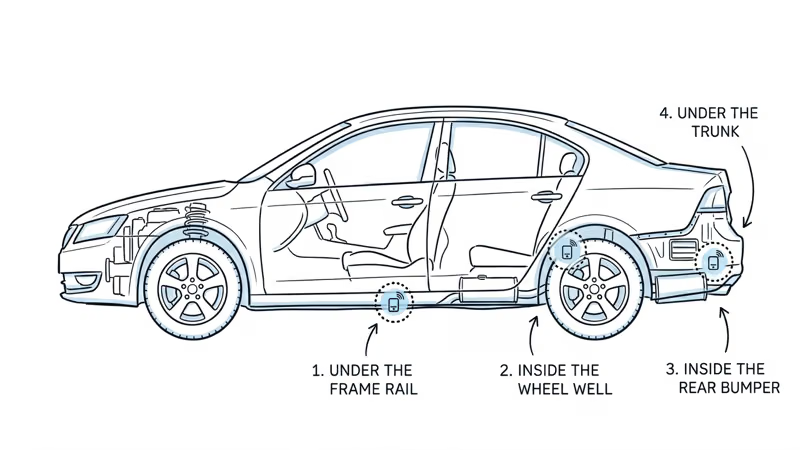
Step 2. Choose a metal surface on the underside of the car. Frame rails, the metal lip inside a rear bumper, and the underside of the trunk all work. Avoid plastic body panels since the magnet won’t grip them.
Step 3. Place the tracker with the GPS antenna side facing the sky, or at least away from dense metal. In our testing with the LandAirSea 54, mounting it on the undercarriage frame rail gave consistent GPS locks within 45 seconds of powering on. Orientation matters more than most people expect.
Step 4. Open the app and confirm the device is reporting its location. Set your geofence zones.
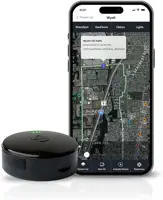
Battery management is the real ongoing cost. The LandAirSea 54 lasts about 2 weeks with standard reporting intervals, and the SpyTec GL300 lasts roughly 2.5 weeks. Both need regular retrieval and recharging.
 Top Pick
The SpyTec GL300 ($40, from $25/month) reports every 5 seconds. See our SpyTec vs Tracki comparison for details.

Can You Hardwire a GPS Tracker in a Car?
Yes, and it’s the best option when you need a tracker that never runs out of battery. Hardwiring connects the GPS device directly to the car’s 12V electrical system so it runs indefinitely. The Optimus 2.0 is one of the few consumer trackers that supports both magnetic and hardwired installation with an optional wiring kit.
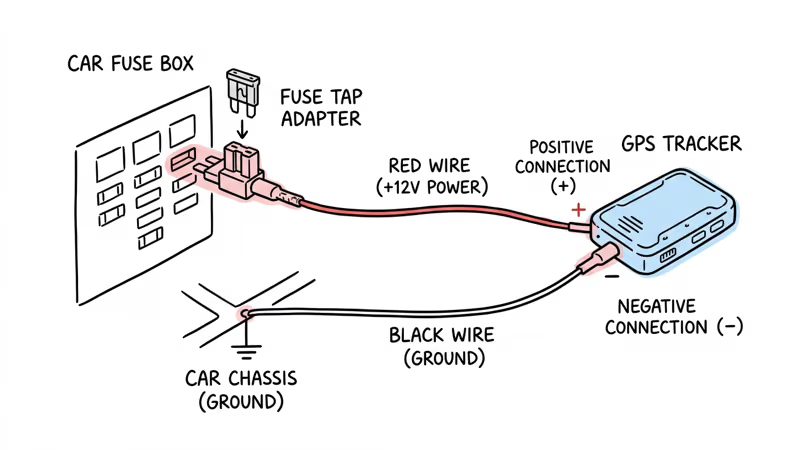
Hardwiring a GPS tracker involves connecting to your car's electrical system. If done incorrectly, it can blow a fuse or cause electrical issues. If you're not comfortable with basic automotive wiring, have a professional install it. Hardwiring may also void your vehicle's warranty on some models.
Step 1. Identify a constant 12V power source. The fuse box is the easiest access point. WikiHow’s circuit tester guide recommends testing each fuse individually to find one that stays powered when the ignition is off. Common options include the cigarette lighter fuse or an accessory fuse.
Step 2. Connect the red wire to the constant 12V source using a fuse tap. Connect the black wire to a chassis bolt for ground.
Step 3. Mount the tracker in a concealed location. Behind the dashboard, under the carpet near the fuse box, or inside a door panel all work well. Keep the GPS antenna oriented toward the windshield for the strongest satellite signal. Route the wiring along existing harnesses and secure with zip ties every 6 to 8 inches to prevent rattling.
Step 4. Test the connection by turning the car off and confirming the tracker stays powered. Drive a short route and verify location updates in the app.
In our testing, the entire hardwire process took about 40 minutes with an add-a-fuse adapter. The actual wiring took 15 minutes. The rest was finding the right fuse and routing the cables neatly. Our full Optimus 2.0 review covers the hardwire kit and long-term reliability in detail.
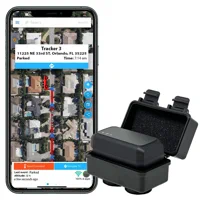 Best Value
Where Are the Best Places to Hide a GPS Tracker in a Car?
Placement comes down to balancing concealment with signal quality. A tracker buried deep inside a metal-enclosed space won’t get a reliable GPS or cellular lock.
In our tests, trackers placed inside the metal frame of a wheel well took 3 to 5 minutes to acquire a GPS fix. Those mounted on a plastic bumper interior locked on in under 60 seconds. The difference is substantial.
Here are five hiding spots, ranked by signal reliability:
1. Inside the rear bumper cavity. Most cars have a gap between the outer plastic bumper cover and the inner structure. A magnetic tracker attaches to the metal crossmember inside, and plastic doesn’t block GPS signals.
2. Under the dashboard, behind the OBD port area. For hardwired setups, the wiring runs directly from the fuse box. Tuck the tracker above the pedals and zip-tie it to existing wiring harnesses.
3. Inside the spare tire compartment. The trunk floor panel lifts to reveal the spare tire well. Place the tracker on top of the spare (metal wheel gives the magnet grip) or tape it to the inside of the compartment lid. Signal quality stays strong through the trunk floor because most trunk lids are thinner gauge metal or have composite panels that allow satellite signals to pass.
4. Frame rail underneath the vehicle. These solid metal rails run the full length of the car. A waterproof tracker like the LandAirSea 54 grips securely here and stays invisible.
5. Behind the glove box. Most glove boxes detach with two clips or screws. GPS signal passes through the windshield from this position.
For Bluetooth-only trackers like Apple AirTag (not GPS, but useful as a backup layer), our guide on hiding an AirTag in your car covers AirTag-specific spots. If you’re tracking a motorcycle instead, see our motorcycle GPS hiding spots guide.
Legal note: In the United States, you can legally track a vehicle you own. Tracking someone else’s vehicle without their knowledge is illegal in most states. The National Conference of State Legislatures states that GPS tracking regulations vary significantly by jurisdiction, and their database covers the specifics for each state. If you’re concerned about being tracked yourself, our guide on how to detect a hidden GPS tracker covers the detection process.
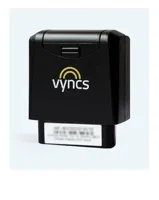
For those looking at car GPS trackers without monthly fees, keep in mind that subscription-free options like the Vyncs base plan still require annual renewal payments after the first year.
Bottom Line
For most people, an OBD plug-in tracker like the Bouncie is the right starting point. It installs in seconds, needs zero maintenance, and costs $8 per month. If you need covert placement or the ability to move the tracker between vehicles, the LandAirSea 54 with its built-in magnet and IP67 rating handles exterior mounting well. Hardwiring the Optimus 2.0 makes sense only if you need permanent, tamper-resistant tracking on a vehicle you own.
Match the method to the goal. Don’t hardwire when a plug-in tracker will do, and don’t rely on battery power when the tracker needs to run unattended for months.
FAQ
How long does it take to install a GPS tracker in a car?
OBD plug-in trackers take under 30 seconds. Magnetic trackers take about 1 minute to charge and place. Hardwired installations take 30 to 60 minutes depending on how accessible the fuse box is and how neatly you want to route the wiring.
Can a GPS tracker be detected in a car?
Yes. Electronic sweepers and RF detectors can pick up the cellular signal a GPS tracker emits. Physical inspection of the OBD port, undercarriage, and bumper cavities will reveal most consumer trackers. OBD trackers are the easiest to find because the port location is standardized.
Do OBD GPS trackers drain the car battery?
OBD trackers draw very little power, typically 10 to 30 milliamps. That's less than the car's clock. In our 3-month test, a Bouncie tracker never caused a battery drain issue, even on a car parked for 10 consecutive days. If your car battery is already weak, any connected device could push it over the edge, but a healthy battery handles it without trouble.
Where is the OBD port in my car?
On most US vehicles made after 1996, the OBD-II port is under the steering column on the driver's side, near the pedals. Some European cars (BMW, Mercedes) place it to the right of the steering column or behind a small access panel. Check your owner's manual or search your car's make and model on the SAE's OBD-II port locator.
Can you install a GPS tracker without a subscription?
No consumer GPS tracker works without some form of ongoing cellular service. The tracker needs a cellular connection to transmit location data. Some devices like Vyncs include the first year of service in the purchase price, which makes them feel subscription-free. After year one, annual renewal is required.
Is it legal to put a GPS tracker on someone's car?
It depends on ownership and jurisdiction. You can legally track a car you own in all 50 US states. Tracking a vehicle owned by someone else without their consent is illegal in most states under stalking or surveillance laws. Some states require written consent even from a spouse. Check your state's specific laws before installing a tracker on any vehicle that isn't yours.
What is the easiest GPS tracker to install in a car?
The Bouncie OBD tracker is the easiest to install. You push it into the OBD-II port under the steering wheel and you're done. No charging, no wiring, no mounting. The entire process takes less than 30 seconds from opening the box to seeing your car on the live map.