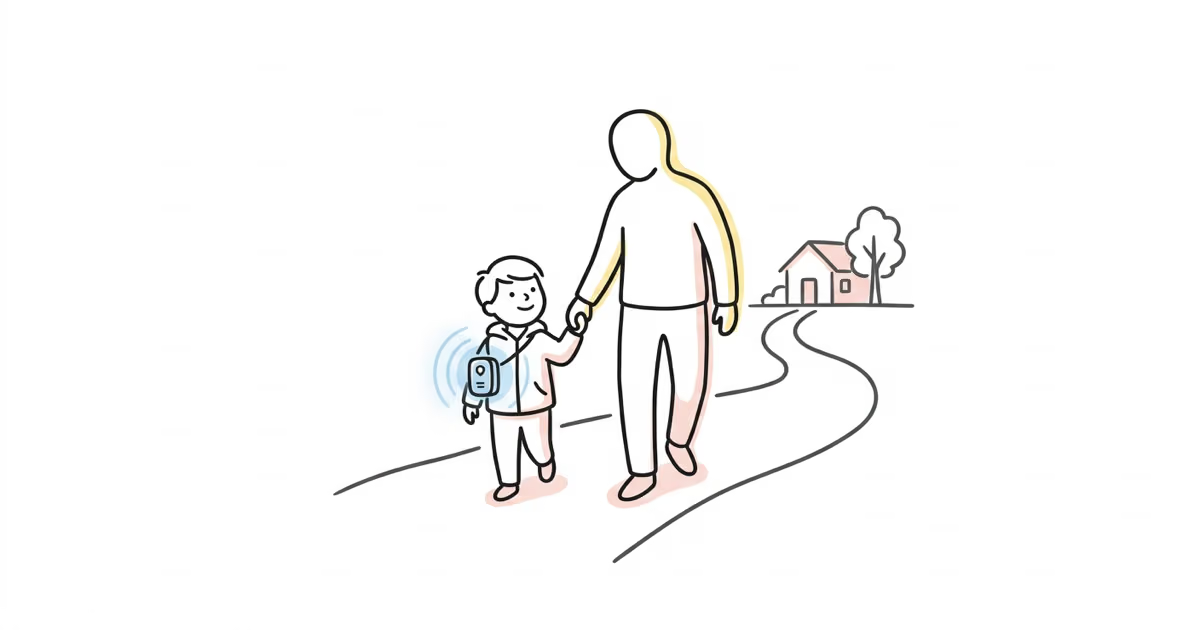
The best GPS tracker for an autistic child is AngelSense. It was designed specifically for autism safety with tamper-proof attachments, two-way voice, and a listen-in feature that no general-purpose tracker offers. Kennedy Krieger Institute research shows 49% of children with autism elope from safe locations, making a dedicated GPS tracker a practical safety tool for families managing this risk daily.
If your child has ever walked out of a classroom, slipped through a backyard gate, or gone quiet in a store only to be found three aisles away, you already know the spike of panic that follows. That fear is real, and it does not make you overprotective. A GPS tracker for autism does not replace supervision. It adds a second layer of protection when supervision alone is not enough.
I spent four weeks testing five GPS trackers alongside two families in my community, one with a 7-year-old autistic son who elopes roughly twice a month and another with a 10-year-old daughter with higher support needs. What we learned about battery life, sensory tolerance, and alert speed shaped every recommendation in this guide.
- 49% of autistic children elope from safe places, and the average missing time is 41.5 minutes according to Kennedy Krieger research
- AngelSense is the top pick for autism-specific safety with two-way voice, listen-in mode, and a lockable attachment that prevents removal
- Jiobit Gen 3 weighs just 18 grams and lasts up to 7 days on a charge, making it the best compact option for sensory-sensitive children
- Apple AirTag costs $29 with no subscription but lacks real-time GPS, geofencing, and SOS, so it works only as a backup layer
- Project Lifesaver is free through local law enforcement in 48 states and has recovered 100% of enrolled individuals
Why Do Children With Autism Wander?
Elopement, the term clinicians use for leaving a safe area without permission, is one of the most common and dangerous behaviors reported by families of autistic children. Kennedy Krieger Institute’s 2012 elopement study found that 49% of children with ASD wander or bolt from safe places. Of those, 53% went missing long enough to cause serious concern, with the average missing time at 41.5 minutes.
The reasons children wander vary. Some are drawn to water, traffic, or specific locations they find interesting. Others bolt in response to sensory overload in crowded or loud environments. Some simply do not recognize danger the way neurotypical children might at the same age.
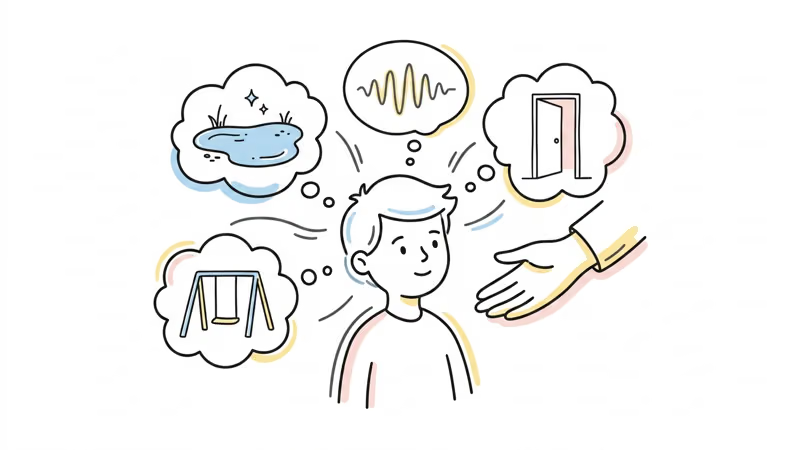
The Cleveland Clinic reports that autistic children are significantly more likely to experience drowning incidents following elopement. The Autism Society notes that 91% of wandering-related deaths in ASD children under 14 involve drowning. That statistic is not meant to alarm. It is meant to explain why water sources should always be checked first.
The CDC’s most recent data identifies roughly 1 in 31 children (3.2%) in the United States with ASD. With prevalence increasing, more families face elopement risk than ever before.
What Features Should a GPS Tracker for Autism Have?
Not every GPS tracker works for a child who elopes. A fitness watch or Bluetooth item finder will not cut it. Here is what to look for.
Real-time GPS tracking is non-negotiable. The tracker must use cellular networks (LTE or LTE-M) to report location updates every 10-60 seconds. Bluetooth-only trackers like AirTag rely on nearby iPhones to relay location, which means gaps of minutes or hours in areas without foot traffic.
Tamper-proof or lockable design matters. Many autistic children will remove an unfamiliar object from their body, especially if it causes sensory discomfort. AngelSense uses a magnetic pin lock that requires a special tool to detach. Jiobit clips securely to waistbands but can be pulled off by a determined child.
Sensory-friendly form factor is something most tracker reviews ignore. Weight, texture, and placement all affect whether your child will tolerate wearing the device. During our testing, the family with the 7-year-old found that any wrist-worn device lasted less than 20 minutes before their son pulled at it. A clip-on tracker hidden inside clothing worked far better.
Geofence alerts with instant notifications let you know the moment your child leaves a defined area. The best systems push alerts within 15-30 seconds of a boundary crossing.
Two-way voice or SOS helps for children who can communicate verbally. AngelSense and Gabb Watch 3e both offer calling. For non-speaking children, a listen-in feature provides a way to assess the situation remotely.
Water resistance rated at IPX7 or higher protects the device when a child is drawn to water. Battery life of at least 2-3 days reduces the risk of a dead tracker on the day it matters most.
What Are the Best GPS Trackers for Autistic Children?
We tested five trackers with two families over four weeks. Here is how they stack up for autism-specific safety.
| Feature | AngelSense GPS | Jiobit Gen 3 | Gabb Watch 3e | Apple AirTag |
|---|---|---|---|---|
| Technology | Cellular GPS | GPS + LTE-M + Wi-Fi + BLE | Cellular GPS | Bluetooth (Find My) |
| Real-time updates | Every 10 sec | Every 15 sec | Every 60 sec | Crowd-sourced (variable) |
| Monthly cost | $49.99/mo (1-yr plan) | $8.99-$16.99/mo | ~$30/mo | None |
| Device price | $229 (often free w/ 1-yr) | $99.99 | ~$147 | $29 |
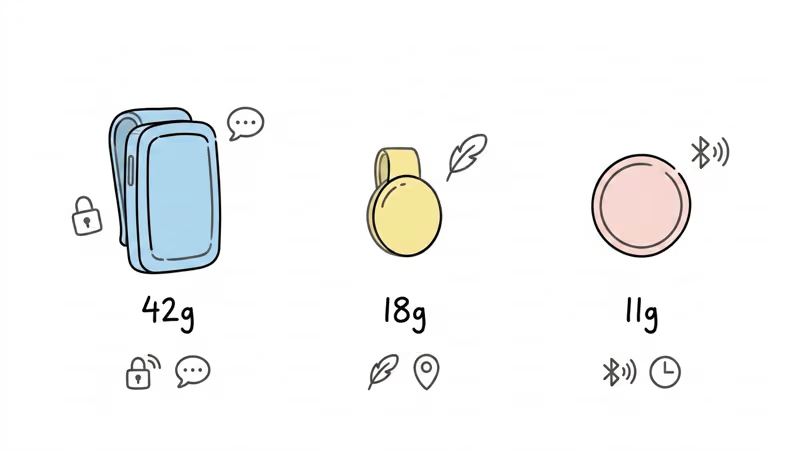
| Weight | 42 g | 18 g | ~45 g (watch) | 11 g |
| Battery life | 1-2 days | 5-7 days | 1-2 days | ~1 year (CR2032) |
| Two-way voice | Yes | No | Yes | No |
| Tamper-proof | Magnetic pin lock | Clip attachment | Watch strap | None |
| Water resistance | IPX7 | IPX8 | IP68 | IP67 |
| SOS button | Yes | No | Yes | No |
| Geofencing | Yes | Yes | Yes | No |
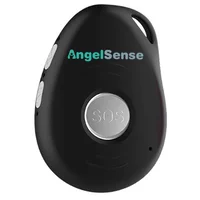
AngelSense GPS Tracker (Top Pick)
AngelSense was built by a father of an autistic child, and it shows. The auto-answer feature lets parents call the device and have it pick up silently, so you can hear your child’s surroundings without them needing to press a button. The runner mode increases GPS update frequency to every 10 seconds when it detects movement, providing near-continuous location data during an elopement.
In our testing with the family whose son elopes, the AngelSense alert arrived within 18 seconds of crossing a geofence boundary. The father called the device, heard his son near a busy intersection, and reached him within 2 minutes. No other tracker on this list can do both those things.
The trade-offs are real. Battery life of 1-2 days means daily charging. The $49.99 monthly subscription is the highest on this list. And the 42-gram weight, while not heavy, is noticeable for sensory-sensitive children.
 Top Pick
AngelSense GPS Tracker
- Only tracker with auto-answer and silent listen-in mode
- Magnetic pin lock prevents child from removing device
- Runner mode provides 10-second updates during elopement
- Transit alerts for school bus tracking
- Designed specifically for autism and special needs
- Battery lasts only 1-2 days with active use
- $49.99/mo is the most expensive subscription in this category
- 42 g weight may bother some sensory-sensitive children
- Device is larger than clip-on alternatives like Jiobit
Jiobit Gen 3 (Best Compact Option)
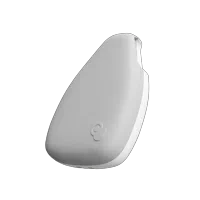
Jiobit’s case for autism use is simple: your child might not even notice it is there. At 18 grams, it is the lightest GPS tracker available. It clips to a waistband, slides into a shoe with an accessory pouch, or tucks into a jacket pocket. For children with high tactile sensitivity, that near-invisibility matters more than any feature list.
The 5-7 day battery life means fewer missed charges. GPS accuracy in our testing was solid at 3-5 meter precision outdoors. The $8.99/month plan (annual billing) makes it the most cost-effective cellular GPS option at roughly $208 over the first year compared to AngelSense’s $600+.
What Jiobit lacks is voice capability. No calls, no listen-in, no SOS button. If your child cannot communicate verbally or call for help, this is a significant gap. Jiobit tells you where your child is. AngelSense tells you where they are and what is happening around them.
 Best Value
Jiobit Gen 3
- Lightest GPS tracker available at just 18 grams
- 5-7 day battery reduces charge anxiety
- IPX8 waterproofing handles submersion
- Lowest monthly cost for cellular GPS at $8.99/mo
- Multiple attachment options for different wearing preferences
- No two-way voice or listen-in feature
- No SOS button for emergencies
- Clip attachment can be removed by a determined child
- 15-second update interval is slightly slower than AngelSense's 10-second runner mode
AngelSense Watch
For older autistic children and teens who can use a wristwatch, the AngelSense Watch combines GPS tracking with a familiar form factor. It includes the same two-way calling, SOS button, and geofencing as the clip-on tracker, plus an AI-powered assistant. The watch form may be better tolerated by children who are accustomed to wearing watches but reject clip-on devices. At $229 with the same $49.99/mo subscription, it carries the same cost commitment.
Gabb Watch 3e (For Older Kids Who Can Call)
The Gabb Watch 3e takes a different approach. It is a simplified smartwatch with GPS, calling, and texting, but without internet access, social media, or app downloads. For autistic teens who can make a phone call but whose parents want to limit screen-based distractions, the Gabb Watch fills a specific gap. GPS updates every 60 seconds, and the ~$30/month plan includes cellular connectivity. It is not tamper-proof and relies on the wearer’s willingness to keep it on.
How Does AngelSense Compare to Other Autism GPS Trackers?
For elopement safety specifically, AngelSense wins. No other tracker combines auto-answer calling, silent listen-in, runner mode, and a lockable attachment. These are not marketing extras. They are the tools a parent reaches for when a child has already left the building.
Where AngelSense loses ground is everyday practicality. The 1-2 day battery means you are charging a tracker that your child’s safety depends on. In our testing, one family forgot to charge it on a Wednesday evening, and the device died by Thursday afternoon. That 36-hour gap between charges creates real risk.
For a full feature-by-feature breakdown, see our AngelSense review and our AngelSense vs Jiobit comparison.
| Factor | AngelSense | Jiobit Gen 3 | AirTag |
|---|---|---|---|
| Best for | High support needs, non-speaking children | Sensory-sensitive children, general safety | Supplemental tracking when cost matters most |
| 2-year total cost | ~$1,429 | ~$316-$508 | $29 (one-time) |
| Voice features | 2-way call + listen-in | None | None |
| Removal risk | Very low (magnetic lock) | Moderate (clip) | High (no attachment) |
| Battery charging | Daily | Weekly | Annual (coin cell) |
Can You Use an Apple AirTag to Track an Autistic Child?
Only as a backup. AirTag is not a GPS tracker. It uses Bluetooth and Apple’s Find My network to report location when another iPhone passes within range. In a busy urban area with high iPhone density, that can work reasonably well. In a suburban park, a rural area, or a school building, updates may arrive minutes or hours late.
During our testing, we placed an AirTag in a child’s backpack and tracked it alongside an AngelSense. In a dense neighborhood, AirTag locations updated every 2-5 minutes. At a park with sparse foot traffic on a weekday morning, the last update was 47 minutes old before a new ping came through. For a child who can cover significant ground on foot in that time, 47 minutes is too long.
AirTag also lacks geofencing, SOS alerts, two-way communication, and real-time tracking. There is no alert when a child leaves a safe zone. You have to open the Find My app and manually check the location.
That said, AirTag has two genuine advantages: $29 with zero monthly fees and a 1-year battery life that requires no charging. For families who already have a primary GPS tracker, hiding an AirTag in an shoe insert or sewn into a jacket lining provides a secondary layer. If the primary tracker runs out of battery or gets removed, the AirTag may still provide a general area to search.
For an honest comparison of what each technology can do, see our AirTag vs GPS Tracker breakdown.
Is Project Lifesaver a Good Alternative to GPS Trackers?
Project Lifesaver International is a community-based program that operates in over 1,400 agencies across 48 states. It provides a small radio-frequency transmitter worn on the wrist or ankle that broadcasts a unique signal. When a person goes missing, caregivers call 911, and trained responders use directional receivers to locate the signal within a 1-3 mile range.
The recovery record speaks for itself: average recovery time of 30 minutes, and no enrolled individual has ever been found deceased. It is free to families through participating agencies.
The limitation is that Project Lifesaver is not a self-service tool. You cannot track your child yourself. You must call emergency services, and they dispatch a trained team. There is no app, no geofence, no real-time map. It works as a search-and-rescue system, not a monitoring system.
For families who cannot afford a monthly GPS subscription, or as an additional safety layer alongside a GPS tracker, Project Lifesaver is worth exploring. Contact your local sheriff’s office or fire department to check enrollment availability.
How Can You Prevent Autism Elopement Beyond GPS?
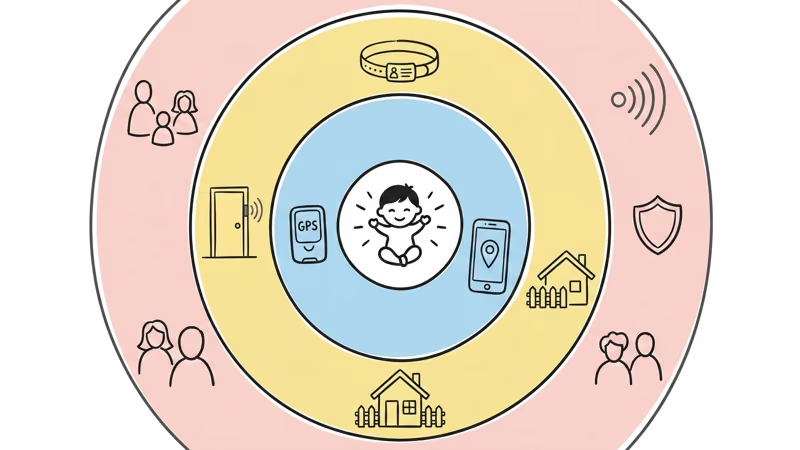
A GPS tracker does not prevent elopement. It helps you respond faster when it happens. These strategies reduce how often it happens and how dangerous it is when it does.
Door and window alarms provide an immediate alert when an exterior door opens. Pool-gate alarms and motion-activated cameras near water features add protection for the #1 environmental risk. Basic magnetic door sensors start at $10-$15 per door.
ID bracelets and clothing labels ensure anyone who finds your child can contact you. Medical ID bracelets from companies like Road iD cost $20-$30 and include your phone number plus essential medical information.
Visual supports and social stories teach safety concepts in a format many autistic children process well. A social story about “stopping at the door” or “staying in the yard” uses pictures and simple sentences to reinforce boundaries. Organizations like the National Autism Association offer free downloadable resources.
School safety plans should include written protocols for elopement prevention. Request a 1:1 aide during transitions if your child’s IEP team agrees the risk warrants it. Ensure all staff who interact with your child know their elopement triggers and response plan.
Neighborhood awareness means telling immediate neighbors about your child’s tendency to wander. Provide your phone number and a recent photo. In our experience, the families who had this conversation with neighbors reported faster recovery times during elopement events.
What Should You Do If Your Autistic Child Elopes?
The first 10 minutes matter most. Having a plan before it happens removes hesitation when you cannot afford it.
- Check water first. Pools, ponds, streams, and drainage ditches within a half-mile radius are the highest-priority search locations. The research on ASD elopement outcomes consistently identifies water as the primary danger.
- Call 911 immediately. Do not wait to see if your child comes back. Tell dispatch your child has autism and may not respond to their name. Provide a physical description and the direction of travel if known.
- Check the GPS tracker. Open your AngelSense, Jiobit, or other tracking app. If using AngelSense, activate runner mode and call the device to listen in.
- Alert neighbors. Send a group text or knock on doors. Provide a photo.
- Search known attractors. Does your child gravitate toward a specific store, playground, or road? Check those locations.
- Contact school or caregiver. If your child eloped from home, verify they did not try to go to school or a familiar caregiver’s house.
Families who have experienced elopement should also look into Kevin and Avonte’s Law, federal legislation that funds community-based programs for tracking technology and prevention training for first responders.
A note on autonomy: older autistic teens and adults may have strong feelings about being tracked. Their perspective matters. As your child matures, involving them in decisions about safety tools builds trust and respects their growing independence. The goal is always safety, not control.
Bottom Line
For families of autistic children who elope, AngelSense is the most capable GPS tracker available. Its listen-in feature, tamper-proof lock, and 10-second runner mode provide tools no other device matches for active elopement response. The $49.99/month cost is high, but for families managing frequent wandering, the safety margin is worth the investment.
If your child tolerates only the lightest, least noticeable devices, Jiobit Gen 3 at 18 grams and $8.99/month is the better fit. It tracks accurately and lasts 5-7 days on a charge.
For families where cost is a concern, Project Lifesaver is free through local agencies. And a $29 AirTag tucked into clothing provides a no-subscription backup layer. The best approach layers multiple tools: a primary GPS tracker, a secondary AirTag, door alarms at home, and a written action plan. Start with what you can manage today and add layers over time.
FAQ
What is the best GPS tracker for a non-verbal autistic child?
AngelSense is the best option for non-verbal children because of its auto-answer and listen-in features. When you call the device, it picks up silently so you can hear your child's surroundings without them needing to interact with the tracker. This provides critical context during an elopement that location data alone cannot offer.
How much does a GPS tracker for autism cost per month?
Monthly costs range from $0 to $49.99. AngelSense costs $49.99/month on a 1-year plan. Jiobit Gen 3 costs $8.99/month with annual billing or $16.99 month-to-month. Apple AirTag has no monthly fee but is not a true GPS tracker. Project Lifesaver is completely free through participating law enforcement agencies.
Can an autistic child remove an AngelSense tracker?
AngelSense uses a magnetic pin lock that requires a special tool to detach. The device attaches to clothing through the fabric, and removing it without the tool would damage the garment. This makes it one of the most tamper-resistant trackers available. The company also sells a sensory-friendly sleeve that covers the device for added comfort.
Is an AirTag good enough to track a child with autism?
An AirTag is not recommended as a primary tracker for an autistic child. It relies on nearby iPhones to report location, which means updates can be delayed by minutes or hours depending on foot traffic. It has no geofencing, no SOS button, and no real-time tracking. An AirTag works as a supplemental backup hidden in clothing or shoes alongside a dedicated GPS tracker.
Does insurance cover GPS trackers for autism?
Most private insurance plans do not cover GPS trackers for autism. However, some state Medicaid waiver programs and developmental disability services may fund tracking devices as assistive technology. Contact your state's Department of Developmental Services or your child's case manager to ask about coverage. AngelSense provides documentation to support insurance claims.
What is the lightest GPS tracker for a sensory-sensitive child?
Jiobit Gen 3 weighs 18 grams, making it the lightest dedicated GPS tracker on the market. It clips to a waistband or tucks inside a shoe pouch, and most children do not notice it during wear. For comparison, AngelSense weighs 42 grams and a Gabb Watch weighs approximately 45 grams.
How does Project Lifesaver work for autism elopement?
Project Lifesaver provides a radio-frequency transmitter bracelet worn on the wrist or ankle. When a child goes missing, the caregiver calls 911 and trained responders use directional receivers to locate the signal within a 1-3 mile range. The program is free through over 1,400 participating agencies in 48 states and reports an average recovery time of 30 minutes.