You want to put an AirTag on a swimming dog or in checked luggage. Apple’s AirTag tech specs state that AirTag carries an IP67 rating good for a “maximum depth of 1 meter up to 30 minutes” — and that the water resistance is “not a permanent condition.” IP67 doesn’t mean swim-safe for repeated submersion.
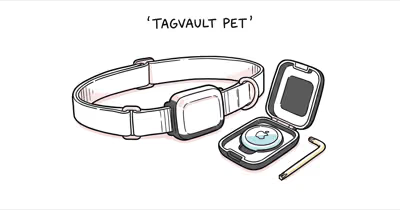
A good waterproof holder like the Elevation Lab TagVault Pet can help protect an AirTag through pool, lake, and ocean exposure, but the swim claim has clear limits set by the AirTag’s own IP67 rating. Below is what the ratings mean and the placements that fit those limits.
- The AirTag's IP67 rating sets the real limit: 1 meter for up to 30 minutes, even inside the holder's higher IP69 shell.
- Pool chlorine and saltwater don't affect IP67 rating short-term, but extended saltwater exposure can corrode the AirTag's stainless steel back over months.
- The 1-meter / 30-minute limit is real. A diving dog routinely reaches depths past 1 meter; long retrieves can exceed 30 minutes in water.
- Twist-lock closure tightness matters most. A loose closure is the main practical risk for water reaching the AirTag, so check it weekly.
- For deeper-water use (kayaking, dive bag), step up to IP68 holders. TagVault Pet's IP69 isn't rated for the multi-meter depths.
IP67 Rating: What It Means for AirTag Holders
IP67 has two numbers. The 6 means full dust protection. The 7 means 1-meter submersion for 30 minutes.
The IEC 60529 IP code standard defines the 7 as a single immersion test at 1 meter for 30 minutes, not repeated cycles. A “waterproof” marketing label doesn’t always survive day-to-day swim use, where a holder gets dunked, dried, and dunked again dozens of times.
The AirTag itself is IP67 rated by Apple. The TagVault Pet enclosure carries a higher IP69 rating against dust and high-pressure water jets. Stacking them doesn’t raise the depth or duration rating: the AirTag’s 1-meter/30-minute limit still governs the system, and failure of either layer compromises it.
A twist-lock closure doesn’t turn the AirTag into a deeper-rated device, so anything past the rating is still outside the intended envelope.
What IP67 and IP69 Ratings Mean for Swimming
Elevation Lab rates the TagVault Pet for IP69 and states that it holds for 30 minutes at 1 meter. The AirTag inside, however, is only IP67 (1 meter / 30 minutes), so the AirTag’s rating, not the holder’s, sets the real limit. For a dog that swims across a chlorinated pool, a freshwater lake, or ocean surf, that means brief, shallow swims sit well within spec while sustained or deep submersion does not.
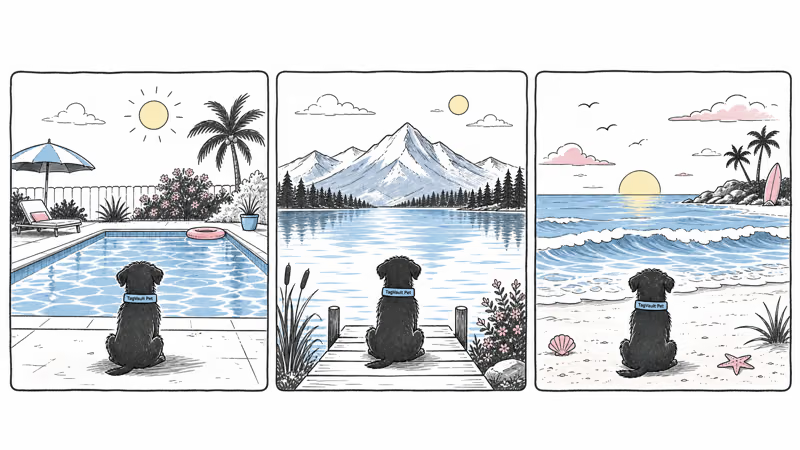
For a typical dog swim, brief shallow water exposure fits the IP67 envelope, while deeper dives or longer sessions exit it. After a swim, open the TagVault Pet and check the AirTag interior for moisture.
The main practical failure risk is not water pressure but a twist-lock that loosens during wear. If the closure backs off even a quarter turn, a small gap can let a drop of water reach the AirTag’s battery seam during a long swim.
Collar friction during a dog’s shake-off can cause that loosening, which is why a weekly tightness check matters more than the holder’s headline IP rating.
When Does the Waterproof Seal Actually Fail?
Three patterns predict failure even with a quality holder. Recognize these before assuming the holder is at fault.
A loose twist-lock from daily wear can break the seal. The TagVault Pet’s closure is intentionally easy to open (one-handed twist) for owners. The trade-off is that it can loosen during high-vibration wear like dog collar shake-off, vehicle vibration on a kayak rack, or repeated bag drops. Check tightness weekly.
Sustained depths past 1 meter can push past the AirTag’s rated seal limit.
Saltwater corrosion over months is harsher than freshwater wear on stainless steel.
Best Waterproof AirTag Holders Compared
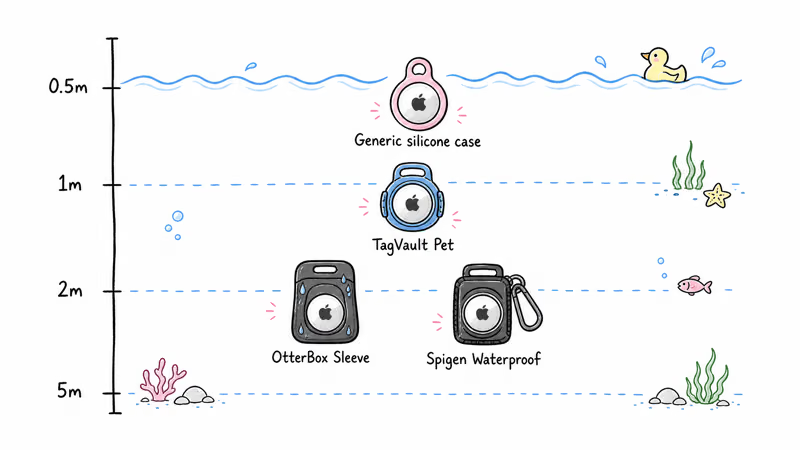
For non-pet waterproof use cases, three holders beyond TagVault Pet are worth considering. The IP code reference states that an IP68 device is “suitable for continuous immersion in water under conditions which the manufacturer shall specify” — so IP68 isn’t just deeper than IP67’s 1-meter limit, it covers prolonged underwater use. Each holder has a different depth and durability tradeoff.
| Holder | IP Rating | Best Use Case | Notes |
|---|---|---|---|
| Elevation Lab TagVault Pet | IP69 | Dog collars, brief swims | IP69 shell; twist-lock closure |
| OtterBox AirTag Sleeve | IP68 | Kayak, dive bag, marine gear | Deeper rating; bulkier form factor |
| Spigen Waterproof Case | IP68 | Universal waterproof attachment | Includes strap, more versatile |
| Generic Amazon silicone case | IPX5 or unrated | Light splash protection only | Avoid for actual swim use |
For real swim/dive applications past 1 meter, the OtterBox or Spigen IP68 options are safer choices. The TagVault Pet’s strength is the pet-collar use case where flexibility and dog-friendly attachment matters more than maximum depth.
How Do You Maintain a Waterproof Seal Over Time?
Three habits keep a waterproof holder effective.
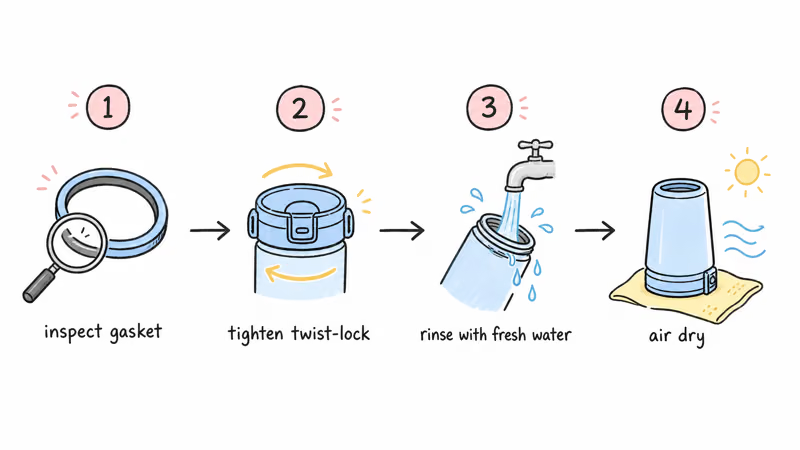
Check tightness weekly. Open and re-close the holder once a week. Confirm the twist-lock clicks fully into closed position. A quarter-turn loose is a common seal risk.
Rinse with fresh water after saltwater. Salt crystals damage the silicone gasket. Rinse for 30 seconds after ocean exposure.
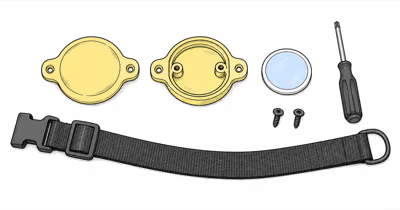
Replace the gasket every 2 years. Silicone gaskets harden and lose elasticity over time. Elevation Lab sells replacement gaskets for $5 each. The TagVault Pet manual recommends 24-month replacement intervals, after which the gasket takes a compression set and loses the flex needed for a tight seal.
For more on AirTag accessories beyond water-specific needs, see our best AirTag dog collar roundup and the broader AirTag holders and accessories guide.
Elevation Lab TagVault Pet
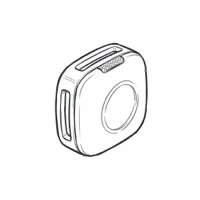 Top Pick
Aftercare and Replacement Schedule
Under regular swim use, plan to replace the gasket every 18-24 months, in line with Elevation Lab’s guidance.
Bottom Line
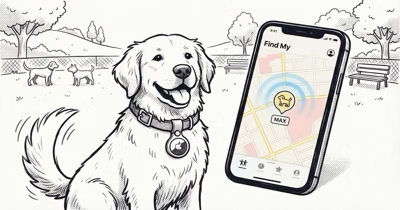
The Elevation Lab TagVault Pet is built to keep an AirTag dry on a dog collar through pool, lake, and ocean swims within the IP67 envelope. The most likely failure is a loose closure rather than the seal itself, so a weekly tightness check is the key habit.
For deeper-water use (kayak rack, dive bag, marine gear), step up to an IP68 holder like the OtterBox AirTag Sleeve. TagVault Pet’s strength is the pet-collar use case at 1-meter depths; pushing beyond that exits the rated envelope.
FAQ
Will the TagVault Pet survive my dog jumping into a lake?
Yes, assuming jump depth stays under 1 meter and total swim duration stays under 30 minutes. Check the holder tightness weekly; loosening from collar shake-off is the most common failure point.
Can I take an AirTag in TagVault Pet swimming with me?
For surface swimming yes (lap swim, snorkel surface). For diving past 1 meter depth, the IP67 rating becomes marginal. Use an IP68 holder for genuine dive or deep-pool use.
Does saltwater damage the AirTag inside a TagVault Pet?
Saltwater doesn't change the IP rating, but it's harsher than freshwater on metal and gasket surfaces. The external AirTag stainless back can show surface oxidation after repeated salt exposure. Rinse with fresh water after each ocean swim to extend life.
How often should I replace the TagVault Pet's seal?
Every 24 months per Elevation Lab's manual. Silicone gaskets harden with UV exposure and lose elasticity. Replacement gaskets are $5 from Elevation Lab. Check the gasket visually every 6 months for cracks or compression set.
How deep can you take an AirTag in a TagVault Pet?
The AirTag inside is rated IP67: 1 meter for up to 30 minutes continuous. Brief, shallower dips don't guarantee failure, but anything past 1 meter or 30 minutes exits the spec, so don't plan around deeper use of the rated envelope.
Will sand and grit damage the seal over time?
Yes. Beach use with sand intrusion into the twist-lock thread can grind down the silicone gasket faster than normal use. Rinse with fresh water after beach exposure before opening; inspect the gasket monthly if you beach the dog daily.
Can the TagVault Pet handle a washing machine cycle?
Probably not. Washing machines combine sustained submersion, agitation, and 60°C+ water temperatures. The TagVault Pet's IP69 rating covers brief pressure jets, not a sustained hot soak; high-temp washing can soften the silicone gasket and compromise the seal. Remove the AirTag and TagVault Pet from any collar going in the wash.
Does the TagVault Pet affect AirTag Bluetooth or Find My range?
It should have minimal effect. The polycarbonate enclosure is transparent to Bluetooth signals, so a thin holder like this shouldn't meaningfully block Bluetooth or Find My relays.