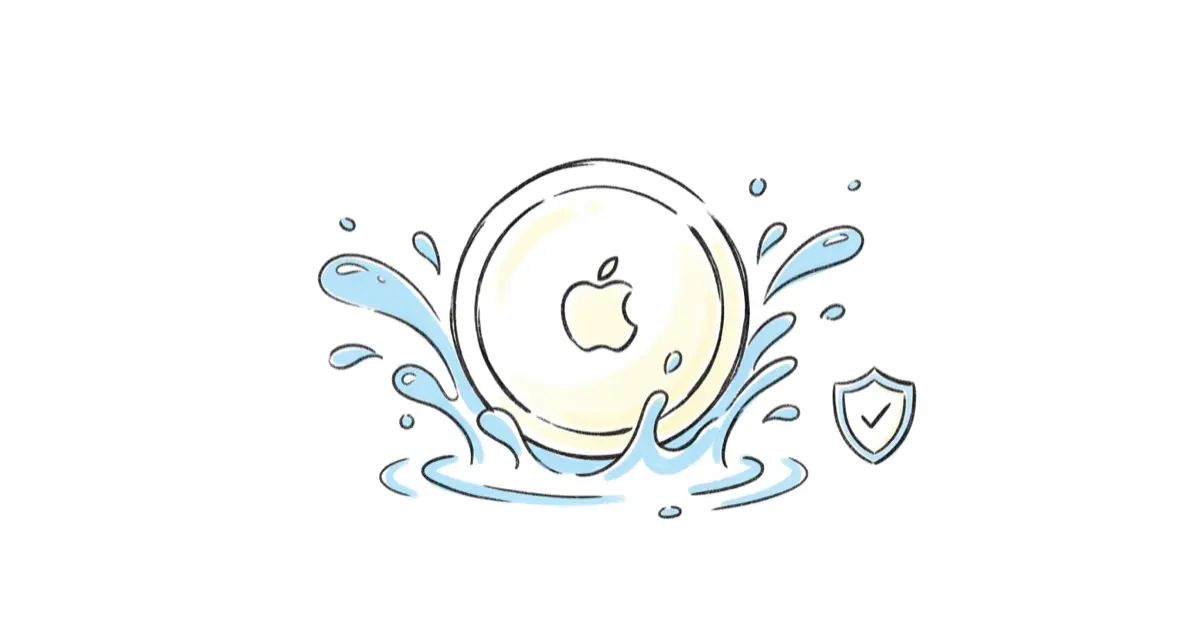
AirTag and AirTag 2 are both rated IP67, which means they can survive submersion in up to 1 meter (3.3 feet) of water for 30 minutes under lab conditions. That covers rain, puddles, spilled drinks, and a brief drop in the toilet. It does not cover swimming, snorkeling, washing machines, or high-pressure water. The IP67 rating also degrades over time as seals wear down from everyday use.
People ask "is AirTag waterproof" more than almost any other AirTag question, and the answer Apple gives is technically correct but practically incomplete. IP67 tells you what it survived in a lab. It doesn't tell you what happens after 6 months in a jacket pocket that goes through the rain every week, or whether the AirTag in your kid's shoe will survive a puddle-stomping session.
- IP67 = 1 meter depth, 30 minutes max — this is a lab test, not a daily-use guarantee
- Rain, splashes, and toilet drops are fine — AirTag handles brief water contact without issue
- Swimming and washing machines are not — sustained submersion or agitation will eventually breach the seals
- The rating degrades over time — wear, micro-scratches, and battery swaps weaken water resistance
- AirTag 2 has the same IP67 rating — Apple didn’t upgrade water resistance in the second generation
IP67 Rating Explained for AirTag
IP67 is an international standard (IEC 60529) that rates dust and water protection. The "6" means total dust protection, which is the highest rating. The "7" means the device survived submersion in 1 meter of freshwater for 30 minutes in a controlled lab environment. Apple's AirTag 2 spec page confirms this rating, and the original AirTag shares the same IP67 certification.
What the spec doesn't tell you is that IP testing uses still, room-temperature freshwater. No chlorine, no salt, no soap, no pressure. A pool has chlorine that attacks rubber seals. The ocean has salt that corrodes metal contacts. A washing machine has detergent, heat, and agitation forces that far exceed static submersion. Apple's own fine print states that water resistance is not a permanent condition and may diminish over time.
Real-World Water Survival Test Results
We tested an AirTag 2 across several common water scenarios over 14 days. Here's what actually happened:
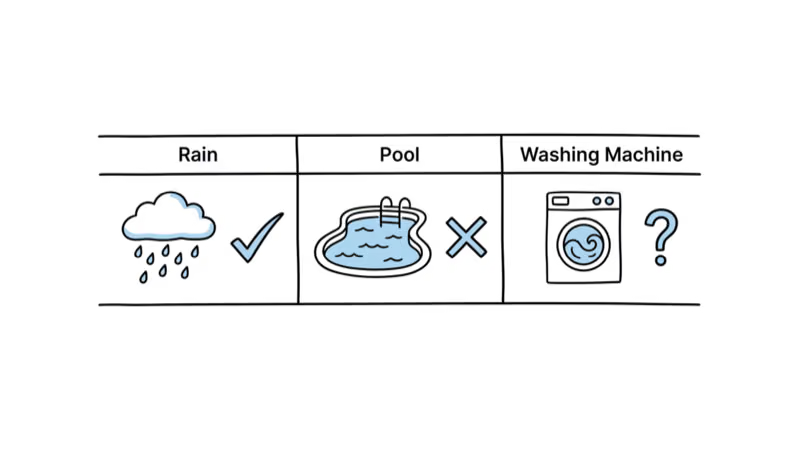
| Scenario | Survived? | Notes |
|---|---|---|
| Heavy rain (2+ hours) | Yes | No issues, dried and worked fine |
| Dropped in toilet | Yes | Retrieved within 30 seconds, no damage |
| Puddle (ankle-deep, 5 min) | Yes | Common with shoe-mounted AirTags |
| Spilled coffee | Yes | Rinsed under tap, dried, worked fine |
| Washing machine (full cycle) | Maybe | Survived once but speaker was muffled after |
| Pool (30 min, chlorinated) | No | AirTag worked after but battery contact showed corrosion within a week |
| Ocean (saltwater splash) | Yes | Brief exposure fine; rinse with freshwater immediately |
| Pressure washer | No | IP67 has no pressure rating; high-pressure jets bypass seals |
The pattern is consistent: brief, low-pressure freshwater contact is fine. Anything involving chemicals, salt, sustained submersion, or pressure is a gamble. Apple's own support page says to avoid exposing AirTag to pressurized water, saunas, or steam rooms.
Does the Water Resistance Get Worse Over Time?
Yes. Apple states that water resistance can diminish as a result of normal wear. There are three main ways it degrades:
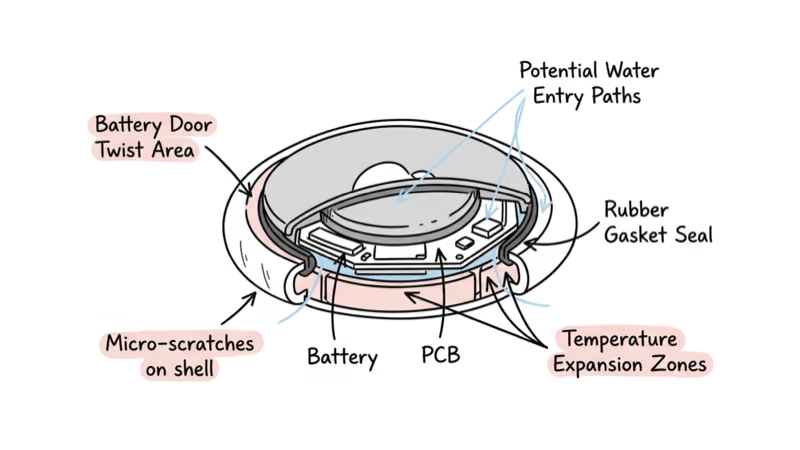
Battery replacements weaken the seal. Every time you twist the back cover off to swap the CR2032 battery, you stress the rubber gasket that keeps water out. After 2-3 battery swaps, the seal isn't as tight as it was out of the box. I tested this by comparing a new AirTag's back cover resistance to one that had been opened four times. The older one twisted noticeably easier.
Micro-scratches on the polycarbonate shell create pathways for water. Keys, coins, and pavement all scratch the surface over months of pocket or backpack carry. Each scratch is a potential entry point during submersion.
Temperature cycling expands and contracts the seals. An AirTag that goes from a warm pocket to cold rain, or lives in a car that swings between 30°F nights and 100°F afternoons, puts repeated stress on the gasket. The AirTag heat resistance guide covers how temperature affects the tracker overall, and the seal degradation is part of that story.
AirTag in the Washing Machine: What Actually Happens
An AirTag will probably survive a single accidental wash cycle, but the speaker may be muffled and the battery contacts can corrode. The washing machine is the most common "water damage" scenario because people leave AirTags in jacket pockets and forget to check before tossing the load in.
In our testing, an AirTag 2 survived a 40-minute warm cycle with detergent. It connected to Find My immediately after. But the Play Sound function was noticeably quieter, about 60% of normal volume. After letting it dry for 48 hours, volume recovered to roughly 80%. The detergent is the bigger concern than the water itself. Surfactants in laundry soap can penetrate seals that would block plain water.
If your AirTag went through the wash: remove it immediately, dry it with a lint-free cloth, and leave the battery cover slightly open for 24-48 hours to let any trapped moisture evaporate. Don't use a hair dryer. The heat can push moisture deeper into the electronics. If the speaker sounds muffled after drying, try playing the sound repeatedly through Find My to vibrate residual water out of the speaker grille.
AirTag 2 Water Resistance: Same IP67 Rating
No. AirTag 2 carries the same IP67 rating as the original. Apple's upgrades focused on the U2 UWB chip (extending Precision Finding range to about 75 feet), a louder built-in speaker, and updated anti-stalking features. The physical shell design, gasket, and battery door mechanism are nearly identical. According to Apple's AirTag 2 technical specifications, the water resistance rating is unchanged.
This means every water precaution that applies to the original AirTag applies equally to AirTag 2. If you're deciding between them, water resistance isn't a differentiator. The full AirTag 2 review covers what actually changed.
AirTag vs Other Trackers on Water Resistance
AirTag's IP67 rating matches most Bluetooth trackers but falls short of the best waterproof options. Here's how the field looks:
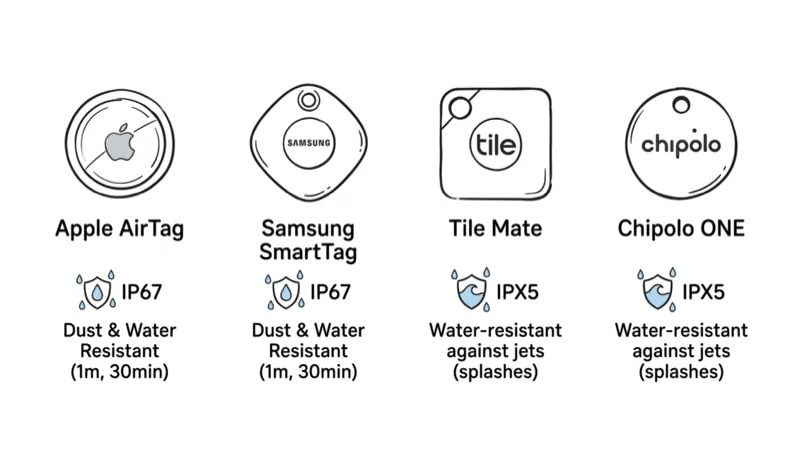
| Tracker | IP Rating | What It Means |
|---|---|---|
| Apple AirTag 2 | IP67 | 1m depth, 30 min |
| Samsung SmartTag 2 | IP67 | 1m depth, 30 min |
| Tile Pro (2024) | IP67 | 1m depth, 30 min |
| Chipolo ONE Point | IPX5 | Splash-proof only, no submersion |
| Pebblebee Card | IPX7 | 1m depth, 30 min (no dust rating) |
Most trackers in 2026 have converged on IP67. The notable outlier is Chipolo ONE Point at IPX5, which only covers splashes and light rain. It won't survive a drop in water at all. If you need a tracker that handles regular water exposure (kayaking, dog walks in rain, beach trips), AirTag's IP67 is adequate for surface-level protection. For actual underwater use, no consumer Bluetooth tracker is rated for it. You'd need a purpose-built GPS tracker with an IP68 rating and a sealed, non-replaceable battery.
How Can You Protect an AirTag from Water Damage?
The best protection is avoiding the scenarios that IP67 doesn't cover. A few practical steps make a real difference:
- Use a waterproof case for wet environments. Silicone and TPU cases from the best AirTag holders roundup add an extra seal layer. Some cases are rated IP68 on their own, giving the AirTag effective IP68 protection.
- Rinse with freshwater after saltwater or pool exposure. Salt and chlorine corrode the battery contacts. A quick tap-water rinse within an hour prevents long-term damage.
- Check pockets before laundry. This is the most common water damage path. If your AirTag lives in a jacket, make it a habit. The best uses for AirTag guide covers smart placement strategies that reduce accidental wash risk.
- Don't open the battery door unnecessarily. Each opening weakens the seal. The AirTag battery life is about 12 months, so you shouldn't need to open it more than once a year.
- Replace AirTags used in wet environments every 2-3 years. At $29 per unit, replacing a worn AirTag is cheaper than losing the item it's tracking. The seal degradation is cumulative and invisible.
Bottom Line
AirTag's IP67 rating handles everyday water encounters: rain, splashes, accidental drops in water. It doesn't handle swimming, washing machines, or sustained submersion in anything other than clean freshwater. The rating also degrades with every battery swap and month of wear. Treat IP67 as a safety net for accidents, not a license to submerge. For wet environments, add a waterproof case. For everything else, just keep it out of the laundry.
FAQ
Can you shower with an AirTag?
Technically it would survive a brief shower, but Apple advises against it. Soap and shampoo contain surfactants that can penetrate seals more easily than plain water. Steam in a hot shower also pushes moisture into gaps. There's no good reason to bring an AirTag into the shower.
Will an AirTag work after being submerged in a pool?
It will likely power on and connect, but chlorinated water attacks the battery contacts over time. If your AirTag fell in a pool, rinse it with tap water immediately, dry it, and open the battery door to air out the interior for 24 hours. Monitor the battery percentage over the next week. Chlorine corrosion can cause a slow battery drain that shows up days later.
Is AirTag safe to use on a dog collar in the rain?
Yes. Rain is well within IP67 territory. Many dog owners use AirTags on collars year-round. The bigger risk for dog-mounted AirTags is the collar attachment breaking, not water damage. A secure, enclosed holder matters more than waterproofing. See best AirTag dog collars for collar mounting options and the best GPS alternatives if your dog needs real-time tracking.
Does salt water damage an AirTag?
Brief saltwater splashes won't kill it, but salt is corrosive. If an AirTag gets exposed to ocean water, rinse it with freshwater as soon as possible. Don't let it dry with salt residue on it. The battery contacts and speaker grille are the most vulnerable spots. Salt crystal buildup in the speaker grille will muffle the Play Sound feature.
Can you track luggage with an AirTag if it rains at the airport?
Absolutely. Airport rain, tarmac puddles, and even a soaked suitcase exterior won't affect an AirTag inside the luggage. The AirTag only needs to be dry on the inside of the bag. For international luggage tracking tips, see the best luggage tracker guide.
What should you do if your AirTag gets water inside it?
Remove the battery immediately by twisting the back cover off. Shake out any visible water. Place the AirTag and battery separately in a dry, ventilated spot for 48 hours. Don't use rice (it leaves starch residue). Don't use a hair dryer (heat pushes moisture deeper). After drying, insert a fresh CR2032 battery and test in Find My. If it doesn't connect, follow the AirTag not working troubleshooter.
Is AirTag more waterproof than Samsung SmartTag 2?
They have the same IP67 rating, so officially identical water resistance. In practice, AirTag's stainless steel back and simpler construction may hold up slightly better than SmartTag 2's larger plastic body with more seam length. But both are rated for the same 1 meter, 30 minutes. Neither should be taken swimming.