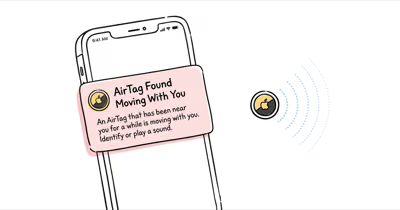
The alert means an owner-separated AirTag has been seen moving with you over time. It doesn’t tell you why. Apple notes that a borrowed item can explain it while still providing a protective response.
AirTag is intended for belongings you own or have permission to track. It should never be used to track a person without consent.
- Don’t rely on an 8-hour or 24-hour rule. Apple does not publish one fixed trigger threshold.
- Start inside the alert. Play Sound and, when available, Find Nearby are the supported locate tools.
- Check the object context. A borrowed bag, keys, or other shared item may carry someone else’s AirTag.
- Document the identifier before deciding what comes next. An NFC-capable phone can show the serial number and limited registrant information.
- Prioritize safety over a longer search. If you can’t find the item and feel at risk, move to a safe public place and contact local law enforcement.
What the Alert Means
According to Apple’s current unwanted-tracker guidance, this alert appears when an AirTag separated from its owner is seen moving with you over time. Find My can show a map of places where the unknown item was detected near your device.
Map points show where your device observed the item. They don’t reveal when its owner viewed the location or why.
| The alert tells you | The alert does not tell you |
|---|---|
| An owner-separated AirTag was observed moving with you | Who placed it or why it’s present |
| Where your device detected the AirTag nearby | When the owner checked the AirTag’s location |
| Which supported locate and safety actions are available | That one fixed number of hours has elapsed |
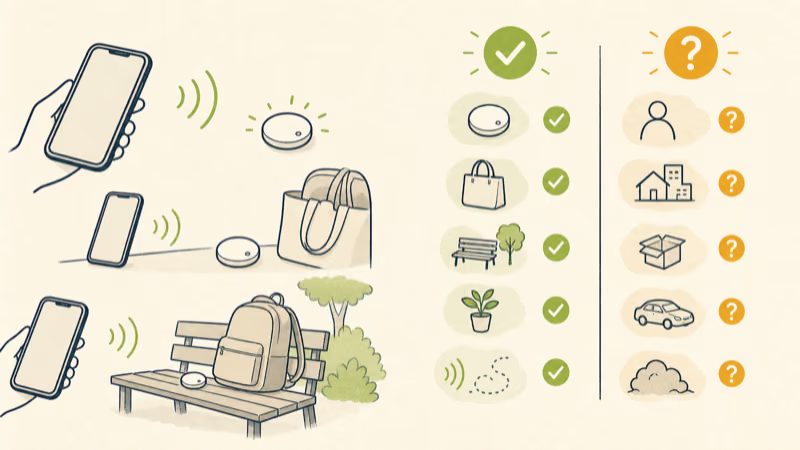
Check the object context. Don’t dismiss the alert solely because an innocent explanation is possible, but don’t assume the alert proves stalking. If the screen says something else, use the Unknown Accessory Detected guide to match Apple’s current wording.
Respond Inside the Alert
- Tap the notification.
- Tap Continue.
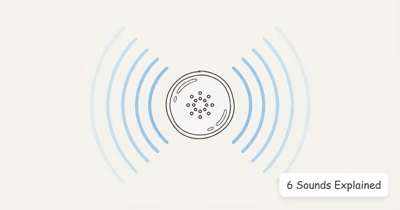
- Tap Play Sound and listen for the AirTag.
- If Find My offers Find Nearby and your iPhone supports the feature, follow the distance and direction prompts.
- Look through belongings in your possession that could contain the AirTag, including an infrequently used pocket or compartment.
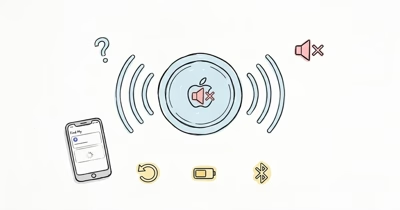
You can replay the sound. If it’s unavailable, the AirTag may be gone, near its owner, or using a changed overnight identifier.
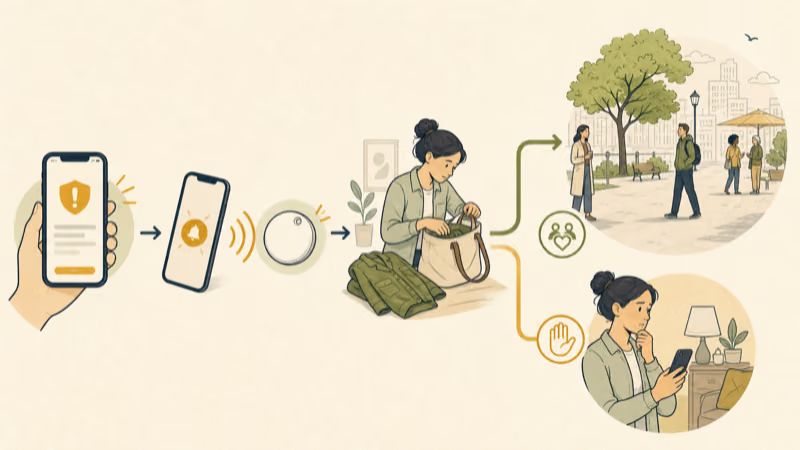
Stop the search if you feel unsafe. Apple recommends going to a safe public location and contacting local law enforcement when the item can’t be found and your safety may be at risk.
Could It Be Attached to Something You Borrowed?
Yes. Apple explicitly lists a borrowed item as one possible explanation. Check whether you recently borrowed keys, luggage, a bag, equipment, or another object that its owner may have tagged.
If you recognize the item and can safely contact its owner, confirm the AirTag’s presence with them. For an item owned by someone in your Family Sharing group, the alert may offer a choice to turn off alerts for that item for one day or indefinitely.
Don’t treat rental cars, coworkers, or any other scenario as the presumed cause without confirming it. Apple doesn’t publish a ranking that says most alerts are false positives.
Get Information About a Found AirTag
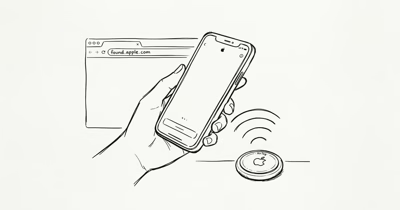
If you physically find the AirTag, hold the top of an NFC-capable iPhone or Android phone near its white side, then open the notification that appears.
Apple says the page can provide:
- the AirTag serial number;
- the last four digits of the phone number of the person who registered it; and
- if the owner marked it as lost, a message with contact information may also appear.
Document the available identifier. Take a screenshot so you don’t have to rely on memory. The limited registrant details may help you recognize the owner, but they don’t give you a complete identity. For a tag that appears lost rather than attached to you, use the AirTag owner-identification guide.
Decide Whether to Disable It
Before changing the item, consider how disabling it could affect your safety.
If appropriate, tap Instructions to Disable and follow the instructions shown for that item.
After an item is disabled, Apple says its owner can no longer receive updates on its current location, and you’ll no longer receive unwanted-tracking alerts for that item.
Use the item’s official instructions. Turning off Bluetooth, Location Services, or the Find My network on your own phone doesn’t disable the AirTag or stop its owner from receiving location updates.

The Apple Personal Safety User Guide recommends contacting local law enforcement if you feel at risk. Law enforcement can work with Apple to request available item information and may need the AirTag and serial number. Follow local instructions rather than improvising evidence handling.
Make Sure Tracking Notifications Can Reach You
Apple states that compatible tracker alerts require iOS or iPadOS 17.5 or later.
Location Services, relevant System Services, Bluetooth, Tracking Notifications, and Airplane Mode settings also affect whether alerts can reach the device.
If you expected an alert but did not receive one, check those settings and update the device. Turning the settings on helps your phone detect and notify you; turning them off is not a way to disable an unknown tracker.
What About Android?
Google states that Android 6.0 or later can automatically notify you when an AirTag or another compatible item tracker is moving with you. Android also provides a manual scan; follow the current Android Help instructions for the controls available on your device.
Any NFC-capable phone can also read the information page of a found AirTag by holding the phone near the white side.
Bottom Line
An AirTag Found Moving With You alert identifies an owner-separated AirTag observed with you over time. It does not prove why the AirTag is present.
Use the supported alert tools to locate it, check whether it belongs to a borrowed object, document the identifier if you find it, and follow the onscreen disable instructions when appropriate. If the item can’t be found or your safety feels at risk, stop searching, move to a safe public place, and contact local law enforcement.
FAQ
Is an AirTag Found Moving With You alert proof of stalking?
No. It means an owner-separated AirTag was observed moving with you over time. A borrowed item can explain the alert, but the alert still deserves a careful check. It does not identify who placed the AirTag or why.
How long does an AirTag move with you before the alert appears?
Apple does not publish one fixed consumer-facing hour threshold. Its current guidance says an AirTag separated from its owner and seen moving with you over time can trigger the alert. Don’t rely on an 8-hour or 24-hour rule.
What should I tap first after receiving the alert?
Tap the notification, tap Continue, then use Play Sound. If Find My offers Find Nearby and your iPhone supports it, follow the distance and direction prompts to help locate the AirTag.
What if Play Sound is not available?
The AirTag may no longer be with you, may be near its owner, or may have changed its identifier after being with you overnight. Look through belongings in your possession, and if you can’t find it and feel at risk, go to a safe public place and contact local law enforcement.
What information can I get from a found AirTag?
Hold an NFC-capable phone near the white side. Apple says the resulting page can show the serial number and the last four digits of the registrant’s phone number. If the AirTag was marked lost, you may also see a contact message.
Will turning off Bluetooth stop the AirTag?
No. Apple says turning off Bluetooth, Location Services, or the Find My network on your phone does not prevent the owner from receiving the AirTag’s location. Use the onscreen Instructions to Disable for the item itself.
When should I contact law enforcement?
If you can’t find the AirTag and feel your safety is at risk, go to a safe public place and contact local law enforcement. Apple says law enforcement can work with Apple and may need the AirTag and its serial number.