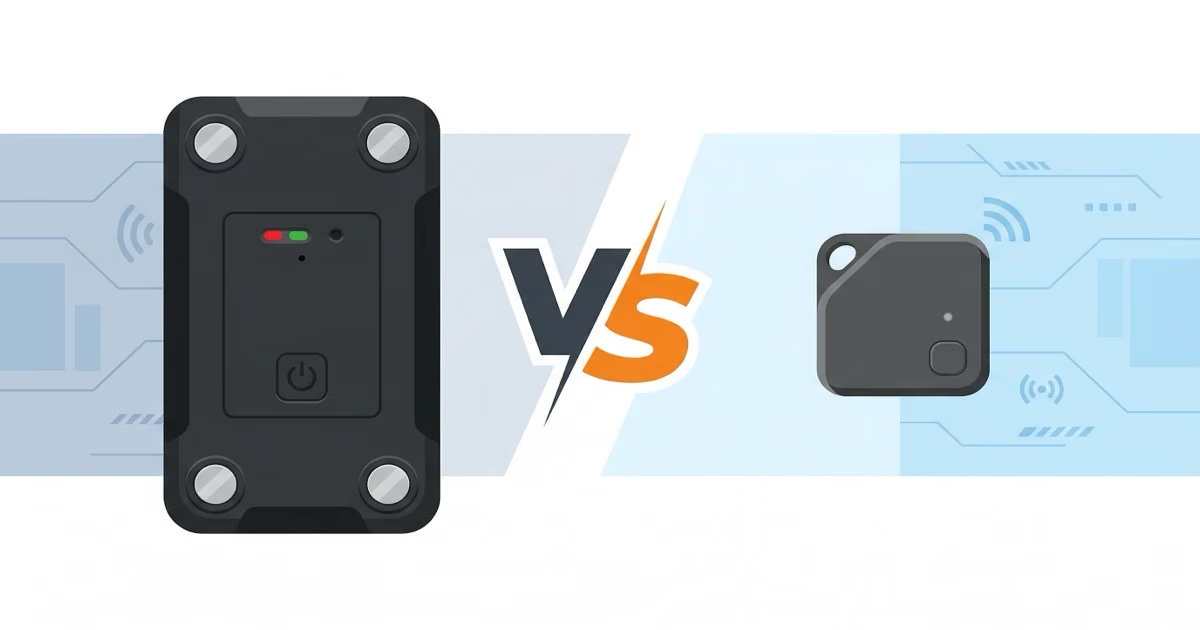
TKSTAR TK905 costs $215-230 over three years. Tracki costs $740-930 for the same period. TKSTAR wins on cost by a wide margin because you bring your own $5/month SIM card instead of paying Tracki's $20/month subscription. Tracki wins on app quality, setup speed, and compact size. Pick TKSTAR if you want the lowest possible ongoing cost and can handle a DIY setup. Pick Tracki if you want a polished app and plug-and-play experience.
These two GPS trackers solve the same problem in opposite ways. TKSTAR TK905 lets you supply your own prepaid SIM card for about $5/month, skipping the subscription entirely. Tracki bundles a built-in SIM with mandatory plans starting at $13.95/month. The hardware cost difference is small. The monthly cost difference is not.
After testing both trackers on the same vehicle for two weeks, the verdict comes down to one question: is saving $500+ over three years worth a worse app and a 30-minute setup process? For most vehicle owners, the answer is yes. For anyone who wants zero friction, it is no.
- TKSTAR saves $525-700 over 3 years — $5/month BYOD SIM vs Tracki’s $20/month subscription adds up fast
- Tracki’s app scores 4.0 stars vs TKSTAR’s 2.5 stars — the app gap is the biggest day-to-day difference between these trackers
- TKSTAR setup takes 20-30 minutes — SMS commands, APN configuration, and SIM insertion vs Tracki’s 2-minute plug-and-play
- TKSTAR battery lasts 50 days on standby — Tracki’s base model lasts 2-5 days, though the Pro model reaches 14 days
- Both deliver 5-meter GPS accuracy outdoors — Tracki adds Wi-Fi positioning for better indoor tracking
Specs at a Glance
Before diving into the details, here is how these trackers compare on the numbers that matter:
| Feature | TKSTAR TK905 | Tracki 4G |
|---|---|---|
| Device price | $35-50 | $20-30 |
| Monthly cost | ~$5 (BYOD SIM) | $13.95-$19.95/mo |
| Battery | 5000mAh | 600mAh |
| Standby | 50 days | 2-5 days |
| Size | 90 x 72 x 22mm | 47 x 40 x 17mm |
| Weight | 180g | 36g |
| Waterproofing | IP65 | IPX6 |
| Magnets | 5 built-in | Accessory case needed |
| GPS accuracy | 5m (GPS + AGPS) | 5-10m (GPS + Wi-Fi + BT) |
| App rating | 2.5 stars | 4.0 stars |
| Coverage | Carrier-dependent | 190+ countries |
| Setup time | 20-30 minutes | 2 minutes |
The specs tell one story: TKSTAR is bigger, cheaper to run, and harder to set up. The daily experience tells another. Let me break down each area that actually matters.
What Does Three Years Actually Cost?
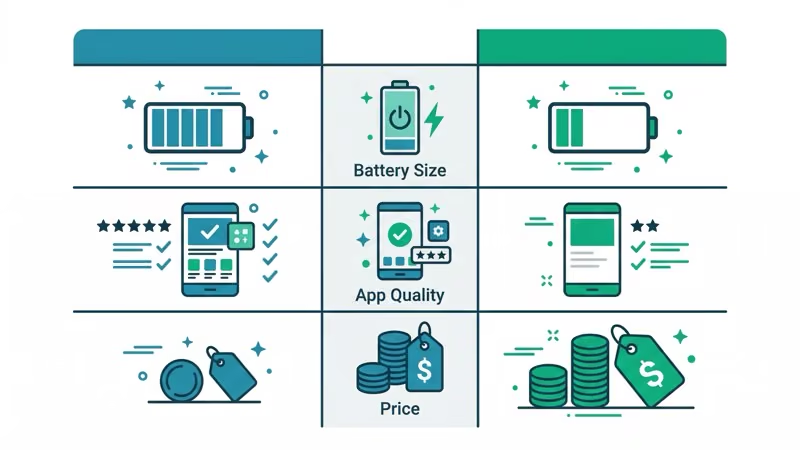
This is the comparison that changes most people’s minds. The device price barely matters. The monthly bill is where the real money goes.
TKSTAR TK905 requires a user-supplied SIM card. A prepaid data plan from SpeedTalk Mobile or US Mobile runs about $5/month with more data than the tracker needs. Tracki includes a built-in SIM but charges $13.95-$19.95/month depending on your plan commitment. Even on Tracki’s cheapest 2-year prepaid rate ($9.95/month), the gap is significant.
| Time Period | TKSTAR TK905 | Tracki (monthly plan) | Tracki (2-yr prepaid) |
|---|---|---|---|
| Device | $40 | $25 | $25 |
| Year 1 total | $100 | $265 | $145 |
| Year 2 total | $160 | $505 | $264 |
| Year 3 total | $220 | $745 | $384 |
| 3-year savings | baseline | you pay $525 more | you pay $164 more |
On month-to-month Tracki plans, you pay $525 more over three years. Even on the cheapest prepaid rate, Tracki still costs $164 more. For a single vehicle, that is a nice dinner out. For a fleet of five vehicles, TKSTAR saves $820-2,625 over three years depending on the Tracki plan. That math is what makes fleet managers pick TKSTAR every time.
One thing to note: the SpeedTalk Mobile GPS SIM plans we recommend are specifically designed for GPS trackers and require zero configuration beyond inserting the card. If you want to understand all the no-subscription options available, our guide to GPS trackers with no monthly fee covers the full landscape.
How Hard Is Setup?
This is where Tracki earns its subscription fee.
Tracki setup takes about 2 minutes. Download the app, create an account, power on the tracker. The built-in SIM activates automatically. You see your location on the map within 60 seconds. No SMS commands, no APN settings, no SIM card shopping.
TKSTAR setup takes 20-30 minutes and requires multiple steps:
- Buy a compatible micro-SIM card with a data plan
- Disable the SIM PIN using a phone before inserting it
- Open the TK905 back panel (four screws)
- Insert the SIM and reassemble
- Send SMS commands to configure the APN, time zone, and upload interval
- Download the TKSTAR GPS app and pair via IMEI number
- Wait 1-3 minutes for the first GPS lock outdoors
The SMS command step trips up most first-time users. You are sending text messages like apn123456 wholesale to configure cellular settings on a device with no screen. If you type the command wrong, nothing happens and there is no error message. In our testing, we got it right on the second attempt after double-checking the carrier APN name.
If TKSTAR setup sounds like too much hassle, the cost savings only matter if you actually get the tracker working. Be honest about your comfort level with SIM cards and SMS commands before buying.
For a deeper walkthrough, our TKSTAR TK905 review includes every SMS command and tested SIM card recommendation.
Which Tracker Has the Better App?
Tracki wins this one by a mile, and it is not close.
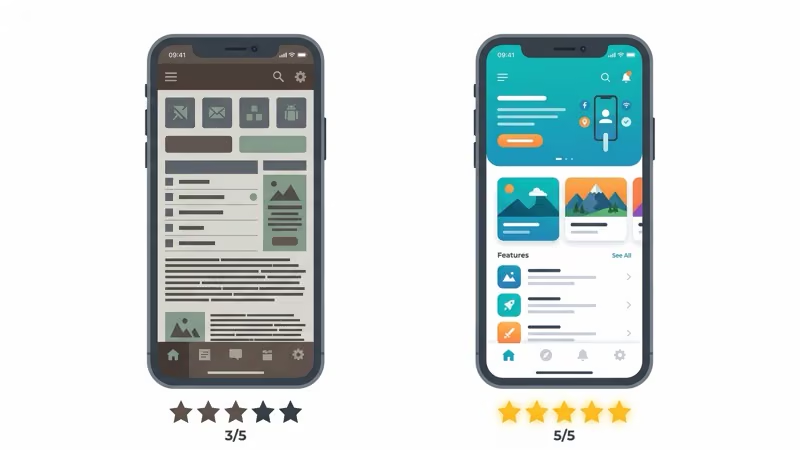
The Tracki app carries a 4.0-star rating on both iOS and Android. The map loads fast, location refreshes happen within a few seconds, and push notifications for geofence alerts arrive consistently. The interface looks modern. Nothing fancy, but nothing frustrating either.
The TKSTAR GPS app sits at 2.5 stars on both platforms. Location refreshes take 15-30 seconds. Map tiles load slowly. Push notifications arrive late or not at all on some occasions. The UI looks like it was designed a decade ago. During our two weeks of testing, we found ourselves checking the Tracki app for quick location checks and only opening the TKSTAR app when we specifically needed to verify the TK905’s position.
The workaround for TKSTAR’s app problem is Traccar, a free open-source tracking platform. The TK905 speaks standard Traccar protocol, so you can bypass the official app entirely. Switching to Traccar took us about 10 minutes via SMS command. The Traccar interface is cleaner, notifications are reliable, and route history works properly.
If you go the TKSTAR route, plan on using Traccar from day one. The official app works for basic “where is my car” checks, but Traccar is a better experience for daily monitoring.
How Does GPS Accuracy Compare?
Outdoors, both trackers deliver comparable results. The TKSTAR TK905 consistently hit 5-meter accuracy in our testing using GPS + AGPS dual positioning. Tracki landed at 5-10 meters using GPS with Wi-Fi and Bluetooth fallback.
The real difference shows up indoors and in urban canyons. Tracki’s Wi-Fi positioning picks up nearby router signals and cross-references them against known access point databases. In a parking garage where the TK905 lost signal entirely, Tracki maintained a rough position estimate within 30-50 meters. That is not pinpoint, but it is the difference between “your car is somewhere in this building” and “no signal.”
For highway driving and open-road tracking, you will not notice a difference between them. Geofence alerts triggered within 15-30 seconds on both trackers during our vehicle tests. Speed alerts worked accurately on both. Route playback showed clean paths without phantom drifting on either device.
If you primarily track vehicles parked outside, both are equally capable. If you need indoor positioning in garages or dense urban areas, Tracki has the edge.
Size, Battery, and Waterproofing
Size matters for concealment. Tracki is roughly the size of a matchbox at 36 grams. The TK905 is the size of a deck of cards at 180 grams. If you need to hide a tracker in a backpack, purse, or small compartment, Tracki fits where TKSTAR cannot. For vehicle undercarriage mounting, size is irrelevant because both disappear under a car frame.
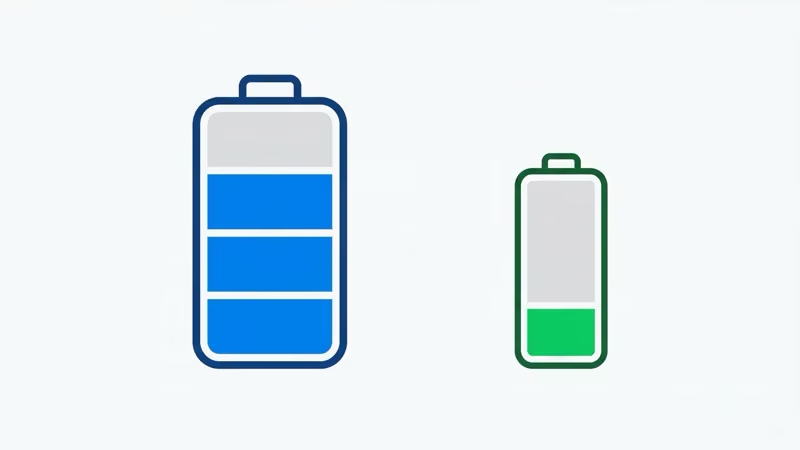
Battery life is not even a contest for vehicle use. TKSTAR’s 5000mAh battery delivers 50 days of standby. Tracki’s 600mAh base battery lasts 2-5 days. Even Tracki’s Pro model with extended battery only reaches 14 days. If you want to mount a tracker and forget about it for weeks, TKSTAR is the only option here. The TKSTAR TK905B doubles that to 100 days of standby for an extra $10-15.
Waterproofing tilts toward Tracki on paper, but matters less in practice. Tracki’s IPX6 rating handles splashes and rain. TKSTAR’s IP65 resists dust and water jets. Neither survives submersion. For under-car mounting in normal weather conditions, both hold up fine. The TKSTAR TK905 spec page confirms the IP65 rating covers exterior vehicle mounting in all weather short of flooding.
TKSTAR TK905 Full Breakdown
 Best Value
TKSTAR TK905
- Lowest ongoing cost of any real-time GPS tracker (~$5/month)
- 50-day standby battery outlasts Tracki by 10x
- 5 built-in magnets hold firmly on vehicle undercarriage
- No vendor lock-in, any carrier SIM works
- Compatible with free Traccar platform as app replacement
- Official app is poorly designed (2.5-star rating)
- Setup requires 20-30 minutes with SMS commands
- Large and heavy (180g) compared to Tracki (36g)
- No Wi-Fi or Bluetooth indoor positioning
- Customer support is slow and based in China
Tracki Full Breakdown
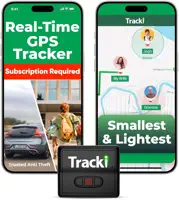
Tracki
- Polished app with 4.0-star rating and fast location refresh
- Setup takes 2 minutes with built-in SIM activation
- Compact and lightweight (36g) for discreet placement
- Wi-Fi and Bluetooth improve indoor positioning
- Works in 190+ countries with no roaming fees
- Subscription required ($13.95-$19.95/month)
- 600mAh battery only lasts 2-5 days
- No built-in magnet (accessory case costs ~$15)
- 3-year total cost reaches $384-$745 depending on plan
- Subscription pricing hidden until app registration
Who Should Buy Which?
Choose TKSTAR if...
- Monthly cost is your top priority ($5/mo vs $20/mo)
- You are tracking vehicles and want weeks of battery life
- You are comfortable with SIM cards and basic setup
- You are tracking a fleet where subscription fees add up
- You can live with a mediocre app or switch to Traccar
Choose Tracki if...
- You want a tracker that works in 2 minutes out of the box
- App quality and reliable notifications matter to you
- You need a small, lightweight tracker for personal items
- You travel internationally and need global coverage
- Indoor positioning in garages and buildings is important
If neither of these trackers fits your use case, our cheapest ways to GPS track a car guide covers everything from OBD-II plug-in trackers to repurposed AirTags. For more subscription-based alternatives, the Tracki vs LandAirSea comparison breaks down how Tracki stacks up against another popular option. And if you want to skip monthly fees entirely, our car GPS tracker guide covers no-subscription options beyond TKSTAR.
Bottom Line
TKSTAR TK905 is the cheapest way to do real-time GPS tracking if you are willing to spend 30 minutes on setup and use Traccar instead of the official app. Over three years, it saves $164-525 compared to Tracki depending on the subscription plan. Tracki is the better tracker for people who value their time over monthly savings, need a compact form factor, or travel internationally. Both deliver solid outdoor GPS accuracy. The decision comes down to whether your budget or your patience runs out first. For a full breakdown of the TK905’s setup, battery, and app workarounds, read our TKSTAR TK905 review. For Tracki’s strengths across vehicles, pets, and travel, see our Tracki GPS tracker review.
FAQ
Is TKSTAR TK905 better than Tracki for vehicle tracking?
For vehicle tracking specifically, the TK905 has clear advantages: 50-day standby battery vs 2-5 days, built-in magnets vs an accessory case, and $5/month operating cost vs $13.95-$19.95/month. The trade-off is a worse app and harder initial setup. If your tracker lives under a car and you check it a few times per week, TKSTAR is the better value.
Does TKSTAR require a monthly subscription like Tracki?
No. TKSTAR TK905 has no subscription. You buy the device and supply your own SIM card with a data plan. Prepaid plans from carriers like SpeedTalk Mobile cost about $5/month. Tracki requires an active subscription starting at $13.95/month on annual plans or $19.95/month on month-to-month billing.
How much do you save with TKSTAR over Tracki in 3 years?
On Tracki's month-to-month plan, you save approximately $525 over three years by choosing TKSTAR. On Tracki's cheapest 2-year prepaid plan, the savings drop to about $164. The exact amount depends on your SIM card cost and which Tracki plan you compare against.
Can you use Tracki without a subscription?
No. Tracki requires an active cellular plan to transmit location data. The built-in SIM card only works with Tracki's own service plans. There is no way to use a third-party SIM or bypass the subscription. If you want GPS tracking without recurring fees, TKSTAR with a BYOD SIM or a Bluetooth tracker like AirTag are your options.
Which tracker is easier to set up?
Tracki is far easier. Download the app, power on the device, and the built-in SIM activates automatically. The whole process takes about 2 minutes. TKSTAR requires buying a SIM card, configuring APN settings via SMS commands, and pairing through the app, which takes 20-30 minutes even if everything goes smoothly.
Is the TKSTAR app really that bad?
The official TKSTAR GPS app carries a 2.5-star rating and feels dated. Location refreshes are slow, notifications are unreliable, and the interface lacks polish. The workaround is Traccar, a free open-source tracking platform that the TK905 supports natively. Switching to Traccar takes about 10 minutes and provides a much better experience than the official app.
Which tracker has better battery life?
TKSTAR TK905 wins on battery by a large margin. Its 5000mAh battery lasts 50 days on standby and 6-8 days with active 30-second tracking. Tracki's base 600mAh battery lasts 2-5 days. Even the Tracki Pro with an extended battery only reaches 14 days. For vehicle tracking where you want to mount and forget, TKSTAR's battery advantage is significant.