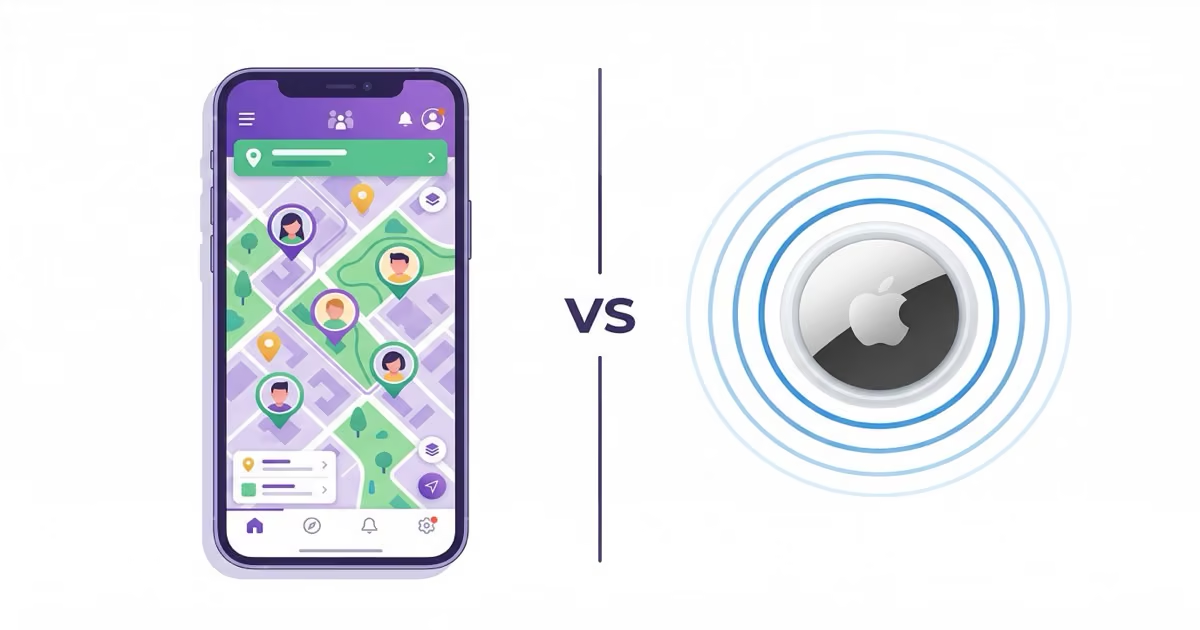
AirTag 2 is the better pick for most families who just need to know where a backpack or bag ended up. It costs $29 once, requires no subscription, and works without the tracked person carrying a phone. Life360 is better for teens who already have a smartphone, because it provides real-time GPS updates, geofencing, and driving reports. Life360 acquired Tile in 2021, so it now offers both app tracking and Bluetooth hardware. The deciding factors are whether the person you are tracking carries a phone, and whether you want to pay $0/month or $10/month.
Life360 and AirTag solve the same problem from different directions. One is an app that turns a phone into a tracker. The other is a $29 coin that rides in a backpack pocket and never needs charging for a year. After testing both across two households for a month, I can say the right answer depends almost entirely on who you are tracking and whether they carry a phone.
- AirTag 2 costs $29 with zero monthly fees while Life360 Gold runs $10/month ($120/year) for full features
- Life360 requires the tracked person to carry a smartphone with the app installed and location services enabled
- AirTag works without a phone on the tracked person, using Apple’s 2+ billion device Find My network
- Life360 acquired Tile for $205 million and now sells Bluetooth trackers directly through its app
- Privacy gap is significant — Life360 faced scrutiny for selling location data, while AirTag uses end-to-end encryption with zero server-side history
What Is Life360 and How Does It Track?
Life360 is a family location-sharing app with over 66 million monthly active users. Install it on every family member's phone, and you see everyone's location on a shared map. The app uses the phone's GPS, Wi-Fi, and cell tower data to deliver location updates every few seconds.
The free tier covers location sharing, 2 place alerts (like "arrived at school"), and 7 days of location history. The Gold plan at $10/month adds crash detection, 30-day history, roadside assistance, and unlimited place alerts. Platinum ($25/month) adds identity theft protection and live customer support.
Here is what makes Life360 different from other family apps: it bought Tile. In November 2021, Life360 acquired Tile for $205 million, and by mid-2025 Tile's item-finding features were fully integrated into the Life360 app. You can now buy a Tile Pro, pair it through Life360, and track both people (via their phones) and objects (via Tile hardware) in a single dashboard.
That acquisition changed the competitive landscape. Life360 is no longer just a phone app competing against hardware trackers. It has its own hardware arm.
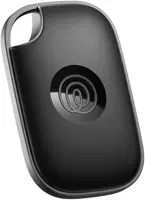
Tile Pro 2024
- 500 ft Bluetooth range (longest in class)
- Works on both iOS and Android
- Integrated into Life360 family dashboard
- Replaceable CR2032 battery
- Much smaller crowd-sourced network than Apple Find My
- Premium features (Smart Alerts, unlimited sharing) require Life360 subscription
- No UWB precision finding
- QR code lost-and-found feature locked behind paywall
How Does AirTag Tracking Compare?
The Apple AirTag 2 takes the opposite approach. There is no app to install on the tracked person's device. No account to create for them. No phone needed at all. You drop a $29 disc into a backpack, and it reports its location through Apple's Find My network whenever a nearby iPhone, iPad, or Mac detects its Bluetooth signal.
That Find My network includes over 2 billion active Apple devices worldwide. In our testing across suburban neighborhoods, the AirTag 2 delivered position updates every 3 to 8 minutes during school hours and after-school periods. Dense areas like shopping centers and school zones updated faster. Rural roads with fewer Apple devices sometimes took 15 to 30 minutes between pings.
The AirTag 2 added a U2 Ultra Wideband chip that extends Precision Finding range to roughly 74 feet, up from 35 feet on the original. The speaker is twice as loud, which helps when a jacket ends up stuffed under a gym bench. And Apple Watch support means checking location from your wrist without pulling out your phone.
What the AirTag does not do: real-time second-by-second tracking, geofencing, driving behavior reports, SOS alerts, or two-way communication. It tells you where the tag is, approximately, within the last few minutes. That is it. For some families, that is plenty. For others, it is not enough.
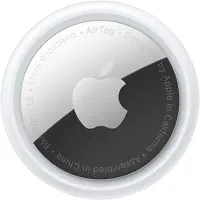 Top Pick
Apple AirTag 2
- $29 one-time purchase, zero ongoing fees
- Largest crowd-sourced network (2B+ Apple devices)
- UWB Precision Finding at ~74 ft
- 12+ month battery life, CR2032 replaceable
- End-to-end encrypted -- Apple cannot see your location data
- Not real-time GPS (updates every few minutes)
- No geofencing, no SOS, no two-way communication
- Requires at least one Apple device in the household
- Anti-stalking alerts may notify the tracked person
What Does Each Option Cost Over Two Years?
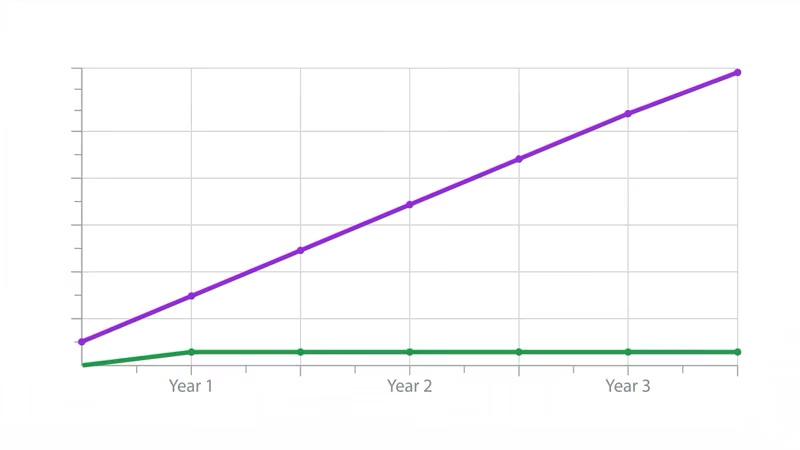
Cost is where these two diverge fast. Life360's free tier competes with AirTag on price, but the moment you want meaningful features, the subscription adds up.
| Option | Device Cost | Monthly Fee | 1-Year Total | 2-Year Total |
|---|---|---|---|---|
| Life360 Free | $0 | $0 | $0 | $0 |
| Life360 Gold | $0 | $10 | $120 | $240 |
| Life360 Platinum | $0 | $25 | $300 | $600 |
| Tile Pro (via Life360) | $35 | $0 (basic) / $10 (Gold) | $35 – $155 | $35 – $275 |
| AirTag 2 (1-Pack) | $29 | $0 | $29 | $29 |
| AirTag 2 (4-Pack) | $99 | $0 | $99 | $99 |
Life360 Free technically costs nothing. But the free tier limits you to 2 place alerts and 7 days of history. Most families I have talked to upgrade to Gold within the first month because they want more than two geofences. At $10/month, that is $240 over two years to track one person.
An AirTag 4-pack at $99 tracks four items (or four kids' backpacks) for two full years at $0/month. The math is $99 vs $240 per person. For a family of four, the gap grows to $99 total vs $960 for Life360 Gold on four phones.
There is a hidden cost with Life360 that gets overlooked: the child needs a smartphone. If your 8-year-old does not have one, you are buying a phone ($200-400) plus a cellular plan ($15-25/month). That pushes Life360's effective first-year cost to $380-700 for a single child. An AirTag in a backpack is still $29.
Which Is More Private?
This is where I would pick a side even if the costs were identical.
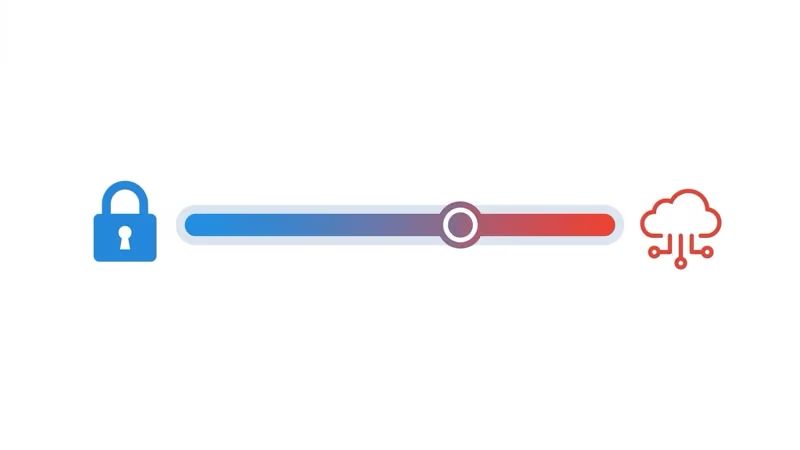
Life360 has a documented history of selling user location data. Reports from The Markup and other outlets revealed that Life360 sold precise geolocation data through data brokers including LiveRamp and X-Mode, creating audience segments based on where users physically traveled. The company updated its privacy policies in late 2025, claiming it stopped selling raw location data. Privacy advocates note that "aggregated" data with pseudonymous identifiers can still be re-identified.
AirTag stores no location history on any server. Apple's Find My privacy architecture uses end-to-end encryption. The AirTag broadcasts a rotating Bluetooth identifier. Nearby iPhones relay that signal to Apple, but only the AirTag owner's iCloud account can decrypt the location. Apple itself cannot see where your AirTag is. No location history accumulates on any external server.
Tile, now under Life360, uses its own crowd-sourced network. Post-acquisition, Tile's data practices fall under Life360's privacy policy. If you are buying a Tile Pro specifically because Life360 owns it, your item-tracking data feeds into the same ecosystem.
For privacy-conscious families, the ranking is straightforward: AirTag (encrypted, no server history) > Apple Find My app (encrypted, Apple ecosystem) > Tile standalone (Life360 data ecosystem) > Life360 app (most data collection).
Which Works Better for Kids of Different Ages?
Under 10: AirTag Wins
Children this age rarely carry smartphones. Life360 is not an option unless you hand them a device, and handing a $300 phone to a 7-year-old introduces a whole set of problems that have nothing to do with tracking. An AirTag in a backpack or clipped inside a jacket solves the "where did my kid end up" question for $29.
For younger kids, our AirTag for kids guide covers the best placements, holders, and school policy considerations.
Ages 10 to 14: The Overlap Zone
Some kids in this range have a phone, others do not. If the child has an iPhone, Apple's built-in Find My app provides free location sharing without any third-party app. If they have an Android phone, Life360's free tier works across platforms.
The practical move for this age group: use a free location app on the phone, and put an AirTag in the backpack as a backup. The app covers real-time tracking when the phone is charged and has signal. The AirTag covers the gaps when the phone dies at 2 PM because they watched YouTube at lunch. Both together cost $29/month total.
Ages 15+: Life360 Has More to Offer
Teens drive. Life360 Gold includes crash detection, speed alerts, and driving behavior reports. These features matter once car keys enter the picture, and no Bluetooth tracker can replicate them. If your teen already has a phone and you want driving data, Life360 Gold at $10/month is worth the cost.
That said, an AirTag in the car is a useful complement. If the teen leaves their phone at a friend's house, the car's AirTag still tells you where the vehicle is. For families considering more options, our app vs GPS tracker comparison covers the broader landscape.
What Does Life360's Tile Acquisition Mean for You?
The $205 million deal closed in January 2022, and by 2025 Tile was fully embedded in Life360. This matters because Life360 is no longer an apples-to-oranges comparison with AirTag. It competes on both fronts.
Tile Pro has a 500-foot Bluetooth range, the loudest in any consumer tracker. It works on both iOS and Android, which is a real advantage for mixed-platform families where AirTag is Apple-only. But Tile's crowd-sourced network is a fraction of Apple's. In our experience, Tile trackers in suburban areas took 20 to 45 minutes between location pings compared to AirTag's 3 to 8 minutes. The network size gap directly affects how fast you find a lost item.
The integration means one app for everything. You can see your teenager's phone location (Life360 app tracking), your kid's backpack (Tile Pro), and your car (another Tile) all in a single dashboard. Apple's Find My does something similar within the Apple ecosystem, but Life360 works cross-platform.
If your household runs all Android phones, Life360 plus Tile is the practical choice. AirTag needs at least one Apple device in the family. If you are an Apple household, the AirTag plus Find My combination is cheaper, more private, and has a vastly larger crowd-sourced network. For a full breakdown of AirTag vs dedicated GPS trackers, we cover the technology differences in depth.
Choose Life360 if...
- The person you are tracking carries a smartphone daily
- You need real-time GPS updates every few seconds
- You want driving behavior reports and crash detection for a teen driver
- Your family uses a mix of iPhone and Android devices
- You want one app for people tracking and item tracking (via Tile)
Choose AirTag if...
- The tracked person does not carry a phone (young children)
- You want a one-time $29 purchase with no monthly fees
- Privacy matters and you prefer zero location data on external servers
- Your household uses Apple devices
- You need a tracker that lasts 12+ months on a single battery
Bottom Line
Life360 and AirTag are not really competing for the same job. Life360 is built for families where everyone has a smartphone. AirTag is built for tracking things and people who do not carry a phone. The Tile acquisition gives Life360 a hardware option, but Tile's smaller network cannot match Find My's 2-billion-device reach.
For kids under 10 without a phone, an AirTag at $29 is the clear choice. For teens with smartphones, Life360's free tier handles basic tracking, and Gold ($10/month) adds driving safety features worth paying for. Want both? A free location app plus a $29 AirTag covers every gap for $0/month ongoing. For parents exploring more ways to track a child without a phone, we cover additional hardware options beyond AirTag.
FAQ
Can Life360 track someone without a phone?
No. Life360 requires the tracked person to have a smartphone with the app installed, cellular data or Wi-Fi active, and location services enabled. Without a phone, Life360 has nothing to track. For children or family members without a phone, a hardware tracker like AirTag ($29) or Tile Pro ($35) works independently of any smartphone on the tracked person.
Is Life360 free or does it require a subscription?
Life360 has a free tier that includes basic location sharing, 2 place alerts, and 7 days of location history. The Gold plan costs $10/month and adds crash detection, 30-day history, unlimited place alerts, and driving reports. Platinum costs $25/month and adds identity theft protection. Most families find the free tier too limited and upgrade within the first month.
Does AirTag work with Android phones?
Partially. An AirTag requires an iPhone or iPad for initial setup and for viewing its location in the Find My app. Android users cannot set up or track an AirTag. However, Android phones can detect nearby unknown AirTags using Google's tracker detection feature. If your household has no Apple devices at all, a Tile Pro paired with the Life360 app is the cross-platform alternative.
Did Life360 really sell user location data?
Yes. Reports from The Markup and other outlets documented that Life360 sold precise user geolocation data to data brokers including LiveRamp and X-Mode. The data was used to create advertising audience segments based on physical movements. Life360 updated its privacy policies in late 2025 and states it no longer sells raw location data, though privacy advocates continue to monitor the company's practices.
Can I use Life360 and an AirTag at the same time?
Yes, and this is what we recommend for families with teens. Run Life360 or Apple Find My on the teen's phone for real-time tracking. Place an AirTag in the backpack, jacket, or car as a backup that keeps working when the phone battery dies or location services get toggled off. Both can run simultaneously with no conflicts. Total additional cost is $29 for the AirTag.
How accurate is Life360 compared to AirTag?
Life360 is more accurate in ideal conditions, reporting within 3 to 10 meters when GPS and cellular data are active on the phone. AirTag reports within 15 to 50 meters depending on how many Apple devices are nearby. The trade-off is reliability. Life360 stops working when the phone dies, loses signal, or has location services disabled. AirTag runs on its own battery and cannot be accidentally turned off by the user.
Is Tile better than AirTag now that Life360 owns it?
Tile Pro has a longer Bluetooth range (500 ft vs AirTag's 33 ft for standard Bluetooth, 74 ft for UWB) and works on both iOS and Android. But AirTag has a vastly larger crowd-sourced network with over 2 billion Apple devices compared to Tile's smaller user base. In practice, AirTag finds lost items faster in most areas because more nearby devices relay its signal. Tile's main advantage is cross-platform support for Android-only households.