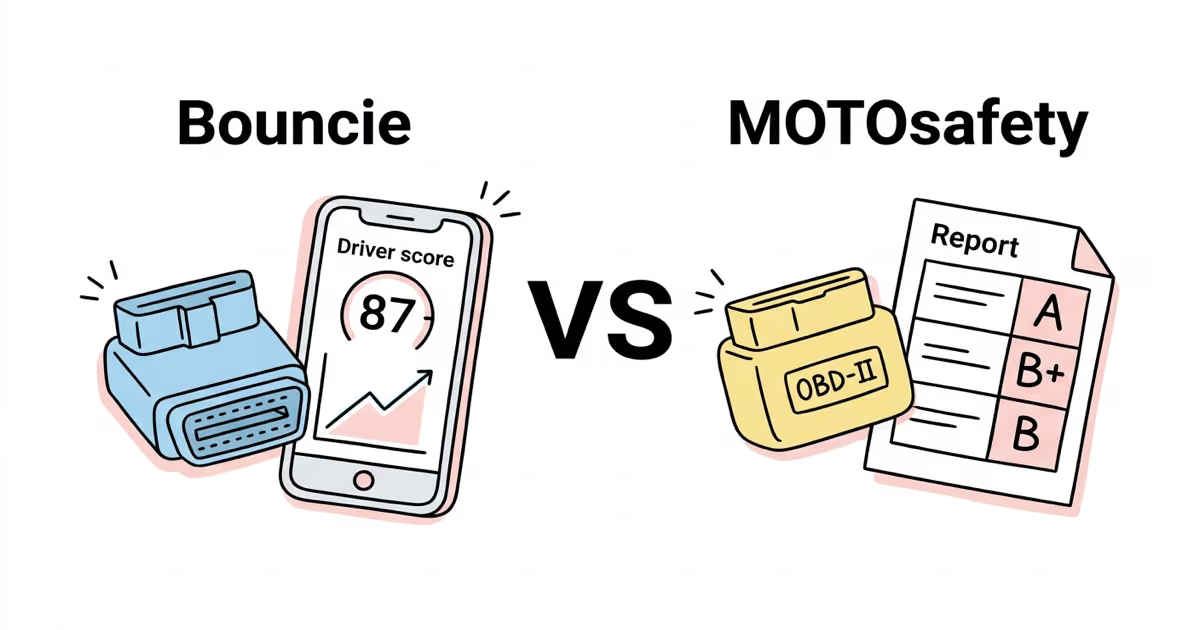
Bouncie is the better OBD-II tracker for most parents. It costs $67 for the device plus $8/month, updates location every 15 seconds, includes crash detection, and works with Alexa. MOTOsafety charges $25/month but adds structured A-F report cards and a built-in driving course. Over 12 months, Bouncie saves you $137 despite the upfront device cost.
Bouncie and MOTOsafety are the two most recommended OBD-II GPS trackers for monitoring teen drivers. Both plug into the diagnostic port under your steering wheel, both send speeding alerts to your phone, and both track every trip your kid takes. The difference comes down to philosophy: Bouncie gives you raw data and real-time tracking. MOTOsafety gives you structured coaching with weekly grades. We tested both on actual vehicles and compared them head-to-head so you can pick the right one.
- Bouncie costs $163/year ($67 device + $8/mo) with 15-second location updates and crash detection
- MOTOsafety costs $300/year ($0 device + $25/mo) with 60-second updates and A-F weekly report cards
- Bouncie tracks 4x faster (15-second vs 60-second intervals), catching more driving events in real time
- MOTOsafety includes a driving course that teaches teens safe habits through structured lessons
- Both require a 1996+ vehicle with an OBD-II port and work on AT&T/T-Mobile 4G networks
Bouncie vs MOTOsafety at a Glance
| Feature | Bouncie | MOTOsafety |
|---|---|---|
| Device Cost | $67 | $0 (included with subscription) |
| Monthly Cost | $8/mo | $25/mo |
| 12-Month Total | $163 | $300 |
| Update Interval | 15 seconds | 60 seconds |
| Driver Coaching | Driver score (0-100) with trends | A-F weekly report card + driving course |
| Crash Detection | ✓ Yes | ✗ No |
| Smart Home | ✓ Alexa + Google | ✗ No |
| Geofence Alerts | ✓ Yes | ✓ Yes |
| Curfew Alerts | ✓ Yes | ✓ Yes |
| App Quality | Modern, 4.8/5 rating | Dated, web portal is stronger |
| Contract | ✓ Month-to-month | ✓ Month-to-month |
| Network | AT&T / T-Mobile 4G | AT&T / T-Mobile 4G |
How Does Each OBD Tracker Monitor Driving Behavior?
This is where the two trackers take completely different approaches. Bouncie tracks the data. MOTOsafety turns it into a lesson plan.
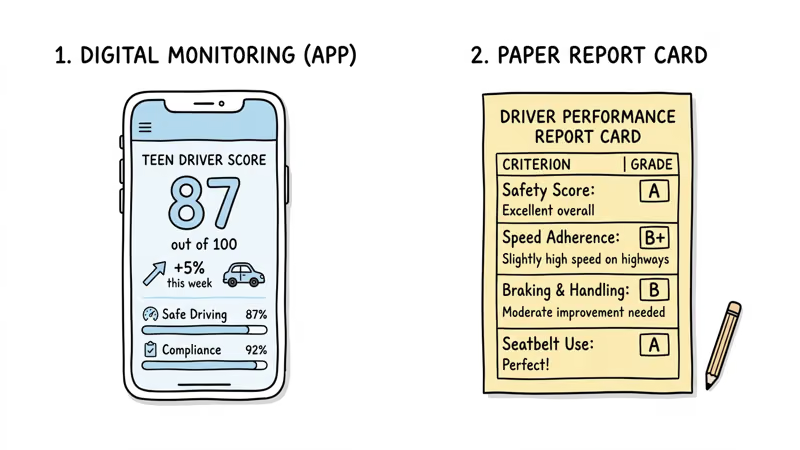
Bouncie assigns a driver score from 0 to 100 based on speeding, hard braking, and rapid acceleration events. The score updates after each trip. You can see trend graphs over time in the app, which makes it easy to spot improvement or regression. In our testing with the Bouncie GPS tracker, the score system surfaced specific incidents with timestamps and locations. That gave us concrete talking points rather than vague concerns.
MOTOsafety takes a more structured approach. Every week, it emails a driving report card that grades speed compliance, braking habits, acceleration patterns, and overall performance on an A-F letter scale. During our time with the MOTOsafety tracker, a test driver’s weekly grade improved from C+ to B over three weeks. The report card format works well for parents who want a simple, school-style summary they can review with their teen.
MOTOsafety also includes a built-in driving course. It walks teens through safe driving modules with quizzes. No other OBD tracker at this price point includes structured education like this.
The difference matters depending on your parenting style. Bouncie gives you the raw numbers and lets you decide what to discuss. MOTOsafety does the grading for you and adds a teaching component.
Tracking Speed and Accuracy
Bouncie refreshes your vehicle’s GPS position every 15 seconds while driving. MOTOsafety updates every 60 seconds. That 4x speed difference has real consequences.
At 15-second intervals, Bouncie captures enough data points to reconstruct a trip in detail. In our testing, it caught a hard-braking event on a residential street that a 60-second tracker would have missed entirely because the car was already stopped by the next ping.
MOTOsafety’s 60-second interval is adequate for knowing where the car is and whether it arrived at school on time. But it creates gaps in the driving behavior picture. A quick burst of speeding that lasts 30 seconds might not register at all.
Both devices report location within 15-20 feet of actual position under normal conditions. Accuracy degrades in parking garages and dense urban canyons where GPS signals bounce off buildings.
For parents who want to monitor how their teen drives, Bouncie’s faster updates paint a more complete picture. For parents who mainly want to confirm arrival and departure times, MOTOsafety’s 60-second intervals are sufficient.
What Does Each Subscription Include?
Bouncie’s $8/month covers everything. There are no tiers, no upgrades, and no add-on fees. That flat rate gets you:
- 15-second GPS updates
- Crash detection via built-in accelerometer
- Speed, braking, and acceleration alerts
- Geofence and curfew notifications
- 30-day trip history
- Vehicle diagnostics (engine codes, battery voltage)
- Alexa and Google Assistant integration
- 3 free roadside assistance calls per year
MOTOsafety’s $25/month also includes the full feature set, with no hidden tiers:
- 60-second GPS updates
- A-F weekly driving report cards
- Built-in teen driving course
- Speed, braking, and acceleration alerts
- Geofence and curfew notifications
- Trip history
- Vehicle diagnostics
The feature-per-dollar math favors Bouncie. At $8/month, you get faster tracking, crash detection, and smart home integration. MOTOsafety’s premium goes toward the report card system and driving course. Whether that’s worth $17/month extra depends on how much structure you want in your teen’s driving education.
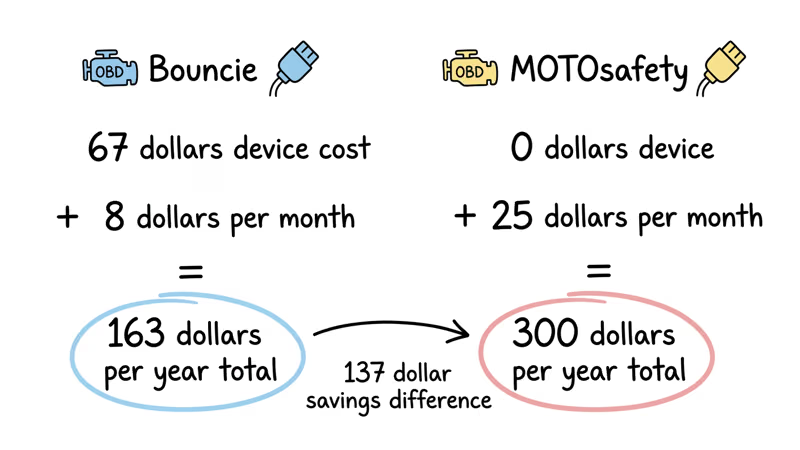
Over 12 months, the gap is stark. Bouncie totals $163 ($67 device + $96 in monthly fees). MOTOsafety totals $300 ($0 device + $300 in monthly fees). That $0 device price looks attractive until you realize MOTOsafety costs nearly twice as much per year. Bouncie’s official site confirms current pricing with no contract required.
For a wider look at how these fit among other OBD trackers, see our best OBD GPS tracker roundup.
Which Is Better for Monitoring a Teen Driver?
It depends on the stage your teen is at and what you want from the tracker.
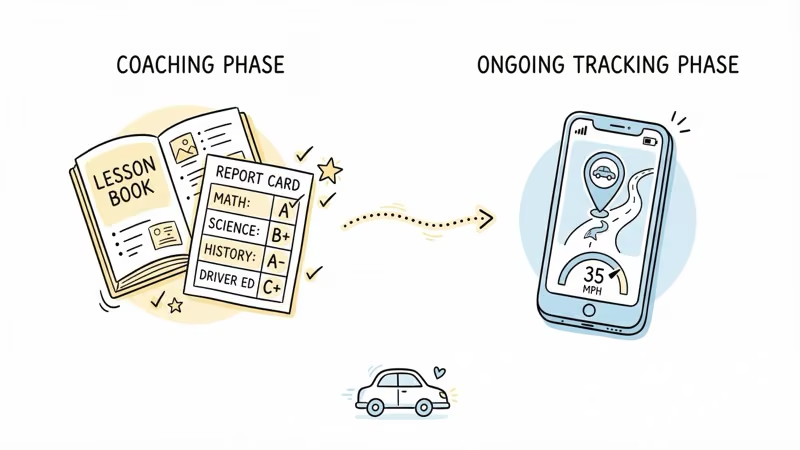
In the first 6 months of driving, MOTOsafety has a genuine edge. New teen drivers benefit from structured feedback. The weekly report card gives them a tangible grade to improve, and the driving course reinforces safe habits. Parents who want a hands-off coaching system that runs itself will find value here. MOTOsafety’s official site details their full course curriculum and report card system.
After the first year, Bouncie becomes the stronger choice for ongoing monitoring. By that point, your teen has established driving habits. What you need shifts from coaching to oversight: where is the car, is it speeding, and did it get there safely? Bouncie’s faster tracking, crash detection, and lower monthly cost are better suited for this long-term role.
There’s also the cost reality. Keeping MOTOsafety running for 2 years costs $600. Bouncie over the same period costs $259. That $341 difference buys a lot of gas money for a new driver.
For parents tracking multiple vehicles or teens, Bouncie’s math gets even better. Bulk pricing drops to $6.70/month per device at 3+ units. MOTOsafety offers no multi-vehicle discount.
According to the NHTSA’s teen driving data, the first 12 months after getting a license carry the highest crash risk. A tracker that detects collisions automatically, like Bouncie, addresses that risk directly.
If you’re weighing more than just these two, our best GPS tracker for teen drivers roundup covers seven options across different form factors and price points.
Should You Choose Bouncie or MOTOsafety?
- You want 15-second tracking without paying extra
- Crash detection is a priority for your family
- You prefer lower long-term cost ($163/year vs $300)
- You use Alexa or Google Home for notifications
- Your teen just got their license and needs structured coaching
- You want weekly report cards with letter grades
- The built-in driving course appeals to you
- You prefer $0 upfront cost over lower monthly fees
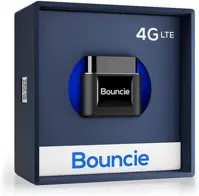 Top Pick
Bouncie
- 15-second GPS updates included in base plan
- Crash detection with built-in accelerometer
- $163/year total cost (lowest among OBD trackers with live tracking)
- Native Alexa and Google Assistant integration
- No contract, cancel anytime
- No structured driving report cards or grades
- No built-in driving course for new teen drivers
- $67 upfront device cost
MOTOsafety
- A-F weekly report cards with actionable feedback
- Built-in driving course with quizzes
- $0 upfront device cost
- Geofence and curfew alerts with weekly summary
- Web portal for detailed trip analysis
- $25/month subscription ($300/year total)
- 60-second update interval (4x slower than Bouncie)
- No crash detection
- No smart home integration
- Mobile app feels dated
If you’re also considering non-OBD options like magnetic trackers, our AirTag vs GPS tracker comparison covers the tradeoffs between Bluetooth trackers and dedicated GPS devices.
Bottom Line
Buy Bouncie if you want the best combination of tracking speed, safety features, and value. At $8/month with 15-second updates and crash detection, it covers what matters most for long-term teen driver monitoring. The $163 annual cost is hard to beat.
MOTOsafety earns its place if structured coaching matters to you during that critical first year. The A-F report cards and driving course give new teen drivers a framework for improvement that Bouncie doesn’t match. But at $25/month, you’re paying a premium for that structure, and the 60-second tracking and missing crash detection are real tradeoffs.
FAQ
Is Bouncie or MOTOsafety better for a new teen driver?
For the first 6-12 months, MOTOsafety's structured A-F report cards and built-in driving course give new teens a framework that Bouncie lacks. After that initial coaching period, Bouncie's lower cost and faster tracking make more sense for ongoing monitoring.
How much does Bouncie cost compared to MOTOsafety per year?
Bouncie costs $163 per year ($67 device + $96 in monthly fees). MOTOsafety costs $300 per year ($0 device + $300 in monthly fees). Despite the $67 upfront cost, Bouncie saves $137 over the first 12 months. The gap widens in year two since you don't repurchase the device.
Does MOTOsafety have crash detection like Bouncie?
No. MOTOsafety does not include crash detection. Bouncie uses a built-in accelerometer to detect impact events and sends immediate alerts to your phone. This is one of Bouncie's most significant advantages for parents concerned about safety.
Can my teen disable either tracker by unplugging it?
Both trackers send a disconnect alert if unplugged from the OBD-II port. Bouncie sends the notification within minutes. MOTOsafety includes the disconnect event in the weekly report card as well as sending a push notification. Neither tracker can be disabled through the app by a secondary user.
Which OBD tracker updates location faster?
Bouncie updates every 15 seconds while driving. MOTOsafety updates every 60 seconds. That means Bouncie provides 4 data points for every 1 from MOTOsafety, giving a much more detailed picture of driving behavior and route taken.
Do Bouncie and MOTOsafety work on the same cars?
Yes. Both require a vehicle manufactured in 1996 or later with a standard OBD-II diagnostic port. This covers the vast majority of gas-powered cars, trucks, and SUVs sold in the US. Some electric vehicles and heavy-duty diesel trucks may not have compatible ports.
Is MOTOsafety's teen driving course worth the extra cost?
For the first 6-12 months of a new driver's experience, the driving course and report card system provide genuine value that Bouncie doesn't offer. After that initial period, most parents find they're paying $17/month extra for features they no longer use regularly. Starting with MOTOsafety and switching to Bouncie after a year is a reasonable strategy.