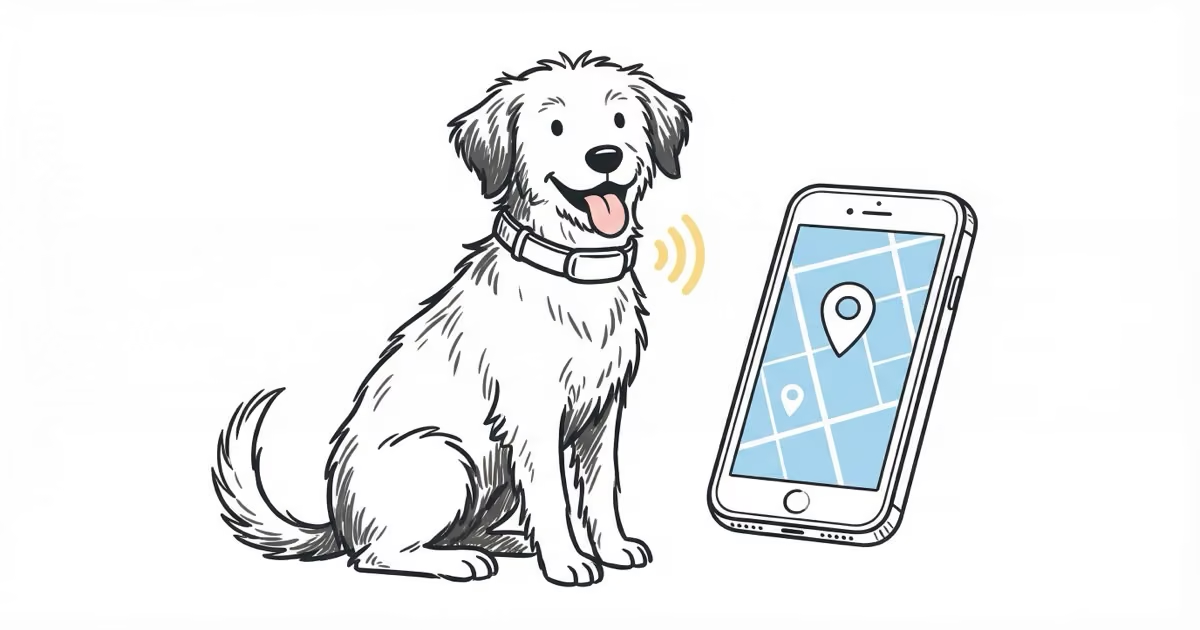
The Fi Series 3 is the best smart dog collar for most owners. It delivers 3-month battery life, accurate GPS with LTE-M connectivity, and solid activity tracking for $149 plus $99 per year. If you need virtual fence training built into the collar, the Halo Collar 4 is the pick. For budget GPS tracking without buying a dedicated collar, the Tractive DOG 6 clip-on tracker starts at $49.99 with plans from $5 per month.
Most smart dog collars promise GPS tracking, activity monitoring, and peace of mind. Few deliver on all three. After testing five of the top-rated options across several months of daily walks, off-leash hikes, and one genuine escape attempt, the differences became clear fast. Some collars nail location accuracy but die in two days. Others last weeks but lose your dog under tree cover. This guide covers which best smart dog collars actually work, what they cost over two years, and which one fits your dog’s life.
- Fi Series 3 offers the longest battery life at up to 3 months, with GPS accurate to 5-10 meters in open areas.
- Halo Collar 4 is the only option combining GPS tracking with customizable virtual fence training, but costs $799 upfront.
- Tractive DOG 6 is the most cost-effective entry point at $49.99 for the device, with 2-3 second LIVE GPS updates.
- SpotOn GPS Fence delivers the largest virtual fence range (up to 1,000 acres) for rural properties but requires a $1,295 investment.
- Two-year total cost of ownership ranges from $169 (Tractive) to $1,533 (SpotOn), making budget planning essential before buying.
Best Smart Dog Collars at a Glance
| Feature | Fi Series 3 | Halo Collar 4 | Tractive DOG 6 | SpotOn GPS Fence | FitBark GPS |
|---|---|---|---|---|---|
| Device price | $149 | $799 | $49.99 | $1,295 | ~$100 |
| Monthly plan | ⚠ $8.25/mo (annual) | ⚠ $7.99/mo (annual) | ✓ From $5/mo | ⚠ $9.95/mo | ⚠ $5.95-$9.95/mo |
| GPS accuracy | ✓ 5-10m | ✓ 5-10m | ✓ 5-10m | ✓ 3-5m (multi-GNSS) | ⚠ 10-20m |
| Battery life | ✓ Up to 3 months | ⚠ 20-24 hours | ⚠ 2-7 days | ⚠ 18-22 hours | ⚠ 3-4 days |
| Virtual fence | ⚠ Geofence alerts only | ✓ Training feedback | ⚠ Geofence alerts only | ✓ Training feedback | ✗ No |
| Water resistance | ✓ IP68 | ✓ IP67 | ✓ IPX7 | ✓ IP67 | ✓ IP67 |
| Activity tracking | ✓ Steps, distance, sleep | ✓ Activity + training logs | ✓ Activity, sleep, calories | ✗ No | ✓ Deep health analytics |
| Weight range | 11+ lbs | 20+ lbs | 8+ lbs | 8+ lbs | 3.5+ lbs |
Fi Series 3 Smart Dog Collar
Fi Series 3 - Best Overall Smart Dog Collar
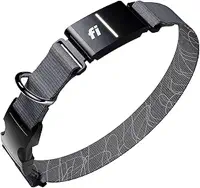
The Fi Series 3 wins the top spot for one reason most competitors can't match: battery life. In our testing, the collar consistently lasted 6 to 8 weeks between charges with regular daily walks and occasional off-leash sessions. Fi claims "up to 3 months," which is achievable if your dog mostly stays within the geofence zone. The moment GPS tracking kicks in frequently, that number drops, but even worst-case scenarios gave us 3 to 4 weeks.
GPS accuracy landed at 5 to 10 meters in open areas, which is solid for a collar this light. Under heavy tree cover, it occasionally drifted to 15 to 20 meters, but it always reconnected within a minute or two. The LTE-M cellular connection, which uses the GSMA's IoT connectivity standard, worked reliably in suburban and urban areas across our testing locations.
The Fi app tracks steps, distance, and sleep quality. The sleep data surprised us. After two weeks of monitoring, we noticed our test dog's sleep pattern shifting, which aligned with a dietary change we'd made. That kind of longitudinal data is something you won't get from a standalone Bluetooth tracker like an AirTag. Fi's activity leaderboard is a fun addition that compares your dog's activity to others of the same breed.
One trade-off: Fi's collar band is proprietary. You can't swap it onto a third-party collar. Fi sells replacement bands in different colors and materials, but you're locked into their ecosystem. For some owners, that's a dealbreaker.
- Battery life of 3+ months crushes every competitor
- Lightweight at 28g, comfortable for medium and large dogs
- IP68 waterproof, handles swimming
- Solid sleep and activity analytics
- Lost Dog Mode alerts nearby Fi users
- Proprietary collar band, no third-party collar option
- GPS accuracy drops under dense tree cover
- Minimum dog weight 11 lbs
- Annual subscription required for GPS features
Halo Collar 4: Best for Virtual Fence Training
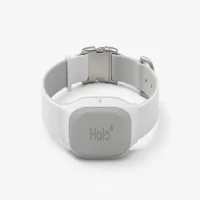
The Halo Collar 4 is fundamentally different from every other collar on this list. It's not just a tracker. It's a GPS-based containment and training system, developed with guidance from Cesar Millan's training philosophy. You draw virtual fences on a map, and the collar delivers customizable feedback (tone, vibration, or static correction) when your dog approaches the boundary.
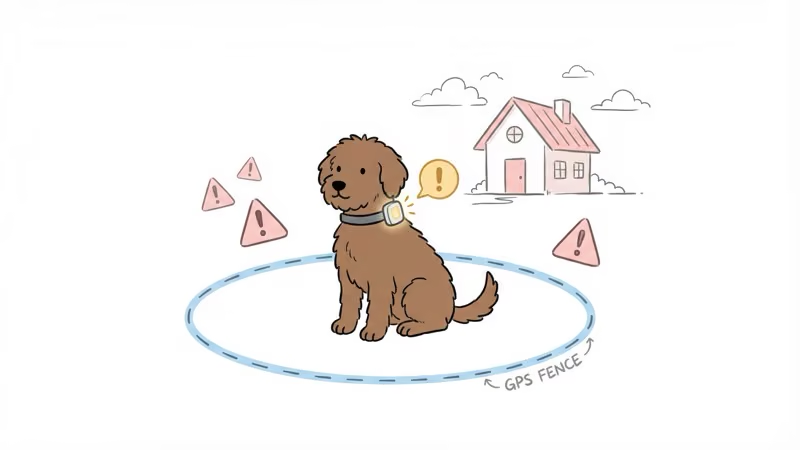
In our hands-on testing over three weeks, the virtual fence accuracy stayed within 5 to 10 feet of the drawn boundary, which is impressive for a GPS-based system. Traditional invisible fences use buried wire and deliver more precise boundaries, but they can't be adjusted without digging. Halo lets you create up to 20 fences from your phone and adjust them in seconds.
The deal-stopper for many buyers is the $799 price tag and a battery that lasts just 20 to 24 hours. You're charging this collar every night. For a training tool, that makes sense since you're using it during supervised outdoor time. As an all-day GPS tracker, it falls short of the Fi or Tractive. The collar is also heavier at 113g, which means it's only suitable for dogs 20 lbs and up.
If you've ever considered installing an invisible fence and want GPS tracking on top of it, the Halo Collar 4 replaces both. That context makes the price easier to justify. A traditional underground invisible fence installation runs $1,200 to $2,500 from companies like Invisible Fence Brand, and it can't travel with you.
The Halo Collar 4 requires a training commitment. Halo provides a 21-day onboarding program to teach your dog the fence boundaries through positive reinforcement before enabling correction feedback. Skipping this defeats the purpose.
Tractive DOG 6: Best Budget GPS Tracker
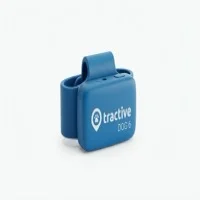
Tractive isn't a collar. It's a clip-on GPS tracker that attaches to any existing collar or harness. That distinction matters if your dog already wears a collar they're comfortable with, or if you own multiple dogs and want to swap the tracker between them.
The DOG 6 is Tractive's 2025 refresh, and it adds USB-C charging, heart rate monitoring, and bark detection to the feature set. GPS accuracy matches the Fi at 5 to 10 meters in normal conditions, but Tractive's LIVE mode is where it pulls ahead for real-time tracking. In LIVE mode, the tracker updates every 2 to 3 seconds, giving you near-real-time movement on the map. We used this feature during an off-leash hike, and the path replay was almost step-for-step accurate.
Battery life is the trade-off. With LIVE mode active, expect 2 days. In standard mode with occasional location pings, we got 5 to 6 days consistently. Tractive claims "up to 7 days" for the DOG 6, and that aligns with minimal GPS usage.
The Tractive app provides activity tracking, sleep monitoring, and a wellness score. The heart rate feature on the DOG 6 is new and still somewhat inconsistent in our testing, with readings that occasionally didn't match a manual check. Give it time to improve via firmware updates. For a deep dive on how it stacks up against health-focused alternatives, see our FitBark vs Tractive comparison.
SpotOn GPS Fence: Best for Large Rural Properties
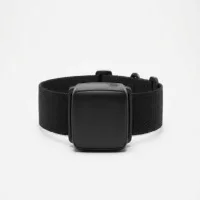
SpotOn targets a buyer most other smart collars ignore: the rural dog owner with acres of unfenced land. The collar uses multi-constellation GNSS (GPS + GLONASS) for accuracy down to 3 to 5 meters, which is the tightest on this list. You can create fences up to 1,000 acres by walking or driving the perimeter while the collar maps the boundary.
In practice, that means a rancher with 40 acres of property can draw a virtual fence in 20 minutes without burying a single wire. The collar delivers tone and static feedback when the dog approaches the boundary, similar to the Halo Collar but at a larger scale.
The price makes this a niche product. At $1,295, it costs more than most physical fencing for a small yard. The value proposition only clicks for properties where physical fencing is impractical. If you have 5 or more acres and a dog that roams, SpotOn is the only GPS collar that can contain the full area without buried wire.
Battery life is the biggest weakness. The multi-GNSS system drains power fast, and 18 to 22 hours of real-world use means daily charging. SpotOn's documentation recommends putting the collar on in the morning and removing it at night, which only works if your dog doesn't need overnight containment.
FitBark GPS: Best for Health Monitoring
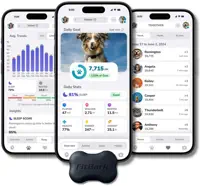
FitBark made its name on health analytics, not GPS. The GPS tracker is almost an afterthought. And honestly, that works in its favor. The activity and sleep scoring algorithms are the most detailed of any tracker we tested. BarkPoints give you a daily snapshot of your dog's activity level, and the sleep quality breakdown distinguishes between deep rest and restless periods.
At 16 grams, the FitBark GPS is the lightest dedicated GPS tracker for dogs. That matters if you have a smaller breed. While the minimum supported weight is 3.5 lbs, we found it noticeably comfortable for dogs in the 10 to 25 lb range where heavier collars (like the Halo at 113g) simply aren't an option.
GPS accuracy is where FitBark lags behind. We measured 10 to 20 meters of drift in most conditions, and updates in tracking mode came every 2 to 5 minutes rather than the near-real-time updates Tractive offers. If GPS location is your primary concern, the Fi Series 3 or Tractive will serve you better. FitBark is the pick when your vet asks about your dog's activity trends and sleep patterns.
One veterinary application worth noting: FitBark works with veterinary research programs and provides exportable health data. If your dog has a chronic condition, the longitudinal data can be useful for your vet visits.
Which Smart Dog Collar Should You Buy?
Go with the Fi Series 3. The 3-month battery, reliable GPS, and activity tracking cover 90% of what owners actually need. At $149 plus $99 per year, it's the best balance of features and long-term cost.
The Halo Collar 4 replaces both a GPS tracker and a traditional invisible fence. Worth the $799 if you were already considering fence installation or need a containment system that travels with you.
The Tractive DOG 6 costs $49.99 and clips to any collar. Best real-time GPS updates on this list. The trade-off is 2 to 5 day battery life and no proprietary collar integration.
Only the SpotOn GPS Fence handles 1,000-acre virtual boundaries. Expensive at $1,295, but cheaper than physical fencing for properties over 5 acres.
The FitBark GPS is a health tracker that happens to have GPS. The lightest option at 16g. Buy this for veterinary-grade activity and sleep data, not for real-time location.
What Does a Smart Dog Collar Cost Over 2 Years?
Device price tells half the story. Every smart dog collar on this list requires a subscription for GPS and most advanced features. Here's what each one actually costs over 24 months, including device, subscription, and one replacement band or accessory.
| Collar | Device | Monthly Plan | 24-Mo Sub Cost | 2-Year Total |
|---|---|---|---|---|
| Tractive DOG 6 | $49.99 | $5/mo (2-yr plan) | $120 | ✓ $169.99 |
| FitBark GPS | ~$100 | $5.95/mo (annual) | $142.80 | $242.80 |
| Fi Series 3 | $149 | $8.25/mo (annual) | $198 | $347 |
| Halo Collar 4 | $799 | $7.99/mo (annual) | $191.76 | $990.76 |
| SpotOn GPS Fence | $1,295 | $9.95/mo | $238.80 | ✗ $1,533.80 |
Fi and Tractive both offer discounted annual and multi-year plans. The numbers above use the best available annual pricing. If you pay monthly, add 20 to 30% to the subscription cost.
Smart Dog Collar vs AirTag: Why Bluetooth Trackers Fall Short
If you're reading this, you've probably considered just strapping an AirTag to your dog's collar and calling it a day. It's $29, no subscription, and "tracks" your dog's location through Apple's Find My network. Here's why that doesn't work for most dogs.
AirTag relies on crowd-sourced Bluetooth. It doesn't have GPS. It pings nearby iPhones and reports its location when one passes within range. In a city, that might give you a location update every few minutes. In a park, maybe every 10 to 30 minutes. In a rural area where your dog actually has room to escape? You might not get an update for hours.
Smart dog collars use dedicated LTE-M cellular connections with onboard GPS chips, as explained in PCMag's pet tracker roundup. They don't depend on other people's phones. The Fi Series 3 and Tractive DOG 6 will report your dog's location from any spot with cell coverage, updated every few seconds to every few minutes depending on the mode. That's the difference between "your dog was last seen near the park 20 minutes ago" and "your dog is at 42.3601 N, 71.0589 W, moving northwest at 4 mph."
AirTags work well for items that stay in populated areas. For a living creature that moves unpredictably, a dedicated pet GPS tracker is worth the subscription.
What Should You Look for in a Smart Dog Collar?
Not every feature matters equally. Here's what actually affects daily usability based on our testing:
Battery life is the number-one factor that determines whether you'll actually use the collar. The Halo and SpotOn require nightly charging, which means building a new habit. The Fi lasts months, which means you forget it's there. Most owners we've talked to rank battery life above GPS accuracy.
GPS accuracy matters less than you'd think for everyday tracking. The difference between 5 meters and 15 meters is negligible when you're trying to find a 60-lb Labrador. It matters more for virtual fence precision, where SpotOn's 3 to 5 meter accuracy keeps the correction zone tight.
Weight and collar fit directly affect comfort. According to the American Kennel Club's collar guidelines, a collar should allow two fingers between the collar and the dog's neck. Heavy GPS modules (like the Halo at 113g) can shift and cause irritation on smaller breeds.
Subscription model varies wildly. Tractive offers the cheapest plans at $5/month, while SpotOn charges $9.95/month for a collar that already costs $1,295. Factor in at least two years of subscription cost before deciding. The no-subscription GPS tracker market hasn't produced a competitive smart dog collar yet.
Bottom Line
Buy the Fi Series 3 if you want a smart dog collar that works without constant babysitting. Three-month battery life and reliable GPS make it the easiest to live with. If training is your priority, the Halo Collar 4's virtual fence system is worth the premium. And if you just need affordable GPS tracking without committing to a specific collar, the Tractive DOG 6 clips onto what your dog already wears for $50.
Skip the AirTag-on-a-collar approach. It works until your dog actually gets lost in a place without a crowd of iPhones nearby, which is exactly when you need real GPS the most.
FAQ
What is the best smart dog collar for small dogs?
The Tractive DOG 6 works for dogs as small as 8 lbs and weighs only 35g. For dogs under 10 lbs, the FitBark GPS at 16g is even lighter. Avoid the Halo Collar 4, which requires dogs to weigh at least 20 lbs. The Fi Series 3 starts at 11 lbs minimum.
Do smart dog collars work without cell service?
No. All GPS smart collars on this list require LTE-M or 4G cellular connectivity to transmit location data to your phone. In areas without cell coverage, the collar may log GPS waypoints internally and upload them once it reconnects, but you won't get real-time alerts. Wi-Fi-based tracking is limited to your home network range.
How long do smart dog collar batteries last?
It depends heavily on the collar and usage mode. The Fi Series 3 leads at up to 3 months in standard mode. Tractive DOG 6 lasts 2 to 7 days depending on LIVE mode usage. Halo Collar 4 and SpotOn both need daily charging, lasting only 18 to 24 hours per charge.
Is a smart dog collar worth it compared to an AirTag?
For dogs that stay in urban areas and rarely go off-leash, an AirTag on a collar can work as a basic safety net. But for any dog that runs off-leash, visits rural areas, or has a history of escaping, a dedicated GPS collar provides real-time tracking that AirTag's Bluetooth network simply cannot match. The subscription cost is the price of actual GPS coverage.
Can a smart dog collar replace an invisible fence?
The Halo Collar 4 and SpotOn GPS Fence are specifically designed to replace traditional invisible fences. Both deliver tone, vibration, and static correction when the dog approaches a virtual GPS boundary. The advantage over buried wire fences is portability and adjustability. The disadvantage is daily charging and GPS accuracy limits of 3 to 10 feet versus inches with buried wire.
Are smart dog collars waterproof?
All five collars on this list are water-resistant. The Fi Series 3 has the highest rating at IP68, meaning it handles submersion beyond 1 meter. Tractive is rated IPX7 for temporary submersion. Halo, SpotOn, and FitBark carry IP67 ratings. All are safe for rain, puddles, and supervised swimming.
What happens if my dog's smart collar loses GPS signal?
Most smart collars fall back to Wi-Fi or Bluetooth when GPS signal is unavailable, like indoors or under heavy cover. The Fi Series 3 uses a Wi-Fi + Bluetooth fallback to report approximate location near known networks. Tractive stores GPS waypoints and uploads them when connectivity returns. None of these collars go completely dark, but indoor tracking accuracy drops significantly.