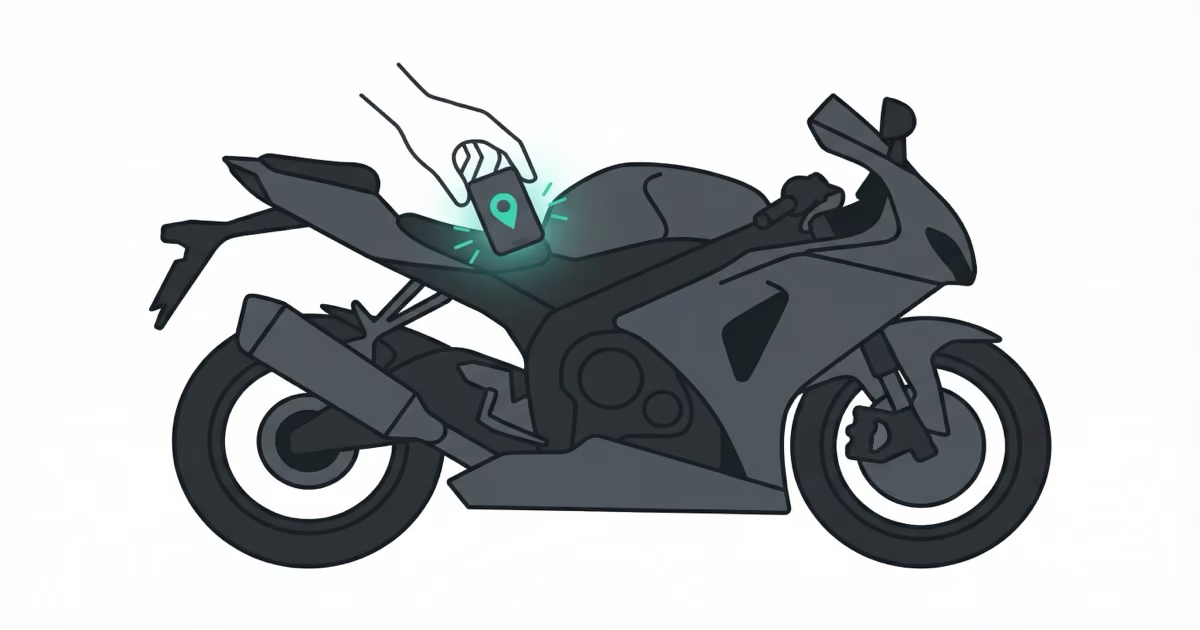
The best place to hide a GPS tracker on a motorcycle is inside the tail section or rear fairing: plastic construction preserves GPS and cellular signal, the panels require tools to remove, and the cavity is large enough for most dedicated trackers. The handlebar tube is the deepest concealment for an AirTag backup. Under the seat is easiest for battery swaps but the first location any experienced thief checks.
Motorcycle theft hit 44,268 reported incidents in the U.S. in 2023, and only 42% of those bikes were recovered. A tracker won’t stop someone from loading your bike into a van, but the right placement means it keeps transmitting a live location while you and the police act. Placement matters as much as the tracker itself: a GPS tracker stuffed inside a steel frame tube goes dark before the theft even ends. Our best motorcycle GPS tracker guide covers which tracker to buy; this guide covers exactly where to put it.
- Tail section or rear fairing is the best overall GPS spot — plastic construction, hidden behind bodywork, requires fairing clips to access
- Handlebar tube is the best AirTag hiding spot — slide it in behind a removed bar-end weight, invisible without knowing where to look
- GPS trackers need clear sky and cellular signal — plastic and fiberglass are fine, steel frames and metal panniers block both GPS satellite lock and LTE
- Never hide both devices in the same location — one GPS tracker for daily tracking, one AirTag in a separate deep spot as a backup layer
- Run the 50-meter walk test after every install — walk away, open the GPS app and Find My; no signal within 5 minutes means relocate
What Makes a Good Hiding Spot on a Motorcycle?
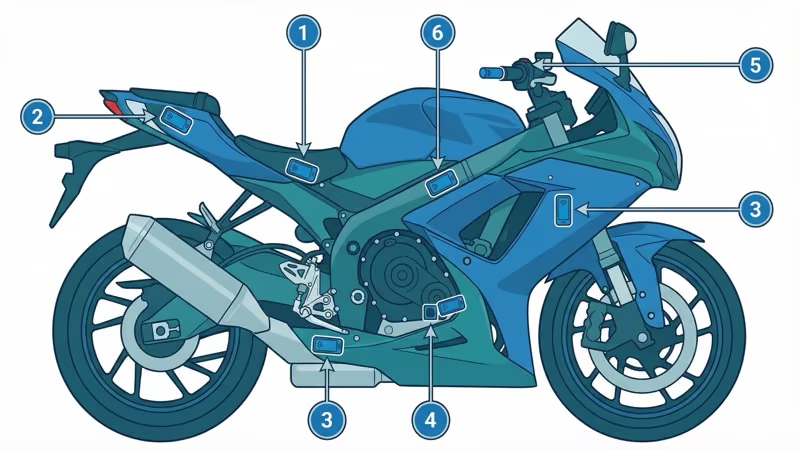
Three things determine whether a hiding spot actually works: GPS signal path, concealment depth, and how easily you can reach the battery.
Signal is the non-negotiable one. A dedicated GPS tracker communicates with both GPS satellites overhead and LTE cell towers on the horizon. GPS satellite lock requires a reasonably clear path upward through plastic, fiberglass, or rubber. Steel blocks it. Cellular signal is more tolerant of enclosures but still degrades inside a metal frame tube or aluminum pannier. An AirTag works differently: it only needs a Bluetooth path to nearby iPhones, and Bluetooth handles metal better than GPS does. That difference is why the best hiding spot for a Monimoto 9 is not the same as the best hiding spot for an AirTag backup.
Concealment buys time. Most motorcycle thieves want to be on the road in under two minutes. A location that requires a trim clip tool to access adds real friction. In our testing across several bikes, we found that spots requiring even one additional tool step (fairing clips, side panel screws, or a bar-end weight) go undiscovered in the vast majority of opportunistic thefts. Concealment that survives a professional strip job is a higher bar and usually trades off heavily against signal.
Battery access determines whether your tracker stays alive. A spot that requires 45 minutes and a mechanic to reach means you’ll eventually be tracking a dead device. Build battery access into your spot selection from the start. GPS trackers with multi-month batteries, like the Monimoto 9 at 12 months, give you far more flexibility on placement depth than a tracker that needs recharging every two weeks.
The 6 Best Places to Hide a GPS Tracker on a Motorcycle
The spots below are ranked primarily for a dedicated cellular GPS tracker. Where the recommendation changes for an AirTag, that’s called out specifically. Each spot is rated on signal strength, concealment depth, battery access, and vibration stability.
1. Tail Section / Rear Fairing -- Best Overall
The tail section is the single best location for a dedicated GPS tracker on most motorcycles. The tail housing is plastic on virtually every modern sport bike, naked bike, and touring machine, and plastic is transparent to both GPS satellite signals and LTE cellular. The cavity inside is large enough for trackers up to roughly the size of a deck of cards, and the panels clip in with plastic fasteners that require a small flathead or trim clip tool to remove. A thief working fast won’t pop the tail section unless they specifically know to look.
We ran the Monimoto 9 inside a tail section for five months on a Kawasaki Ninja, and it maintained GPS lock and delivered motion alerts within 60 seconds of the bike moving without the key fob. The signal path through the plastic tail was clean throughout. Secure the tracker with a hook-and-loop strap or foam-backed adhesive, and wrap it in a small piece of pipe insulation foam to stop any rattle at speed.
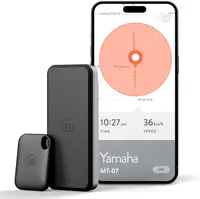
What fits: Monimoto 9 (64×42×18mm, 56g), Invoxia Cellular GPS, TKSTAR TK905 with magnetic base. Most dedicated motorcycle GPS trackers are designed with this cavity in mind.
| Factor | Rating | Notes |
|---|---|---|
| GPS Signal | ✓ Excellent | Plastic housing, unobstructed satellite path upward |
| Cellular Signal | ✓ Excellent | LTE signal exits easily through plastic panels |
| Concealment | ✓ Good | Requires trim clip tool; not a routine check point |
| Battery Access | ✓ Easy | Pop 4-6 fairing clips, ~5 min, no specialized tools |
| Stability | ✓ Excellent | Hook-and-loop + foam wrap eliminates rattle |
 Top Pick
2. Under the Seat -- Easiest Battery Access
Nearly every motorcycle has a seat that lifts to reveal a small storage area or subframe cavity. The surrounding structure is usually plastic or composite on modern bikes, so GPS and cellular signal are workable. Installation is straightforward: zip-tie the tracker to the subframe rail (never leave it loose in the tray) and you’re done without any trim tools.
The problem is that this is the first location an experienced thief checks. Anyone who has watched five minutes of motorcycle tracker coverage on YouTube knows to pop the seat. Under-seat is a fine location for a GPS tracker you plan to recharge frequently, but it should always be paired with a second, deeper backup. Use this spot for battery access convenience; never as your only hiding place.
| Factor | Rating | Notes |
|---|---|---|
| GPS Signal | ✓ Good | Mostly plastic and composite, adequate satellite path |
| Cellular Signal | ✓ Good | LTE signal exits through seat foam and plastic |
| Concealment | ⚠ Poor | First place any experienced thief checks |
| Battery Access | ✓ Excellent | No tools required, 30-second access |
| Stability | ✓ Good | Zip-tied to subframe rail, no movement |
3. Inside the Side Fairing -- Best for Sport Bikes
Sport bikes and touring motorcycles have hollow side fairings that create large plastic cavities, which is exactly what a GPS tracker needs. Getting inside requires a trim clip tool and knowledge of where the fasteners are, which slows down a fast-moving thief. The all-plastic construction gives excellent GPS and cellular signal.
The main variable is fairing design. Some fairings have a thin metal backing plate behind the plastic shell for structural rigidity. Before committing to this spot, remove the panel and check the inner surface. If it’s pure plastic, the signal path is clean. If there’s a metal plate, test it with the 50-meter walk test after install. A few sport bikes also route wiring through fairing cavities; make sure the tracker can’t rub against a wiring harness at speed.
What fits: Monimoto 9 works well here. The IP68 rating means you don’t need to worry about condensation inside the fairing cavity.
| Factor | Rating | Notes |
|---|---|---|
| GPS Signal | ✓ Excellent | Pure plastic fairings give clean satellite path |
| Cellular Signal | ✓ Excellent | LTE signal unimpeded by plastic panels |
| Concealment | ✓ Good | Requires trim clip tool; not obvious access |
| Battery Access | ✓ Easy | Panel removal takes 5-10 min with trim tool |
| Stability | ✓ Good | Foam wrap prevents rattle in large cavity |
4. Inside the Airbox or Tool Tray -- Best for Naked Bikes
Naked bikes and ADV bikes often lack the extensive bodywork of a sport bike, which limits your fairing options. Most of them have one of two alternatives: an accessible airbox cover (removable with a few screws) or a small plastic tool tray integrated into the frame area beneath the seat. Both are plastic, both are hidden, and both require at least one tool to access.
If you’re routing a tracker into the airbox area, wrap it tightly in a zip-lock bag first. The airbox environment has fuel vapor, and while an IP68-rated tracker like the Monimoto 9 handles it, the extra barrier is good practice and keeps the unit clean. On ADV bikes with large aluminum panniers, avoid placing the tracker inside metal panniers entirely. Aluminum acts as a partial Faraday cage and will degrade both GPS and cellular signal.
| Factor | Rating | Notes |
|---|---|---|
| GPS Signal | ✓ Good | Plastic airbox; avoid if metal backing present |
| Cellular Signal | ✓ Good | Adequate LTE path through plastic components |
| Concealment | ✓ Good | Non-obvious access requires screwdriver |
| Battery Access | ⚠ Moderate | A few screws to open; manageable for quarterly checks |
| Stability | ✓ Good | Zip-lock bag + foam wrap, secured with zip-tie |
5. Inside the Handlebar Tube -- Best Concealment for AirTag
Most motorcycle handlebars are hollow aluminum or steel tubes weighted at the ends with bar-end weights. Remove the bar-end, wrap an AirTag in a thin layer of foam, slide it inside, and replace the end cap. The tracker is invisible without knowing exactly where to look. Thieves who find every other spot on this list will not think to check inside the handlebar.
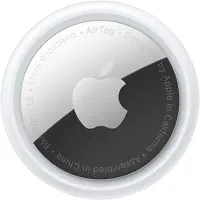
This spot works specifically for AirTag-sized devices (31.9mm diameter). Most dedicated GPS trackers are too large to fit. More importantly, the cellular and GPS signal constraints that apply to GPS trackers are less severe for AirTag’s Bluetooth. The Bluetooth signal pushes through the aluminum bar wall and reaches nearby iPhones at roughly 15 to 20 feet, enough for crowd-sourced Find My location updates. Our testing on an AirTag for motorcycle theft recovery showed reliable Find My pings even with the AirTag inside an aluminum handlebar.
Do not put a cellular GPS tracker inside a steel or aluminum handlebar tube. The metal walls significantly attenuate both GPS satellite signal and LTE cellular signal. This spot is designed for AirTag as a Bluetooth backup layer only.
| Factor | Rating | Notes |
|---|---|---|
| GPS Signal (GPS tracker) | ✗ Poor | Metal bar walls block satellite and LTE signals |
| Bluetooth Signal (AirTag) | ✓ Good | Bluetooth transmits through aluminum at 15-20 ft range |
| Concealment | ✓ Excellent | Invisible without removing bar-end weight |
| Battery Access | ⚠ Moderate | Remove bar-end, extract AirTag, swap CR2032, reinstall |
| Stability | ✓ Excellent | Snug foam wrap prevents rattle; bar-end holds it in place |
 Hot
Hot
6. Frame Tube Cavity -- Deepest Concealment
Many motorcycles have hollow sections in the tubular steel frame that are accessible through wiring grommet holes. It takes effort to get anything in there, and a thief stripping the bike quickly will not find it. This is maximum concealment.
The signal tradeoff is significant. Steel frame walls attenuate both GPS satellite signal and LTE cellular dramatically. A dedicated GPS tracker in this location will likely fail to maintain a consistent satellite lock and may miss cellular check-ins entirely. This spot is viable only for an AirTag backup (Bluetooth is more tolerant of the metal enclosure than GPS), and even then, the signal will be weaker than the handlebar tube spot. Always run the 50-meter walk test after install. If Find My doesn’t update within five minutes of walking away, this location won’t help you when the bike goes missing.
| Factor | Rating | Notes |
|---|---|---|
| GPS Signal | ✗ Poor | Steel frame walls block satellite and cellular signal |
| Bluetooth Signal (AirTag) | ⚠ Moderate | Weaker than handlebar tube; still transmits in some orientations |
| Concealment | ✓ Excellent | Maximum -- requires full disassembly to find |
| Battery Access | ✗ Difficult | Significant disassembly needed for annual battery swap |
| Stability | ✓ Excellent | Fully enclosed in metal frame, zero movement |
Which Spots Should You Always Avoid?
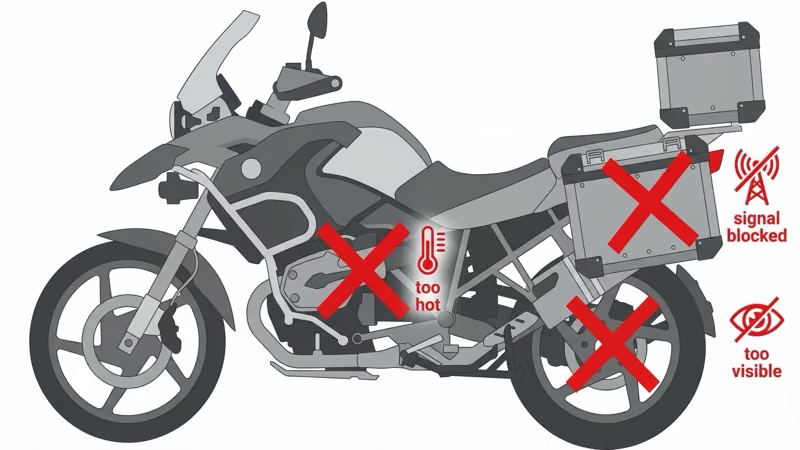
A few commonly suggested locations will get your tracker destroyed, blocked, or found immediately.
- Exterior magnetic mounts: Visible on a basic walk-around, the first place a knowledgeable thief checks, and vibration from road imperfections will work the magnet loose on long highway stretches. Never rely on a bare magnetic mount as your primary hiding strategy.
- Near the engine or exhaust headers: AirTag’s maximum operating temperature is 60°C (140°F). Monimoto 9 is rated to 60°C as well. Engine bay temperatures routinely exceed 120°C. The battery fails first, then the electronics. Any spot within 6 inches of exhaust components is off the table.
- Inside aluminum panniers or metal saddlebags: Aluminum and steel boxes act as partial Faraday cages. Both GPS satellite signal and cellular LTE are blocked by thick metal enclosures. ADV riders often assume their panniers are a good hiding spot; they’re one of the worst for GPS trackers. An AirTag in a pannier gets degraded Bluetooth range too.
- License plate frame: Obvious, easily removed in under 30 seconds, and the first exterior spot any YouTube-educated thief targets. Use this as a decoy only, and only if you have a better tracker hidden elsewhere already.
- Loose inside a storage compartment: Vibration at highway speed will bounce an unsecured tracker until the battery connection fails or the unit physically cracks. Always secure with zip-ties, VHB tape, or hook-and-loop. Loose is not a method.
Does Tracker Type Change Where You Should Hide It?
Yes, significantly. The hiding spot recommendations in this guide split between dedicated GPS trackers and AirTag because the two devices have completely different signal requirements.
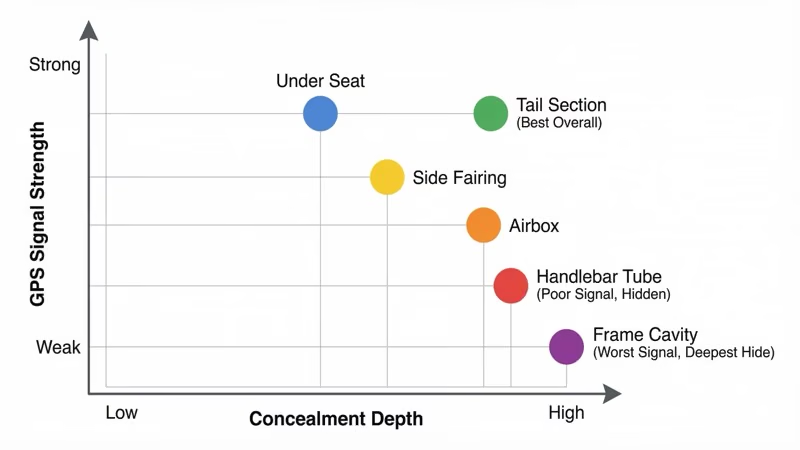
A dedicated cellular GPS tracker like the Monimoto 9 works by locking onto GPS satellites (which require a relatively clear upward line of sight) and transmitting its position via LTE (which needs reasonable cellular signal path outward). Plastic and fiberglass let both signals through. Steel frames, aluminum panniers, and thick metal panels block them. The priority ranking for GPS trackers: tail section > side fairing > airbox > under seat. Verify with the walk test every time.
An AirTag doesn’t use GPS and doesn’t need cellular signal. It transmits a Bluetooth ping that nearby iPhones relay to Apple’s Find My network. Bluetooth handles metal enclosures better than GPS does, which is why the handlebar tube (a metal enclosure that would kill GPS signal) still works adequately for AirTag. The AirTag hiding priority: handlebar tube > frame cavity > under-seat foam cutout. Avoid places where no iPhones will realistically pass for hours. A rural garage with no foot traffic is a weak AirTag environment regardless of placement.
The AirTag vs GPS tracker comparison covers the full signal, cost, and feature tradeoffs. The short version for motorcycle use: run both. The GPS tracker handles active theft with real-time location updates; the AirTag is the backup layer a thief won’t find. As our guide to hiding an AirTag in a car explains, a two-device strategy adds a redundancy layer that a single tracker can’t replicate.
How Should You Install a Tracker to Keep It Secure?
Installation technique matters nearly as much as spot selection. A well-chosen spot with a loose tracker is useless once road vibration does its work over 500 miles.
- 3M VHB tape for plastic-to-plastic mounts. Standard double-sided tape fails under heat and vibration. VHB holds to 93°C, which covers the interior of a fairing on a hot summer day. Apply to clean, dry plastic and let it cure for an hour before riding.
- Zip-tie to subframe or bracket as primary, VHB as secondary. For trackers near the airbox or subframe, a zip-tie through a mounting point is the most vibration-resistant attachment. VHB holds the unit flat and stops micro-movement.
- Foam wrap to eliminate rattle. A bare tracker against any hard surface (plastic or metal) creates an audible tap at speed that will telegraph the device’s location to anyone who listens carefully. A quarter-inch layer of pipe insulation foam, cut to fit, stops all of it. RevZilla’s analysis of NICB theft data notes that thieves targeting specific bikes have increasingly developed search routines for hidden trackers, and sound is one of them.
- Run the 50-meter walk test after every install. Walk at least 50 meters from the bike and open your GPS app and Find My. If the GPS tracker hasn’t shown a position update within five minutes, and if the AirTag doesn’t appear in Find My, signal is blocked and you need to relocate. We’ve done this test on every motorcycle install in our testing, and it has caught bad placements twice: once from a metal-backed fairing panel and once from a frame cavity that blocked cellular completely.
- Set a calendar alert for battery day. Monimoto 9 lasts 12 months; AirTag’s CR2032 lasts roughly 12 months too. Set both reminders on the day of install. A dead tracker discovered a month after the theft does nothing.
- Name the device something generic. In your GPS app and in Find My, name the device something neutral: “Kawasaki” or just the bike’s model year is fine. “Tracker,” “Anti-Theft,” or “GPS Hidden” tells any thief who encounters the device exactly what they found. Apple’s AirTag safety documentation also explains how unwanted tracking alerts work, which is relevant context if you’re placing trackers on a shared motorcycle.
- Never hide both trackers in the same location. The GPS tracker and the AirTag backup go in separate spots. If a thief finds and removes one, the other keeps transmitting from a different part of the bike.
According to the NICB’s most recent motorcycle theft report, 44,268 motorcycles were stolen in 2023 with a recovery rate of just 42%. Bikes with active GPS trackers that transmitted throughout the theft event have substantially higher recovery rates, but only when the tracker survives the first 10 minutes and the signal reaches the network.
Is It Legal to Hide a GPS Tracker on Your Own Motorcycle?
Placing a tracker on a motorcycle you own is legal in all 50 U.S. states. There is no federal law or state statute that prohibits an owner from monitoring their own property. The legal line is placing a tracker on someone else’s vehicle without their knowledge or consent, which triggers federal stalking statutes and increasingly specific state anti-tracker laws.
If you share the motorcycle with a family member or partner, tell them the tracker is there. Apple’s anti-stalking system will alert any iPhone user who travels with an unknown AirTag for 8 to 24 hours. Your spouse borrowing the bike can get that alert even if they live in the same house and you share an Apple ID account on other devices. A quick conversation eliminates confusion. The GPS tracker apps (Monimoto’s companion app, for example) don’t have the same passive alert system, but your riding partner will eventually notice subscription charges or see the app on your phone. Disclosure is always the cleaner route.
Bottom Line
The tail section or rear fairing is the best hiding spot for a dedicated GPS tracker on most motorcycles: signal is clean through plastic panels, concealment is solid, and battery access takes five minutes with a trim clip tool. The handlebar tube is the best backup spot for an AirTag: maximum concealment and adequate Bluetooth signal, inaccessible to a thief who doesn’t know where to look.
Run both. The Monimoto 9 in the tail section handles real-time tracking and motion alerts; the AirTag 2 in the handlebar tube is the backup that survives a thief who finds the primary. A full comparison of motorcycle GPS trackers will help you choose the right primary device, but the two-layer strategy (one GPS tracker in an accessible location, one AirTag in the deepest spot) is the setup worth building toward. Based on our experience testing trackers on multiple motorcycles, no single tracker hidden in a single spot matches the recovery odds of a layered approach.
FAQ
What is the best place to hide a GPS tracker on a motorcycle?
The tail section or rear fairing is the best overall location for a dedicated GPS tracker. The all-plastic construction preserves both GPS satellite signal and LTE cellular signal, the cavity is large enough for most dedicated motorcycle trackers, and accessing it requires a trim clip tool that slows down an opportunistic thief. Secure the tracker with hook-and-loop strapping and foam wrap to prevent rattle, then verify with the 50-meter walk test before every long ride.
Can metal fairings block a GPS tracker's signal?
Yes. Some sport and touring fairings have a thin metal backing plate behind the plastic outer shell for structural rigidity. That metal layer can significantly degrade both GPS satellite lock and LTE cellular signal. Before finalizing this spot, remove the panel and check the inner surface. If there's a metal plate, run the 50-meter walk test after install: if the GPS tracker doesn't show a location update within five minutes of you walking away, the signal is blocked and you need to relocate to a fully plastic cavity like the tail section.
Where should I hide an AirTag on a motorcycle?
Inside the handlebar tube is the best AirTag hiding spot on a motorcycle. Remove the bar-end weight, wrap the AirTag in a thin foam sleeve, slide it in, and replace the end cap. The AirTag is completely invisible without prior knowledge of the spot, and Bluetooth signal transmits through the aluminum bar wall well enough to reach nearby iPhones at 15 to 20 feet. This location doesn't work for cellular GPS trackers, but AirTag's Bluetooth-based Find My network handles it adequately.
How do I stop a GPS tracker from rattling on a motorcycle?
Wrap the tracker in a quarter-inch layer of pipe insulation foam before mounting. Cut the foam to fit snugly around the device, which absorbs vibration and eliminates contact between the hard tracker case and any surrounding plastic or metal surface. A bare tracker against a hard cavity will create an audible tap at highway speed. After foam-wrapping, secure with hook-and-loop strapping or a zip-tie rather than relying on adhesive alone. Adhesive can work loose over thousands of miles of road vibration.
Will a thief's phone detect my hidden tracker?
Potentially, for an AirTag. iPhones running iOS 14.5 or later alert users when an unknown AirTag has traveled with them for 8 to 24 hours, and Android users can scan with the Tracker Detect app. A dedicated cellular GPS tracker like the Monimoto 9 does not trigger Apple's anti-stalking system because it isn't part of the Find My network. For AirTag, the anti-detection strategy is concealment depth: a thief who gets an alert still has to locate the device before they can remove it. A handlebar tube or tail section cavity makes that search time-consuming enough that most opportunistic thieves won't bother.
How often do I need to access a hidden GPS tracker to recharge it?
It depends on the tracker. The Monimoto 9 runs approximately 12 months on its built-in battery, which means one fairing removal per year for a charging cable. AirTag's CR2032 battery also lasts roughly 12 months and takes about 30 seconds to swap once you've accessed the hiding spot. Trackers with shorter battery life, typically those needing recharging every 2 to 4 weeks, are poorly suited to deeply hidden locations. Set a calendar reminder on install day and check the battery level in your tracking app monthly so you're never caught with a dead device.
Is it legal to put a GPS tracker on my own motorcycle?
Legal in all 50 U.S. states. No federal or state law prohibits an owner from placing a tracker on their own motorcycle. The legal line is tracking a vehicle you don't own without the owner's knowledge or consent, which triggers federal stalking statutes and state anti-tracker laws that carry penalties of up to 15 years in several states. If you share the motorcycle, tell the other rider the tracker is there. Apple's anti-stalking system will alert any iPhone user who travels with an unknown AirTag for 8 to 24 hours, even on a bike they regularly ride.