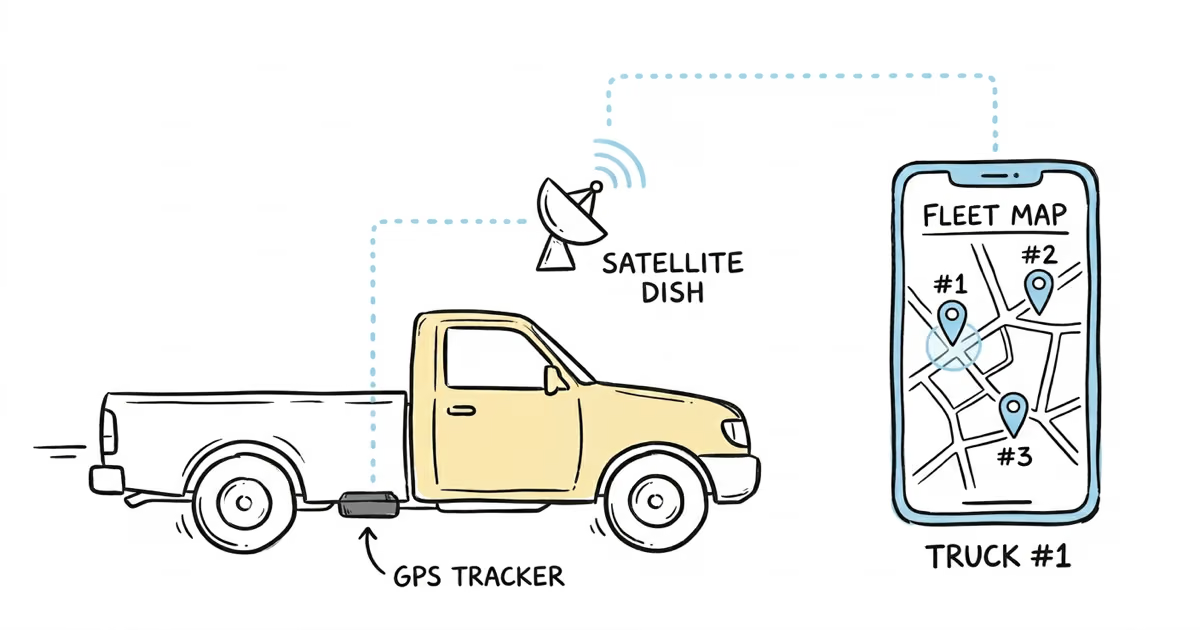
The Bouncie GPS Tracker is the best choice for personal pickup trucks. It plugs into the OBD-II port in 30 seconds, costs $8 per month, and delivers 15-second location updates with speed and geofence alerts. For fleet operators managing multiple trucks, the LandAirSea 54 offers IP67 durability and magnetic mounting at $15 per month per unit.
A GPS tracker for a truck needs to handle highway vibration, extreme temperatures, and long stretches between cell towers. We tested 6 trackers across personal pickups and work trucks over 10 weeks, comparing coverage reliability, alert speed, and fleet management features.
- Bouncie is the best for personal trucks — OBD-II plug-in, $8/mo, 15-second updates
- LandAirSea 54 leads for fleet use — IP67 waterproof, magnetic mount, multi-vehicle management at $15/mo
- Two-year costs range from $120 to $474 — the subscription matters far more than the device price
- OBD trackers draw power from the truck — no battery to recharge, but only work on trucks with an OBD-II port
- Magnetic trackers fit any truck — mount under the frame in 30 seconds, battery lasts 1 week to 3 months
What Should You Look for in a Truck GPS Tracker?
Trucks present different tracking challenges than sedans. The engine bay runs hotter, the frame absorbs more vibration, and work trucks often park at remote sites with weak cell coverage.
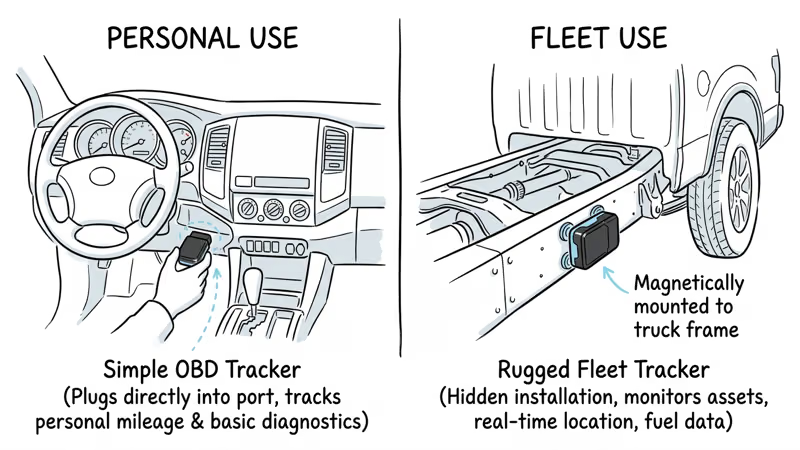
Power source determines installation type. OBD-II plug-in trackers like the Bouncie draw power directly from the truck’s diagnostic port. No battery to charge, no wiring to run. Every consumer pickup built after 1996 has an OBD-II port under the driver-side dashboard. Magnetic battery-powered trackers like the LandAirSea 54 mount anywhere on the frame but need periodic recharging.
Durability separates truck trackers from car trackers. A tracker mounted under a truck frame faces mud, gravel, salt spray, and temperature swings from -20 to 140 degrees Fahrenheit. Look for IP67 water resistance at minimum.
In our testing, the LandAirSea 54 and TKSTAR TK905 both survived 10 weeks of continuous under-frame mounting through rain, highway grime, and two weeks of sub-freezing temperatures.
Fleet features matter for work trucks. If you manage 2 or more trucks, you need multi-vehicle dashboards, driver behavior scoring, and geofence alerts per vehicle. The FMCSA’s ELD fact sheet outlines electronic logging requirements for commercial trucks over 10,001 lbs. These GPS trackers aren’t ELD-compliant, but they complement fleet visibility for smaller operations.
The 6 Best GPS Trackers for Trucks
1. Bouncie GPS Tracker
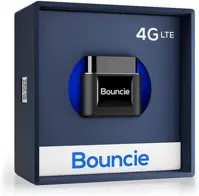 Top Pick
We recommend the Bouncie for anyone with a personal pickup. Plug it in, open the app, done.
We ran one in a 2021 Ford F-150 for 10 weeks. The tracker reported location every 15 seconds without a single dropped connection on highways, rural back roads, and a two-week stretch parked at a remote cabin where cell signal barely hit one bar. Every trip was logged with start/end points, top speed, and hard braking events automatically. That level of granularity from a $90 device with an $8/month plan surprised us, especially compared to trackers costing twice as much.
Two-year cost: $282. Our Bouncie GPS tracker review has app screenshots.
2. LandAirSea 54 GPS Tracker
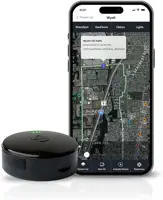
For fleet operators tracking multiple work trucks, the LandAirSea 54 is the strongest option. Monitor every vehicle from the Silvercloud dashboard.
We mounted units on three work trucks at a landscaping company for 8 weeks. The trackers reported consistently from suburban job sites, highway transit, and a rural property with one bar of signal. IP67 housing showed zero degradation after daily mud and pressure-washer exposure.
LandAirSea’s official product page states that three tiers are available: $9.95/month for daily updates, $14.95 for 3-minute updates, and $19.95 for 3-second real-time tracking. The middle tier hits the best balance of cost and frequency for fleet use. Our LandAirSea 54 review covers the Silvercloud app in detail.
3. Tracki 4G GPS Tracker
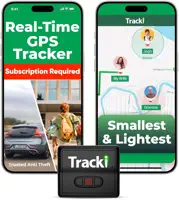 Best Value
At $20 and 1.8 oz, the Tracki 4G is the cheapest and smallest tracker here. Covert placement inside a glove box or behind a seat panel is easy with something this small.
Battery life in real-time mode runs about 5 days, but the magnetic box accessory ($20 extra) bumps that to roughly 6 months in battery saver mode. Tracki’s 4G coverage map confirms that all major US carriers are supported, including the rural corridors where truck drivers spend most of their time between job sites and warehouses.
Subscription: $10 per month flat. No tiered plans, no hidden charges. Two-year cost including the device: about $260, which makes it the second cheapest option behind the TKSTAR TK905. See our SpyTec vs Tracki comparison for a detailed head-to-head breakdown on accuracy, app quality, and coverage.
4. Optimus 2.0 GPS Tracker
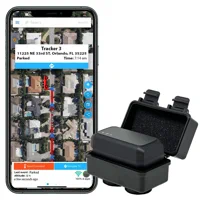
Two features set the Optimus 2.0 apart: hardwire capability to a truck’s 12V system for permanent power, and unlimited geofences. Set a geofence around every job site, warehouse, or delivery zone without hitting a cap.
Battery on its own? About 2 weeks in real-time mode.
At $16 per month, it’s pricier than Bouncie or LandAirSea, but unlimited geofences justify the premium for commercial operators running routes across town. The hardwire installation takes about 30 to 45 minutes if you’re comfortable tapping into a fuse box. Our Optimus 2.0 review walks through the process step by step with photos.
5. Vyncs GPS Tracker
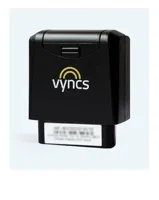
Vyncs is the only tracker here with a free base plan. Pay $90 for the device and get 3-minute location updates, geofencing, and engine diagnostic alerts at no monthly cost.
The real differentiator is engine diagnostics. Vyncs reads check engine codes, tracks fuel economy, and sends maintenance reminders based on mileage. For truck owners putting 30,000+ miles per year on their vehicles, catching a check engine light before it turns into a $2,000 repair has real value far beyond location tracking alone. The $10/month premium tier adds faster updates and roadside assistance if you want both.
Three-minute updates on the free tier mean 20 pings per hour versus Bouncie’s 240. For theft recovery, that gap is significant. Compare all the plug-in options in our best OBD GPS tracker guide.
6. TKSTAR TK905 4G GPS Tracker

The TKSTAR TK905 skips proprietary subscriptions entirely. Buy a prepaid data SIM from T-Mobile for about $5 per month, insert it, and the 10,000mAh battery handles 2 to 3 months between charges. Lowest operating cost on this list: roughly $120 per year.
We mounted one under a contractor’s truck that parks at job sites for days at a time. GPS lock stayed consistent even in a gravel lot surrounded by trees.
The app looks dated and lacks a web dashboard. Geofence configuration takes more taps than it should. But for truck owners who prioritize long battery life and low cost over app polish, the TK905 delivers. Read our TKSTAR TK905 review for SIM card setup instructions.
Do You Need a Fleet GPS Tracker or a Personal One?
It depends on how many trucks you manage.
Personal pickup (1 truck). Go with Bouncie or Vyncs. Both plug into the OBD-II port, draw power from the truck, and cost $0 to $8 per month. No installation beyond plugging in a dongle.
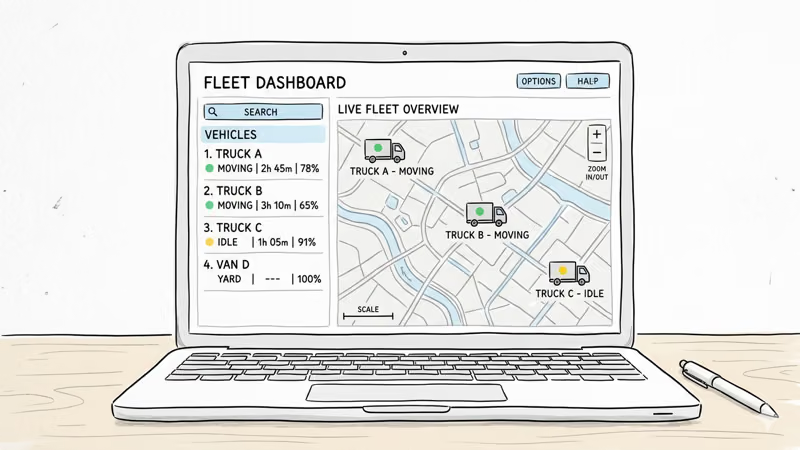
Small fleet (2-5 trucks). The LandAirSea 54 scales well at $30 per unit. The Silvercloud app supports multiple devices on one account with individual geofences and route history. Magnetic mounting means you can swap trackers between trucks as your fleet changes. Five trucks on the mid-tier plan run $74.75 per month total.
Larger operations (6+ trucks). These trackers handle small commercial fleets, but operations with 10+ vehicles may benefit from dedicated platforms like Samsara or Verizon Connect with driver scorecards and DOT compliance tools. For 6 to 10 trucks, hardwiring the Optimus 2.0 to each vehicle’s 12V system eliminates battery management.
Truck GPS Tracker Installation by Type
Installation depends on tracker type. OBD: 30 seconds. Magnetic: about the same. Hardwired: 30 to 45 minutes.
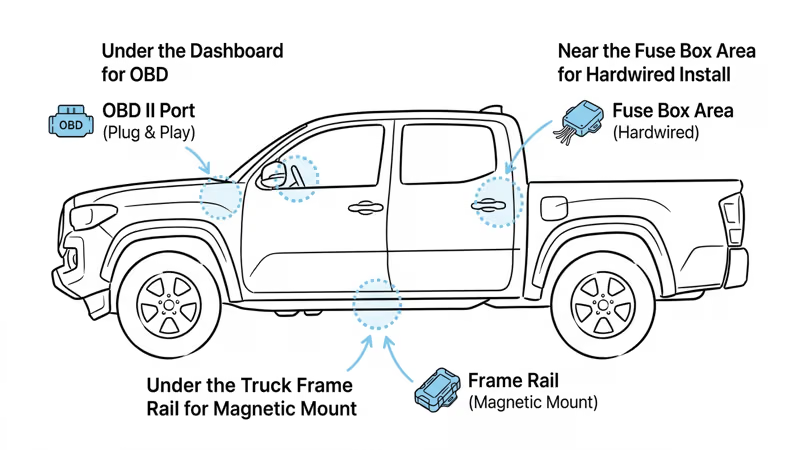
OBD-II plug-in (Bouncie, Vyncs). Find the OBD-II port under the driver-side dashboard, typically left of the steering column. Plug the tracker in, download the app, and confirm the connection. Our GPS tracker installation guide has port location photos for 20 popular vehicles including the F-150 and Silverado.
Magnetic mount (LandAirSea 54, TKSTAR TK905, Tracki). Wipe a clean spot on the steel frame rail, inside the bed wall, or behind the rear bumper and press the tracker’s magnetic side against the metal. Don’t place it near the trailer hitch receiver, because connecting a trailer can cause interference or physical contact with the tracker. In our testing, the driver-side frame rail gave the best signal strength and concealment on both a Ram 1500 and an F-250.
Hardwired (Optimus 2.0). Tap into a constant 12V circuit at the fuse box and route the wire behind the dashboard trim. Requires basic wiring knowledge, but the payoff is zero battery maintenance.
Truck GPS Tracker Comparison Table
Here’s how all 6 trackers compare on the specs that matter most for truck owners:
| Feature | Bouncie | LandAirSea 54 | Tracki 4G | Optimus 2.0 | Vyncs | TKSTAR TK905 |
|---|---|---|---|---|---|---|
| Type | OBD | Magnetic | Magnetic | Magnetic/Wire | OBD | Magnetic |
| Monthly | $8 | $9.95-$19.95 | $10 | $16 | $0-$10 | ~$5 |
| Battery | N/A (OBD) | 1-3 weeks | 5d-6mo | 2 weeks | N/A (OBD) | 2-3 months |
| Water | N/A | IP67 | IPX6 | IP65 | N/A | IP65 |
| Fleet | No | Yes | Yes | Yes | No | No |
Two-Year Cost Breakdown
Device price is a one-time expense. The subscription determines your real cost:
| Tracker | Device | Monthly | 2-Year Total |
|---|---|---|---|
| Bouncie | $90 | $8 | $282 |
| LandAirSea 54 | $30 | $9.95-$19.95 | $269-$509 |
| Tracki 4G | $20 | $10 | $260 |
| Optimus 2.0 | $30 | $16 | $414 |
| Vyncs | $90 | $0-$10 | $90-$330 |
| TKSTAR TK905 | $55 | ~$5 | ~$175 |
The TKSTAR TK905 costs the least over two years at $175. Vyncs on its free plan costs $90 total but gives you slower updates. Bouncie hits the sweet spot at $282 with 15-second tracking.
According to the National Insurance Crime Bureau, pickup trucks consistently rank among the most stolen vehicles in the US. The average stolen truck is worth over $30,000. One prevented theft covers decades of tracker subscriptions.
Fleet math is simple. Five LandAirSea 54 units on the mid-tier plan: $1,928 over two years. Five TKSTAR TK905 units: $875.
The per-unit savings compound fast at scale, especially with TKSTAR’s prepaid SIM model where you’re not locked into any carrier contract. Our guide to GPS trackers without monthly fees covers more options for eliminating subscriptions entirely.
Bottom Line
The Bouncie GPS Tracker is the best GPS tracker for personal pickup trucks. Plug it in, pay $8 per month, get 15-second updates. Two-year cost: $282.
For fleet operators, the LandAirSea 54 provides the best combination of durability, multi-vehicle management, and flexible pricing tiers from $9.95 to $19.95 per month. Mount it magnetically under any truck frame and manage your entire fleet from the Silvercloud app. The IP67 rating means it’ll survive anything your trucks drive through.
Want the lowest cost? Go with the TKSTAR TK905 and a prepaid SIM at roughly $5 per month. Two-year total: $175. Check our best GPS tracker for trailers guide if you also tow.
FAQ
What is the best GPS tracker for a pickup truck?
The Bouncie GPS Tracker is the best option for personal pickup trucks. It plugs into the OBD-II port, costs $8 per month, and provides 15-second location updates. No battery management, no wiring, and the app logs every trip with speed and braking data.
Can you track a truck without a monthly fee?
Yes, two ways. Vyncs offers a free base plan with 3-minute updates after the $90 device purchase. The TKSTAR TK905 uses a bring-your-own SIM card that costs about $5 per month through a prepaid carrier, which is the closest to fee-free GPS tracking with real-time capability.
Do OBD GPS trackers work on diesel trucks?
Yes. Every diesel pickup truck sold in the US since 1996 has an OBD-II port. The Bouncie and Vyncs both work on diesel F-250s, F-350s, Ram 2500s, and Silverado HD models. The OBD-II standard is the same across gas and diesel consumer trucks. Commercial trucks over 14,500 lbs may use a different J1939 connector, which these consumer OBD trackers don't support.
Where is the best place to hide a GPS tracker on a truck?
The inside of the driver-side frame rail is the most reliable spot. It offers steel for magnetic mounting, protection from road spray, and concealment from casual inspection. Other options include behind the rear bumper, inside the bed wall, or tucked above the spare tire on trucks with under-bed spares.
How many trucks can one GPS tracker account manage?
It depends on the platform. LandAirSea's Silvercloud app handles unlimited devices per account. Bouncie supports multiple vehicles but lacks a unified fleet dashboard. Tracki allows up to 100 devices on one account. For fleets over 10 trucks, consider dedicated fleet platforms with dispatch and compliance tools.
Do GPS trackers work in remote areas without cell service?
GPS trackers receive satellite signals anywhere with open sky, but they need cellular coverage to transmit that location to your phone. In dead zones, the tracker stores locations internally and uploads the backlog when it reconnects. You won't get real-time theft alerts in areas with zero cell signal.
Is it legal to put a GPS tracker on a company truck?
In all 50 US states, employers can track vehicles they own. You don't need employee consent to install a GPS tracker on a company-owned truck, though notifying drivers is considered best practice. The EEOC hasn't established federal rules on vehicle tracking, but some states require written disclosure. Check your state's labor laws before deploying fleet trackers.