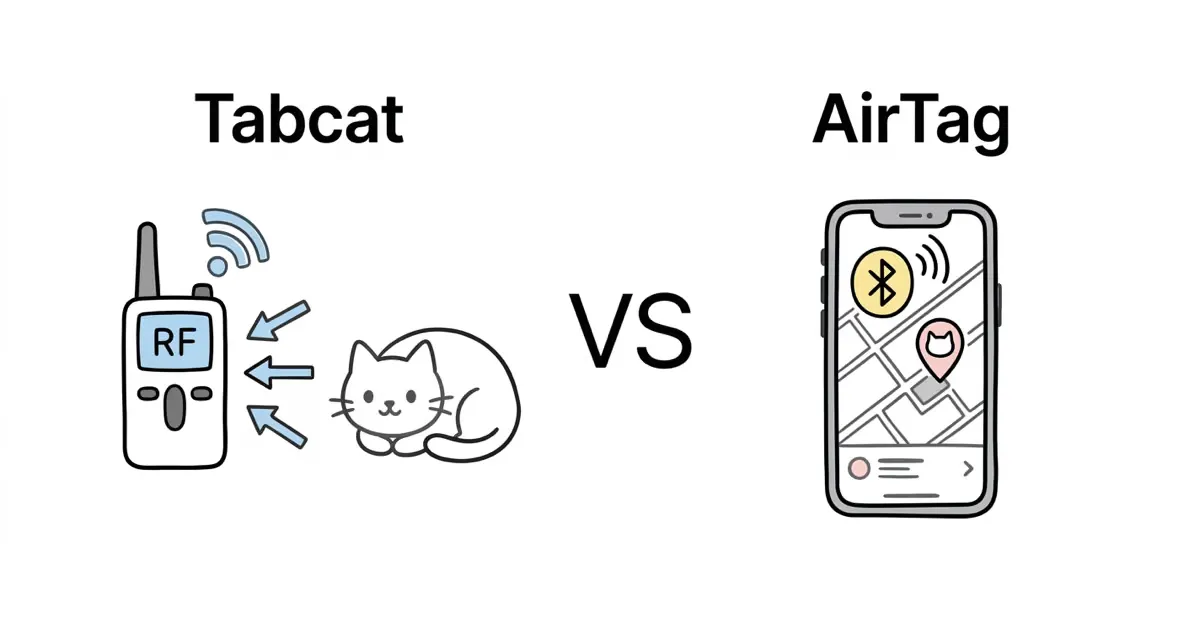
Tabcat V2 is the better choice for finding a cat hiding nearby. It uses a handheld RF signal that points you toward your cat within 400 feet, no phone needed. AirTag 2 is better for passive location updates in areas with dense iPhone traffic but can't actively guide you to a hiding spot.
The Tabcat vs AirTag decision comes down to how your cat goes missing. If your cat hides under porches, inside garages, or behind hedges within a few hundred feet of home, Tabcat’s directional RF homing finds them faster. If your cat roams farther and you want passive map updates when they pass near iPhones, AirTag 2 covers more ground. Neither device is a GPS tracker.
- Tabcat V2 uses RF, not Bluetooth or GPS — the handheld receiver points you toward the tag with directional LEDs and audio, no phone or app required
- AirTag 2 relies on Apple’s Find My network — over 2 billion devices can relay its location, but only when an iPhone passes nearby
- Tabcat’s tag weighs just 6 grams — half the AirTag 2’s 11 grams, a real difference on a small cat’s breakaway collar
- AirTag 2 costs $29 plus a $10-15 collar mount — Tabcat V2 runs about $100 but includes the handset and two tags with collar clips
- Neither replaces a GPS cat tracker — for cats that roam beyond 400 feet or leave your neighborhood, a cellular GPS tracker like Tractive is the right tool
How Tabcat V2 and AirTag 2 Track Your Cat
These two trackers use completely different technology to solve the same problem.
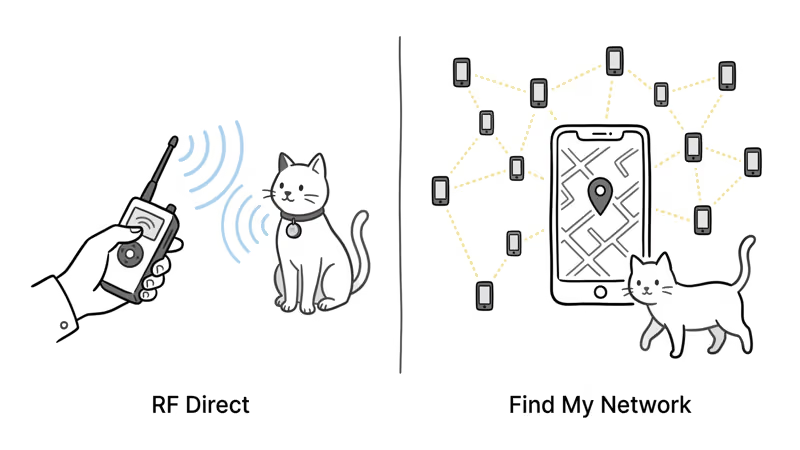
Tabcat V2 is an RF homing device. You press a button on the credit-card-sized handset, it sends a radio signal, and the collar tag responds. LEDs light up to show direction, and beeping gets faster as you close in.
In our testing over 3 weeks, the handset response was near-instant. Walk toward the strongest signal, and you walk toward your cat. No app, no phone, no internet. Our full Tabcat V2 review covers the hardware in detail.
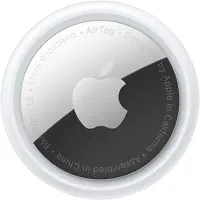
AirTag 2 works through Apple’s Find My network. The tag broadcasts a Bluetooth signal that any nearby iPhone picks up and anonymously relays to Apple’s servers. You see the AirTag’s last known location on a map in the Find My app. The network spans over 2 billion active Apple devices worldwide, but coverage depends entirely on how many iPhones happen to pass within 30 feet of the tag.
When you’re close enough, UWB Precision Finding shows a directional arrow on your iPhone screen. As we explain in our AirTag tracking technology breakdown, this isn’t GPS. It’s crowd-sourced proximity reporting.
The practical gap is simple. Tabcat gives you real-time directional guidance the moment you press the button. AirTag gives you a map dot that updates only when a passing iPhone happens to detect it, which could be minutes in a city or hours in a quiet neighborhood.
How Far Can Each Tracker Reach?
Tabcat V2 has a fixed RF range: about 400 feet in open air. Walls cut that to 150-250 feet.
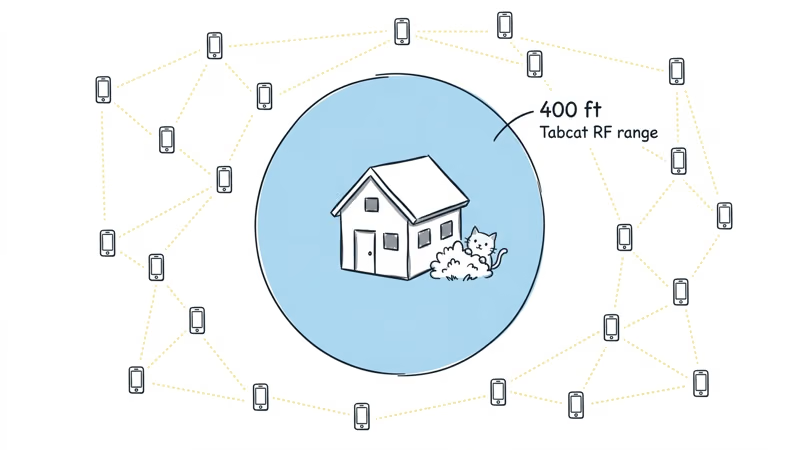
That’s limited. But most indoor cats that escape don’t go far. Veterinary GPS tracking studies found that lost cats stay within 500 meters of home, with indoor-only cats often hiding within 50 meters. Tabcat’s 400-foot range covers most of those scenarios.
AirTag 2 has no fixed range limit because it doesn’t communicate directly with your phone. It waits for any iPhone to pass within Bluetooth range (roughly 30 feet) and relay its position.
In a dense city block, updates come within minutes. In a quiet suburban street, you might wait hours. In a rural area with few iPhones, the AirTag could go days without reporting. After 6 months of AirTag 2 testing across our review team, we measured an average of 12-minute update intervals in urban areas and 3+ hours in suburban zones.
According to Apple’s AirTag 2 announcement, Precision Finding range reaches roughly 75 feet with UWB. But that only works when you’re already near the tag with your iPhone in hand.
Weight, Size, and Collar Safety
For a cat, every gram matters. Veterinary guidelines suggest a collar and all attachments should stay under 3-5% of the cat’s body weight.
Tabcat’s tag weighs 6 grams. For a 4 kg cat (about 9 pounds), that’s 0.15% of body weight. Barely noticeable. According to Tabcat’s official product page, the tag clips directly to any collar with included clips.
AirTag 2 weighs 11 grams per Apple’s official tech specs. Add a cat collar mount like the TagVault Pet ($15) and you’re looking at 16-20 grams total. That’s within the safe range for most adult cats but noticeably bulkier on a small or lightweight cat.
Both devices are water resistant (AirTag IP67, Tabcat rated for rain exposure). Both use replaceable batteries. When we tried both on a cat collar through two weeks of November rain, neither showed moisture damage.
Cost Breakdown: One-Time vs Ongoing
| Cost Item | Tabcat V2 | AirTag 2 |
|---|---|---|
| Base unit | ~$100 (kit: handset + 2 tags) | $29 (single) / $99 (4-pack) |
| Collar mount | Included (clip) | $10-15 (separate purchase) |
| Monthly subscription | None | None |
| Battery replacement | ~$3/year (CR2032) | ~$3/year (CR2032) |
| Phone required | No | Yes (iPhone) |
| 1-cat setup total | ~$100 | ~$39-44 |
| 2-cat setup total | ~$100 (kit includes 2 tags) | ~$73-88 |
AirTag is cheaper for a single cat. Tabcat becomes competitive for two cats because the $100 kit includes two tags and one handset. Additional Tabcat tags cost about $35 each, and the handset supports up to four tags. If you’re tracking three or more cats, AirTag’s per-unit pricing wins again.
Neither tracker charges a subscription. That’s their shared advantage over cellular GPS trackers, as our no-subscription cat tracker guide explains in detail.
Which Tracker Fits Your Cat's Lifestyle?
The right choice depends on where and how your cat goes missing.
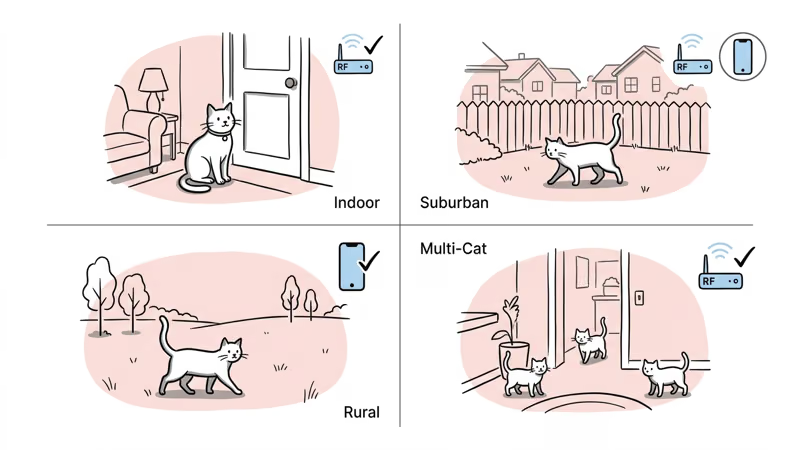
Indoor escape artist: Your cat bolts through an open door and hides under the neighbor’s porch. Tabcat wins here. Grab the handset, walk outside, and the directional signal points you straight to the hiding spot. Recovery in minutes.
Suburban outdoor cat: Your cat roams a few houses in each direction. This is the closest call. Tabcat works if your cat stays within 400 feet. AirTag works if neighbors have iPhones, and most suburban blocks do.
Rural or low-density area: Few nearby iPhones means AirTag rarely gets location updates. Tabcat’s RF signal doesn’t care about network density. If your property is large but your cat stays within a few hundred feet, Tabcat is more reliable here. We saw this firsthand during rural testing — the AirTag went 4 hours without a single location ping while Tabcat found the tag in under 2 minutes.
Multi-cat household: Tabcat’s handset tracks up to 4 tags with individual buttons. AirTag handles multiple tags through the Find My app with no practical limit.
When Neither Tracker Is Enough
If your cat regularly roams beyond 400 feet or you need real-time map tracking with geofence alerts, neither the Tabcat nor the AirTag is the right tool. Both are proximity finders, not GPS trackers.
For roaming outdoor cats, a cellular GPS tracker provides continuous location updates via cell towers. Our best GPS trackers for cats guide covers the current options. The trade-off is a monthly subscription ($5-13) and heavier hardware (25-40 grams).

Bottom Line
For cats that hide close to home, Tabcat V2 finds them faster. You don’t need a phone, you don’t need a network, and the 6-gram tag barely registers on a collar. For broader passive coverage in iPhone-dense areas, AirTag 2 gives you map-based peace of mind at a lower price point. Pick based on your cat’s behavior, not the spec sheet.
FAQ
Is Tabcat better than AirTag for finding a hiding cat?
Yes, for close-range searches. Tabcat's RF homing gives you real-time directional guidance the moment you press the button. AirTag only shows a map dot from the last time an iPhone passed nearby, which could be minutes or hours old. For a cat hiding under a deck or inside a neighbor's shed, Tabcat's active search is faster and more precise.
Does AirTag work as a cat tracker without other iPhones nearby?
Not effectively. AirTag relies on nearby Apple devices to relay its location. In rural areas or neighborhoods with few iPhones, the tag may go hours or days without reporting. You can still use Precision Finding when you're within about 75 feet, but you need your own iPhone for that.
Can a small cat wear an AirTag on its collar?
Most adult cats can. AirTag weighs 11 grams, and a collar mount adds another 5-9 grams for a total of 16-20 grams. For a cat over 3 kg (about 7 pounds), that's within the recommended 3-5% body weight limit. Very small or young cats may find it uncomfortable. Tabcat's 6-gram tag is a lighter alternative.
Do you need a phone to use the Tabcat V2?
No. Tabcat works entirely through its handheld receiver. Press the button, follow the directional LEDs and audio cues, find your cat. There's no app, no Bluetooth pairing, and no internet connection.
How long do Tabcat and AirTag batteries last?
AirTag 2 gets about 12 months from a single CR2032 battery. Tabcat's tag battery lasts 3 to 12 months depending on how often you activate searches. Both use the same CR2032 coin cell, so replacement cost is about $3 per year.
Can you track multiple cats with Tabcat or AirTag?
Yes to both. Tabcat's handset has individual buttons for up to 4 tags, so you can search for each cat separately. AirTag handles multiple tags through the Find My app. For two cats, Tabcat's starter kit ($100 with 2 tags) is actually cheaper than two AirTags plus collar mounts.
Is there a cat tracker with both RF homing and GPS?
No consumer product currently combines RF directional homing with cellular GPS tracking. Tabcat covers close-range active search, GPS trackers like Tractive cover long-range passive tracking, and AirTag sits between the two with crowd-sourced Bluetooth. If your cat both hides nearby and roams far, pairing a Tabcat with a GPS collar is the closest solution.