⚡ Quick Answer
There’s no such thing as a cellular GPS tracker with zero lifetime cost — real GPS requires cellular data, which has a real cost. What you can find in 2026: Bluetooth trackers (AirTag 2 at $29, Tile Pro at $35) that are genuinely free forever but are not GPS; cellular GPS trackers (LandAirSea 54, Invoxia) that include 1–2 years of service in the device price; and the cheapest true GPS route — a BYOD device + a $5/month prepaid SIM, totaling ~$180 over 2 years. If you need real-time GPS tracking, no-subscription is a myth. If you just need to find your car in a parking lot or track a bag, AirTag 2 genuinely costs nothing per month.
Every week, thousands of people search “GPS tracker no monthly fee” — and most of them get misled. Product listings on Amazon claim “no monthly fee” while burying renewal charges in the fine print. Other sellers call their Bluetooth trackers “GPS” when they have no satellite connection at all. And a few products genuinely do include a year or two of service in the device price, but don’t make that limitation clear.
This guide untangles all of it. We cover all five types of trackers marketed as “no monthly fee,” give honest 2-year total costs, and help you match the right technology to what you actually need.
The 5 Types of “No Monthly Fee” Trackers — What’s Actually Free
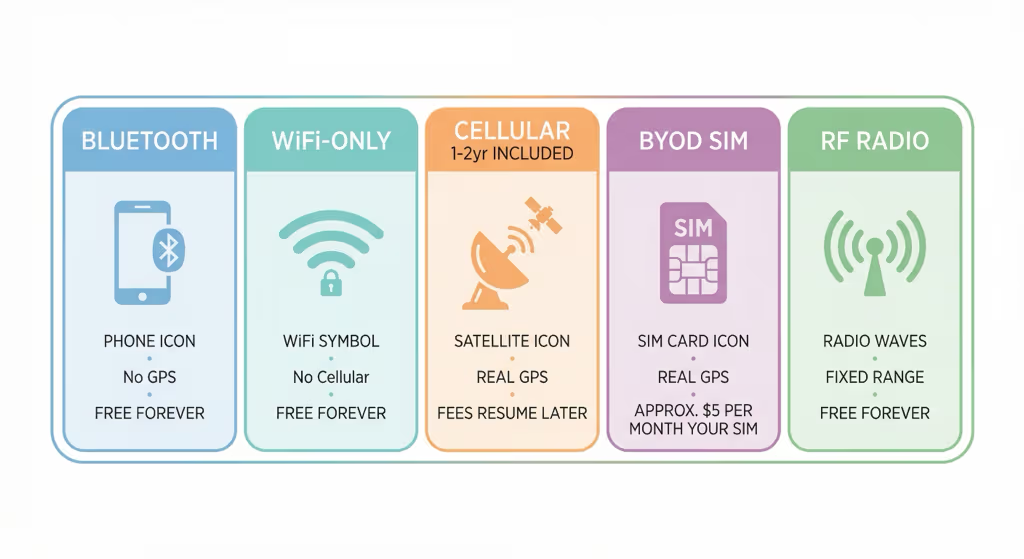
Before evaluating any specific product, you need to understand the five fundamentally different technologies sold under the “no monthly fee” label. They are not interchangeable — each has different range, accuracy, and real-world use cases.
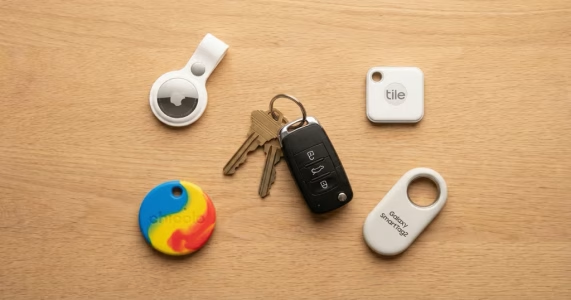
Type 1 — Bluetooth / UWB crowd-sourced trackers (AirTag 2, SmartTag 2, Tile Pro, Chipolo, Pebblebee): These piggyback on other people’s phones to relay their location. No cellular data, no subscription, genuinely free forever. Range is limited to Bluetooth (~100m direct), but the crowd-sourced network extends that globally in densely populated areas. They are not GPS — they cannot tell you where a tracker is in real time; they report the last location a nearby phone detected them. This is the most misunderstood category.
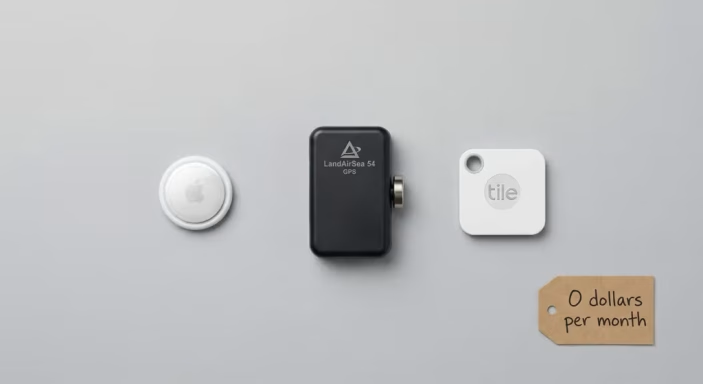
Type 2 — Cellular GPS with service included (1–2 years) (LandAirSea 54, Invoxia, SpaceHawk): These are real GPS trackers with a cellular SIM built in. The device price includes a prepaid data plan — typically 1 year, sometimes 2. After the included period, you pay $9–30/month or buy a new prepaid block. Honest marketing would call these “first year included,” but most listings say “no monthly fee” without that caveat. These are the best option if you need real GPS and want predictable costs.
Type 3 — BYOD (Bring Your Own SIM) (some Tracki models, TKSTAR, generic 4G trackers): The device itself is cheap ($20–60), but you supply your own SIM card and data plan. With a $5/month MVNO prepaid SIM (SpeedTalk, Mint, etc.), the total ongoing cost is among the lowest in the real-GPS category — about $60/year. This takes more setup but gives you full control and no lock-in to a tracker manufacturer’s subscription.
Type 4 — WiFi-only trackers (Trakkit GPS): No cellular, no GPS — the device pings its location only when within range of a known WiFi network. Completely free to operate but only useful in settings where WiFi is available (home, office, regular parking spot). Not useful for active tracking in unknown locations.
Type 5 — RF radio trackers (Aorkuler dog tracker): Use radio frequency instead of cellular or Bluetooth — no subscription, no infrastructure dependency, fixed range (Aorkuler claims up to 3.5 miles). Works in truly remote areas with no cell or phone coverage. Mainly marketed for pets in wilderness settings.
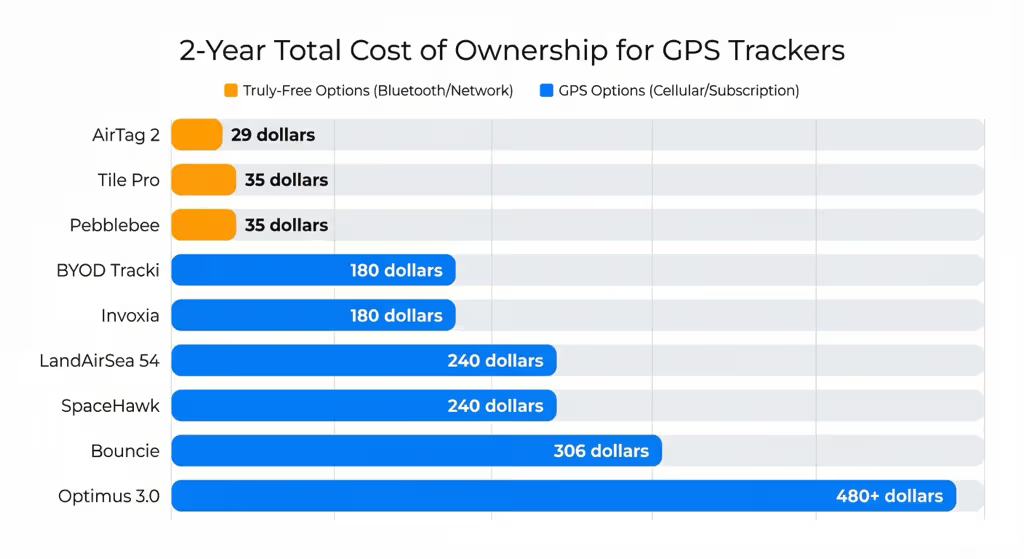
2-Year Total Cost of Ownership: The Honest Comparison
| Tracker | Type | Device Cost | Monthly Fee | 2-Year Total | Real GPS? |
|---|---|---|---|---|---|
| Apple AirTag 2 | Bluetooth | $29 | $0 | $29 | ❌ Crowd-sourced |
| Tile Pro | Bluetooth | $35 | $0 | $35 | ❌ Crowd-sourced |
| Pebblebee Clip 5 | Bluetooth | $35 | $0 | $35 | ❌ Crowd-sourced |
| BYOD Tracker + SIM | Cellular GPS | ~$60 | ~$5/mo (your SIM) | ~$180 | ✅ Real GPS |
| Invoxia Cellular GPS | Cellular GPS | ~$150–180 | $0 (2 yrs incl.) | ~$150–180 | ✅ Real GPS |
| LandAirSea 54 | Cellular GPS | ~$100–120 | $0 yr 1; ~$10/mo yr 2 | ~$220–240 | ✅ Real GPS |
| SpaceHawk GPS | Cellular GPS | ~$80–100 | $0 yr 1; ~$10/mo yr 2 | ~$200–220 | ✅ Real GPS |
| Bouncie (OBD-II) | Cellular GPS | $90 | $9/mo (required) | $306 | ✅ Real GPS |
All 2-year totals are estimates based on device cost + 24 months of service. Bluetooth tracker costs shown include device only (service is genuinely free). BYOD estimate uses $5/month prepaid SIM.
The Truly Free Options (No Subscription, Ever)
These four trackers have zero ongoing costs — no subscription, no SIM, no renewal. The tradeoff: they use Bluetooth crowd-sourcing, not satellite GPS. That means no real-time updates, no speed data, and no geofencing. But for finding a car in a parking lot, tracking a bag on a flight, or recovering a stolen item in a city, they’re remarkably capable — and the price is right.
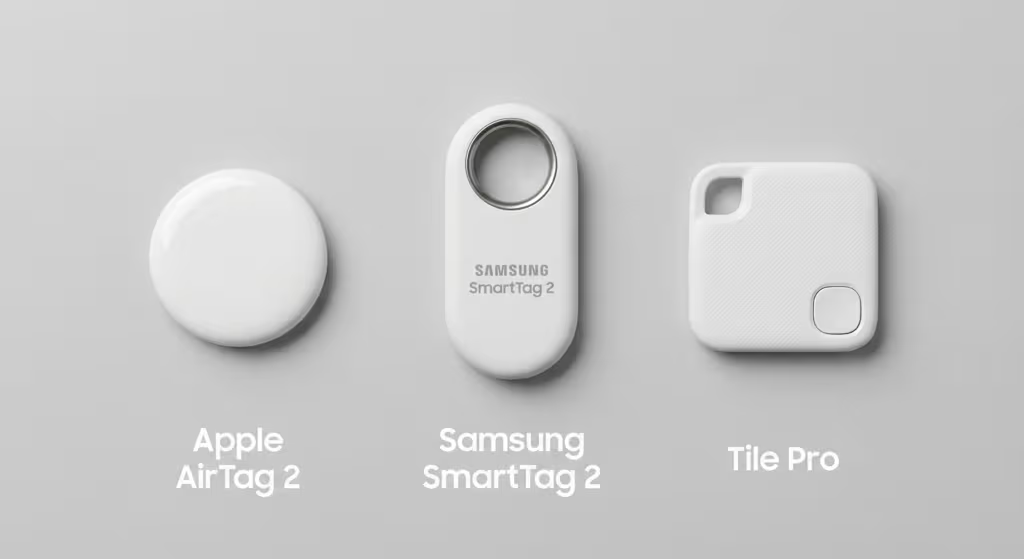
1. Apple AirTag 2 — Best Bluetooth Tracker, iPhone Required
The AirTag 2 ($29) is the most capable crowd-sourced tracker ever made, and for iPhone users it’s the obvious first choice. The January 2026 upgrade brought a second-generation UWB chip that extends Precision Finding range to ~60 meters (200 ft) — more than enough to locate your car across a parking garage floor with AR arrow guidance. The 30% wider Bluetooth detection radius means more frequent location updates in theft scenarios. Battery lasts about 1 year on a standard CR2032 you can replace at any pharmacy for under $2.
The Find My network spans hundreds of millions of Apple devices worldwide. In any major city, airport, or shopping center, your AirTag’s location refreshes every few minutes when nearby iPhones pass by. Read our full AirTag 2 review for hands-on performance details.
Price: $29 (single) / $99 (4-pack) | No subscription | iPhone required | Battery: ~1 year CR2032
Buy AirTag 2 (1-pack) on Amazon
Buy AirTag 2 (4-pack) on Amazon
2. Samsung SmartTag 2 — Best for Samsung Galaxy Users
For Samsung Galaxy phone owners, the SmartTag 2 (~$20–30) matches AirTag’s zero-subscription model while offering UWB Precision Finding and an industry-leading 700-day CR2032 battery. Samsung’s SmartThings Find network covers over 700 million Galaxy devices globally — excellent coverage in South Korea, Southeast Asia, and large urban centers worldwide. IP67 water resistance makes it durable enough for car and outdoor use.
The SmartTag 2 does not work with non-Samsung Android phones or iPhones — it’s Samsung Galaxy only. For Samsung users, it’s the most capable no-subscription tracker outside the Apple ecosystem. See our AirTag alternatives guide for a full cross-platform comparison.
Price: ~$20–30 (single) / ~$70–80 (4-pack) | No subscription | Samsung Galaxy only | Battery: 700 days CR2032
Buy SmartTag 2 (1-pack) on Amazon
Buy SmartTag 2 (4-pack) on Amazon
3. Tile Pro — Best Cross-Platform, Any Android or iPhone
The Tile Pro ($35) works with any smartphone — iOS or Android — without requiring a specific ecosystem. It’s the most straightforward no-subscription option for households with mixed iPhone and Android devices, or for Android users who can’t use AirTag. The 122-meter Bluetooth range and 128dB alarm (louder than AirTag 2) make it particularly effective for locating items in noisy environments like baggage carousels.
Tile’s 70-million-device network is smaller than Apple Find My or Google Find Hub, but is mature and reliable in North America and Europe. Basic tracking is completely free — Tile Premium at $2.99/month or $29.99/year is optional and adds 30-day location history and smart alerts. Battery lasts 1 year on a replaceable CR2032. See our best Bluetooth trackers guide for a full cross-brand comparison.
Price: $35 | No subscription (basic) | iOS + Android | Battery: 1 year replaceable CR2032 | Alarm: 128dB
4. Pebblebee Clip 5 — Best Rechargeable No-Subscription Tracker
The Pebblebee Clip 5 ($35) is the only no-subscription tracker in this guide with a USB-C rechargeable battery — no CR2032 coin cells to buy. It works on either Apple Find My or Google Find Hub (choose during setup, switchable later), covering both iPhone and non-Samsung Android users. The 130dB alarm is the loudest of any tracker here, and IP66 water resistance handles outdoor and vehicle use comfortably.
Battery lasts approximately 12 months between USB-C charges. The clip format attaches directly to luggage handles, bag straps, or gear loops without needing a separate mount. For people who don’t want to touch batteries at all, it’s the most convenient no-subscription pick.
Price: $35 | No subscription | Find Hub or Find My | Battery: 12 months USB-C | Alarm: 130dB | Water: IP66
Buy Pebblebee Clip 5 on Amazon
The “1–2 Years Free, Then You Pay” GPS Trackers
These are real cellular GPS trackers that include a prepaid service period in the device price. They genuinely have no monthly charge during the included period — but they are not “free forever.” After the included service expires, you either buy a renewal plan or the device stops reporting location. Read the fine print on every product in this category before buying.
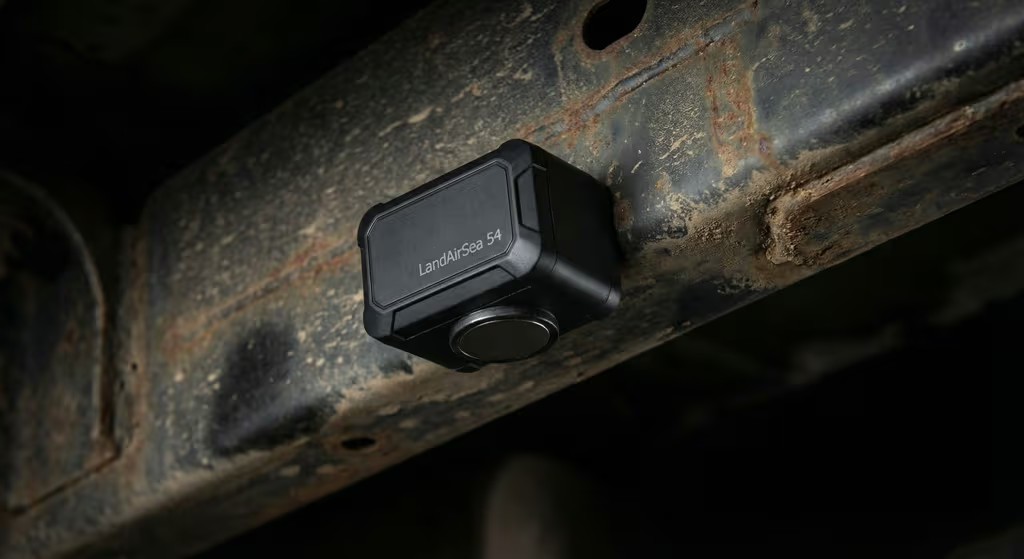
5. LandAirSea 54 — 1 Year Included, Best Overall Cellular GPS Value
The LandAirSea 54 (~$100–120 with 1-year plan included) is the best cellular GPS tracker for buyers who want real satellite tracking with a predictable Year 1 cost and no subscription surprises in the first 12 months. It combines a strong internal magnet for vehicle frame mounting, IP67 waterproofing, and a global SIM that works in 150+ countries. Real-time updates every 10–30 seconds. Geofencing, speed alerts, and location history are all included.
After Year 1: prepaid plans run approximately $9.95–19.95/month depending on update frequency. For vehicles and assets you actively monitor, the ongoing cost is worthwhile — for occasional use, the BYOD route below may be more economical.
Compare this head-to-head with AirTag in our GPS vs. Bluetooth tracker comparison.
Price: ~$100–120 (incl. 1-year service) | Year 2+: ~$10–20/month | Real-time GPS ✅ | Geofencing ✅ | Water: IP67
6. Invoxia Cellular GPS Tracker — 2 Years Included, Best Long-Term Value
If you want real GPS with the longest prepaid window, the Invoxia (~$150–180) includes 2 years of service in the device price — making it the best total-cost option for the first two years of ownership. It uses 4G LTE-M (low-power cellular) for up to 4 months of battery life per charge — dramatically longer than most cellular GPS trackers that need weekly or monthly recharging. After 2 years, renewal is approximately $29.90/year, which is the lowest annual rate of any cellular tracker here.
The form factor is compact and versatile: works for cars, luggage, bicycles, and assets. The 4G LTE-M radio is optimized for low data consumption, which contributes to both the long battery and low renewal cost. Available on Amazon with confirmed product listing.
Price: ~$150–180 (incl. 2-year service) | Year 3+: ~$30/year | Real-time GPS ✅ | Battery: up to 4 months | 4G LTE-M
Buy Invoxia GPS Tracker on Amazon
The BYOD GPS Tracker Route: No Monthly Fee, ~$5/Month
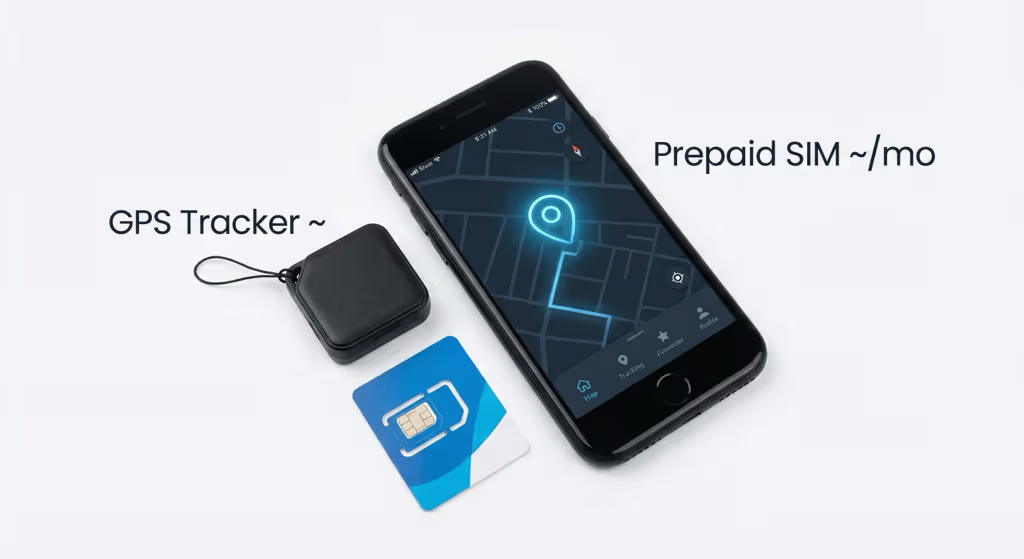
If you want genuine real-time GPS tracking at the lowest long-term cost, the BYOD (Bring Your Own SIM) approach beats every branded subscription plan. Here’s how it works:
Step 1 — Choose a BYOD-compatible GPS tracker (~$40–70): Many Amazon-listed 4G GPS trackers accept a standard nano SIM card. Look for devices explicitly labeled “GSM unlocked” or “SIM not included.” These are often sold by third-party brands at $30–70 on Amazon. The Tracki 4G CAT1 also has a BYOD-compatible mode if you prefer a known brand.
Step 2 — Get a prepaid data SIM ($5–7/month): GPS trackers use very little data — approximately 20–30MB/month at 30-second update intervals. SpeedTalk Mobile, Mint Mobile, and other MVNOs offer prepaid plans for as little as $5/month with no contract and no credit check. You can pause or cancel anytime.
Step 3 — Configure the tracker: Most BYOD trackers include a basic Android/iOS app or SMS-based tracking. Higher-end models include web dashboards with geofencing. Setup takes 10–20 minutes.
2-year total cost: ~$60 device + $120 SIM service = $180 — cheaper than LandAirSea 54 year 2, and far cheaper than Bouncie or Optimus over the same period. The tradeoff is more initial setup and less polished app experience compared to branded solutions.
⚠️ Watch out for “no monthly fee” BYOD traps: Some Amazon listings show a GPS tracker at $30 and advertise “no monthly fee” — but the device requires you to buy their proprietary SIM plan to activate tracking features. Always verify before purchasing that the device accepts standard third-party SIM cards.
Who Needs a GPS Tracker with No Monthly Fee vs. Bluetooth
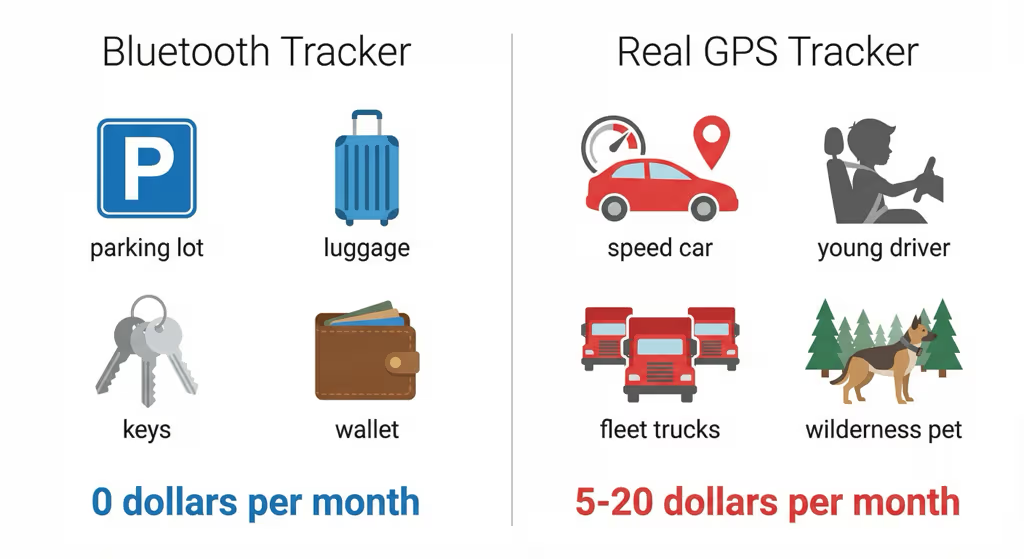
🅿️ Finding my car in parking lots / locating bags during travel
→ Bluetooth tracker is sufficient. AirTag 2 ($29) or Tile Pro ($35) — zero ongoing cost, no subscription ever. In airports, shopping centers, and urban environments, crowd-sourced Bluetooth updates frequently enough to pinpoint your car or bag’s location.
🚗 Car theft recovery (urban area)
→ Bluetooth works as a free backstop; add real GPS if you drive in rural areas. AirTag 2 under the seat costs $29 with no ongoing fees and has successfully aided urban theft recovery. For rural coverage or active real-time tracking, LandAirSea 54 with its included year of GPS is the upgrade path.
👶 Monitoring a teen driver’s speed and routes
→ Real GPS required. Bluetooth won’t work here. You need speed data, route history, and geofencing — none of which Bluetooth trackers provide. Bouncie ($90 + $9/month) or LandAirSea 54 are the appropriate tools.
🐾 Tracking a dog or cat outdoors
→ Depends on environment. In urban/suburban areas, AirTag on a collar can provide location updates (with anti-stalking alert caveats for other iPhone users). For active outdoor tracking in parks, fields, or wilderness, a dedicated pet GPS (Tractive, Fi Series 3+) is far superior — see our best GPS trackers for pets guide.
📦 Tracking shipping containers, trailers, or equipment assets
→ Real GPS required, and Invoxia is the best low-cost option. Two years of included service in a $150–180 device, with ~$30/year renewal — competitive for any asset that moves infrequently but needs accurate location when it does.
Frequently Asked Questions
Is there a GPS tracker that’s truly free with no monthly fee ever?
Not if it uses cellular GPS. Real-time satellite GPS requires cellular data to transmit location — that data has a real cost. What’s genuinely free forever are Bluetooth trackers (AirTag 2, Tile Pro, SmartTag 2, Pebblebee Clip 5): they use crowd-sourced Bluetooth networks instead of satellites and have zero ongoing cost. The tradeoff is no real-time updates and no satellite accuracy. For parking lots, luggage, and urban item tracking, Bluetooth is genuinely sufficient and genuinely free.
What does “1 year included” mean — and what happens after?
GPS trackers marketed as “no monthly fee” often bundle a 1-year prepaid data plan into the purchase price. During that year, you pay nothing beyond what you paid for the device. After 12 months, the service stops unless you purchase a renewal plan — typically $9–20/month or $100–200/year for a prepaid block. LandAirSea 54 and SpaceHawk operate this way. Invoxia includes 2 years. Always check the product listing and manufacturer website for renewal pricing before buying.
Can I use a GPS tracker without a SIM card?
Some GPS trackers have a built-in SIM (cellular data included in the device); these don’t require you to insert your own SIM but do require the manufacturer’s subscription after any included period. True “SIM-free” operation is only possible with Bluetooth trackers (no SIM needed, crowd-sourced network) or WiFi-only trackers (no SIM, requires WiFi). Any device claiming real-time satellite GPS location without any SIM or cellular connection is either using WiFi, using Bluetooth crowd-sourcing, or misrepresenting its technology.
What’s the cheapest way to get real GPS tracking with no monthly contract?
The BYOD (Bring Your Own SIM) route: buy a compatible 4G GPS tracker for ~$40–70, then pair it with a no-contract prepaid SIM (SpeedTalk Mobile, Mint Mobile, etc.) for ~$5/month. With minimal data usage (~20–30MB/month for 30-second location updates), this runs about $60/year — significantly cheaper than any branded GPS subscription. There’s no contract and you can cancel the SIM at any time. Total 2-year cost: approximately $180.
Are “no monthly fee” GPS trackers on Amazon reliable?
Many generic Amazon listings claiming “no monthly fee” use misleading language — they often mean “no fee for the first year” (with service included in device price) or require you to purchase their proprietary SIM plan to activate. Red flags: vague renewal terms, very low device price with subscription buried in FAQs, and brands with no established website outside Amazon. More reliable brands include LandAirSea, Invoxia, Bouncie, and Tracki — all with clear pricing and established customer support.
Do Bluetooth trackers (AirTag, Tile) count as GPS trackers?
No — they use fundamentally different technology. GPS trackers use satellite signals for location, which works anywhere with satellite coverage. Bluetooth trackers use crowd-sourced Bluetooth: nearby phones detect the tracker and report its approximate location to a central network. Bluetooth trackers don’t work in remote areas with few phones nearby, can’t provide continuous real-time location, and have no speed or route data. They excel for item finding and as a free theft backstop in cities. They are not a substitute for GPS tracking in any professional or critical use case.
Will a cheap GPS tracker from Amazon work as well as a branded one?
Often not. Generic Amazon GPS trackers typically offer limited app quality, inconsistent server uptime, and unclear long-term support. If the company behind the tracker folds or discontinues their server, the device stops working regardless of subscription status. For critical tracking (vehicles, fleet assets, pets in wilderness), established brands with long track records (LandAirSea, Bouncie, Tracki, Invoxia) are worth the premium. For casual backup tracking, a reputable Bluetooth tracker is a safer investment than a no-name cheap “GPS” device.