Three Bluetooth trackers are currently certified for Google Find Hub: Chipolo Pop, Pebblebee Clip 5, and Motorola Moto Tag. Chipolo Pop is the best overall pick for most Android users at $29. Moto Tag is the only option with UWB precision finding. Pebblebee Clip 5 runs both Find Hub and Apple Find My at the same time.
As of March 2026, Google Find Hub compatible trackers are a short list: three devices hold official certification, a fourth is announced but not yet available, and several popular trackers (including Samsung SmartTag 2) don’t work with Find Hub at all. This guide covers every confirmed compatible device, explains which to buy for your situation, and clears up the most common misconceptions.
- 3 certified trackers exist as of March 2026: Chipolo Pop, Pebblebee Clip 5, and Motorola Moto Tag. No other mainstream trackers hold Find Hub certification.
- Chipolo Pop ($29) is the only tracker switchable between Find Hub and Apple Find My. It runs one network at a time, but it’s the only Find Hub tracker with cross-ecosystem flexibility.
- Moto Tag is the only Find Hub tracker with UWB precision finding. It’s the closest Android equivalent to AirTag 2’s directional arrow feature.
- Samsung SmartTag 2 does NOT work with Find Hub. It uses Samsung’s SmartThings network, a completely separate system.
- Any Android 6.0+ phone works with Find Hub trackers. You don’t need a Pixel device.
What Is Google Find Hub?
Google Find Hub is the crowdsourced Bluetooth tracking network built into Android. Google renamed it from “Find My Device” in May 2025, along with a major set of upgrades: UWB support for compatible trackers, satellite location sharing, and airline baggage recovery partnerships.
The network works like Apple’s Find My. When your tracker is out of direct Bluetooth range, it pings silently off any nearby Android device running Google Play Services (Android 9 or later). That device sends the tracker’s encrypted location to Google’s servers, and you see the updated position in the Find Hub app on your phone.
Google’s official Find Hub overview describes the network as covering over 1 billion Android devices globally. In dense cities, location updates arrive within minutes of someone walking past your lost item. In rural areas, the update interval stretches to 20-40 minutes depending on local Android density, which is less than Apple Find My’s 2 billion-device network, but the gap is closing.
No Pixel required. Any Android 6.0+ device works, and setup takes under 2 minutes.
Every Google Find Hub Compatible Tracker
Three trackers hold Find Hub certification as of March 2026. Here they’re listed with hands-on data from our individual reviews.
| Tracker | Price | Battery | Speaker | Water Rating | UWB | Dual-Network | Year |
|---|---|---|---|---|---|---|---|
| Chipolo Pop | $29 | CR2032, ~1 yr | 120dB | IP55 | No | Find Hub or Find My | 2025 |
| Pebblebee Clip 5 | $35 | USB-C, ~12 mo | 130dB | IP67 | No | Find Hub + Find My (simultaneous) | 2025 |
| Motorola Moto Tag | $30 | CR2032, ~1 yr | Not rated | IP67 | Yes | Find Hub only | 2024 |
| Samsung SmartTag 2 | $30 | CR2032, ~6 mo | - | IP67 | No | NOT compatible | 2023 |
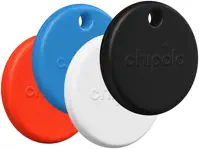
Chipolo Pop: Top Pick for Most Android Users
 Top Pick
The Chipolo Pop earns the top spot for one clear reason: it’s the most versatile Find Hub tracker at the lowest price. In our testing, the 120dB speaker is immediately noticeable. You can hear it through a closed interior door from the next room, and AirTag 2’s 60dB doesn’t come close in a noisy environment.
The Pop supports both Find Hub and Apple Find My, but runs only one at a time. You pick an ecosystem at setup, and switching requires a factory reset and fresh re-pairing.
For a pure Android household, that’s no limitation at all. For mixed households, the Pebblebee Clip 5’s simultaneous support may be worth the extra $6.
At $29 with no subscription and a replaceable battery, it’s the natural starting point for most Android users.
Pebblebee Clip 5
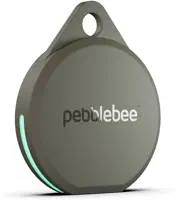
The Pebblebee Clip 5 is the only Find Hub tracker that runs on both Find Hub and Apple Find My at the same time, with no factory reset required. After testing it on a daily carry bag for several weeks, that simultaneous coverage becomes the obvious differentiator.
The 2 billion-device Apple network and 1 billion-device Android network are both active at once. You get location updates whether the person walking past your bag uses an iPhone or Android. That’s the widest crowd-sourced coverage available from any single tracker today.
Speaker-wise, 130dB edges out the Chipolo Pop by 10dB. IP67 means brief submersion is fine.
USB-C charging once a year trades battery hunting for a cable charge. At $35, it’s worth the premium for travelers and mixed households. If your home is Android-only, the Chipolo Pop at $29 is sufficient.
Motorola Moto Tag: Best Value for UWB Precision Finding
 Best Value
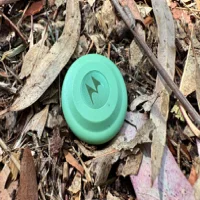
The Moto Tag is the only Find Hub tracker with UWB ultra-wideband precision finding, which gives you a directional arrow pointing toward your lost item rather than a rough map pin. Android Authority’s hands-on Moto Tag review confirmed precision finding works on Pixel 6 Pro and later, with an experience similar to AirTag’s Precision Finding. At $30, it’s the cheapest path to UWB on the Android side.
The catch: most Android phones still don’t include UWB chips. You need a Pixel 6 Pro, a newer Pixel, or certain Samsung and Motorola devices with the right hardware. Check your phone’s spec sheet before buying.
Motorola has announced the Moto Tag 2 as an upcoming model. No release date is confirmed as of March 2026.
Trackers That Are Not Find Hub Compatible
Not every popular tracker works with Google Find Hub, and two names cause consistent confusion: Samsung SmartTag 2 and UGREEN FineTrack.
UGREEN FineTrack is Apple Find My certified (MFi), not Find Hub. It works fine on iPhone but won’t appear in the Find Hub app on Android at all. This confusion comes up frequently because UGREEN prices the FineTrack in the same range as Find Hub certified trackers, and early retail listings don’t always make the network distinction clear. If you’re shopping on Android, skip it entirely and pick from the three certified options above.
Does Samsung SmartTag 2 Work with Google Find Hub?
No. SmartTag 2 uses Samsung’s SmartThings Find network, not Find Hub.
SmartThings Find relies on Samsung Galaxy devices enrolled in the SmartThings network (roughly 200 million globally). Google Find Hub uses all Android phones running Google Play Services, covering over 1 billion devices. These networks don’t overlap and don’t communicate with each other.
9to5Google’s coverage of the Find Hub tracker certification list confirms the SmartTag 2 isn’t on it. Google’s certification requires trackers to integrate with the Android tracking API directly. Samsung chose to maintain its own proprietary network for SmartTag products.
Samsung Galaxy phone owners can use either SmartTag 2 (SmartThings) or any Find Hub certified tracker. Samsung phones support both systems. The SmartTag 2 won’t appear in the Find Hub app, and Find Hub trackers won’t appear in the SmartThings app.
Choosing the Right Google Find Hub Tracker
The right choice depends on two factors: whether you need UWB precision finding, and whether your household mixes iPhone and Android users.
Choose Chipolo Pop if...
- You want the lowest price at $29
- Loud alerts matter most (120dB, second loudest here)
- You're Android-only but want the option to switch to Find My later
- You prefer a user-replaceable CR2032 battery
Choose Pebblebee Clip 5 if...
- Your household mixes iPhone and Android users
- You travel internationally where Android coverage varies by region
- You want the loudest speaker (130dB) and IP67 waterproofing
- USB-C annual charging is simpler than buying replacement batteries
Choose Moto Tag if...
- You have a Pixel 6 Pro or later and want UWB precision finding
- You track items indoors and need a directional arrow, not just a map pin
- You're committed to Android and don't need Apple Find My support
- IP67 waterproofing matters and $30 is the ceiling
Consider waiting if...
- Moto Tag 2 interests you (announced, release date TBD)
- You want to see if more Find Hub certifications arrive later in 2026
For most Android users, Chipolo Pop is the right default. It’s the lowest price, the most flexibility across ecosystems, and the loudest speaker per dollar. The best Bluetooth trackers for Android guide covers compatible options beyond the Find Hub ecosystem if you want a broader view.
Google Find Hub and Apple Find My: How the Networks Compare
Find My currently holds the network coverage advantage: 2 billion Apple devices versus Find Hub’s 1 billion Android phones. In our testing tracking items across airports and suburban neighborhoods, Find My updated more frequently in low-density areas. The gap closes in major cities.
Find Hub has two advantages Find My currently lacks for third-party trackers: satellite location sharing and airline baggage partnerships.
The Moto Tag’s UWB support brings precision finding parity with AirTag 2, though phone compatibility is narrower on the Android side.
For a full breakdown of both ecosystems including network density by region, privacy protections, and UWB performance, see our Google Find Hub vs Apple Find My comparison. It covers the full picture alongside the AirTag 2 vs Chipolo Pop vs Tile Pro head-to-head for cross-ecosystem data.
Bottom Line
The Google Find Hub compatible tracker list is short: three certified devices as of March 2026. Chipolo Pop at $29 covers most Android users who want dual-network flexibility and the loudest speaker on the market. Pebblebee Clip 5 at $35 is the pick for mixed iPhone/Android households and international travelers who need both networks active at once. Moto Tag at $30 is the only option if UWB precision finding is your priority and you own a compatible Pixel device.
Two things to know before buying: Samsung SmartTag 2 is not Find Hub compatible, and UGREEN FineTrack is certified for Apple Find My only. The best Bluetooth trackers overall guide includes options across all ecosystems if you’re not committed to Android.
FAQ
What trackers are compatible with Google Find Hub?
As of March 2026, three Bluetooth trackers hold official Google Find Hub certification: Chipolo Pop, Pebblebee Clip 5, and Motorola Moto Tag. The Moto Tag 2 has been announced but isn't yet available. No other mainstream trackers, including Tile, Samsung SmartTag, or UGREEN FineTrack, hold Find Hub certification.
Does Samsung SmartTag 2 work with Google Find Hub?
No. The Samsung SmartTag 2 uses Samsung's SmartThings Find network, which is separate from Google Find Hub. SmartThings relies on Samsung Galaxy devices; Find Hub uses all Android phones with Google Play Services. The two networks don't share infrastructure. Samsung Galaxy phone owners can use Find Hub trackers, but the SmartTag 2 itself won't appear in the Find Hub app.
Is Google Find Hub the same as Find My Device?
Yes. Google renamed "Find My Device" to "Find Hub" in May 2025. The core network is the same, but the rebrand came with significant upgrades: UWB support for compatible trackers, satellite location sharing, and airline baggage recovery integrations. If you're searching for information under the old name, both refer to the same system.
Do you need a Pixel phone to use Google Find Hub?
No. Any Android phone running Android 6.0 or later can use the Find Hub app and pair with a certified tracker. UWB precision finding on the Moto Tag requires a Pixel 6 Pro or later, but standard crowd-sourced tracking works on any compatible Android device. You don't need specific hardware beyond a reasonably modern Android phone.
Can you use a Google Find Hub tracker with an iPhone?
Not through the native Find Hub app, which is Android-only. However, dual-network trackers offer a workaround. Chipolo Pop can be registered to Find My instead of Find Hub, and the iPhone sees it normally. Pebblebee Clip 5 runs both networks simultaneously, appearing in both Find My and Find Hub apps at once without any changes from either user.
Which Google Find Hub tracker has the longest battery life?
Pebblebee Clip 5 lasts approximately 12 months per USB-C charge. Chipolo Pop and Moto Tag use CR2032 replaceable batteries rated at roughly 1 year each. Annual cost of ownership is comparable across all three: a CR2032 costs around $3, and charging the Pebblebee once a year requires nothing more than a USB-C cable.
Are there any new Google Find Hub trackers coming in 2026?
Motorola has announced the Moto Tag 2. No confirmed release date or Amazon listing exists as of March 2026. The three currently certified trackers are Chipolo Pop, Pebblebee Clip 5, and Moto Tag. Check back in mid-2026 for updates as Google continues expanding the certification program.
How does Google Find Hub compare to Apple Find My in network size?
Apple Find My runs on over 2 billion active Apple devices globally. Google Find Hub covers 1 billion+ Android phones running Google Play Services. In dense cities, both networks deliver frequent updates. In rural areas, Find My's larger network typically means faster location pings. Dual-network trackers like Pebblebee Clip 5 give you access to both from a single device.