Bouncie wins for most car owners. It plugs into your OBD-II port, costs $8 per month, and never needs charging. Optimus 2.0 wins when you need portability -- its magnetic case sticks to any metal surface, and the SOS panic button adds a safety layer Bouncie doesn't have. Bouncie costs $163 per year versus $216 for Optimus on the annual plan.
Bouncie vs Optimus comes down to one question: do you need a tracker locked to your car, or one you can move anywhere? Bouncie plugs into OBD-II. Optimus runs on battery with a magnetic case.
- Bouncie costs $163 for year one — $53 less than Optimus on the annual plan ($216)
- Optimus updates as fast as every 10 seconds while Bouncie is fixed at 15-second intervals
- Bouncie reads engine diagnostic codes and scores driver behavior on a 0-100 scale
- Optimus includes an SOS panic button and an IP67 magnetic case in the box
- Optimus stores 1 year of location history versus Bouncie’s 30-day trip log
Bouncie vs Optimus at a Glance
| Feature | Bouncie | Optimus 2.0 |
|---|---|---|
| Type | OBD-II plug-in | Portable magnetic |
| Device Price | $67 | ~$25 |
| Monthly Fee | $8 (single tier) | $15.95 - $19.95 |
| 12-Month Cost | $163 | $216 (annual) / $265 (monthly) |
| Update Interval | 15 seconds (fixed) | 10 sec - 10 min (configurable) |
| Battery | Car-powered (unlimited) | 500 mAh (1-2 weeks typical) |
| Accuracy | ~15 feet | ~16 feet |
| Water Resistance | Indoor OBD port | IP67 (submersible) |
| Vehicle Diagnostics | Yes (DTCs, battery, fuel) | No |
| SOS Button | No | Yes |
| Driver Scoring | Yes (0-100) | No |
| Geofences | Yes | Unlimited |
| Location History | 30 days | 1 year |
| Coverage | USA (AT&T/T-Mobile) | US, CA, MX, PR |
| Contract | None | None |
How Does Each Tracker Work?
Bouncie plugs into the OBD-II diagnostic port under your dashboard. Every car sold in the US since 1996 has one. Once connected, the device powers itself from the car's electrical system and transmits GPS coordinates over 4G LTE (AT&T and T-Mobile networks). There's no battery to charge, no SIM card to install, and no wiring to run. In our full Bouncie review, the entire setup took under 3 minutes from unboxing to live tracking on the app.
Optimus 2.0 is a standalone GPS tracker with a 500 mAh rechargeable battery and an IP67-rated magnetic case included in the box. You stick it to any metal surface -- under a car frame, on a trailer hitch, inside a tool chest. It connects to 4G LTE networks using a pre-installed SIM.
We measured Optimus battery life across three update intervals during our Optimus review. At the default 1-minute setting, it lasted about 1 to 2 weeks. At 10-minute intervals, closer to a month. The fastest 10-second setting drained the battery in 2 to 3 days.
The fundamental trade-off: Bouncie is maintenance-free but locked to one vehicle. Optimus goes anywhere but needs regular charging. After testing both for over a month, we found Bouncie's plug-and-forget approach better for single-car owners. If you need to move a tracker between assets or attach it to something without an OBD-II port, Optimus is the clear choice.
Tracking Speed and Accuracy
Bouncie sends a GPS fix every 15 seconds while the vehicle is moving. That interval is fixed -- you can't change it. In our testing over six weeks, the location pin tracked smoothly along roads with minimal lag. SafeWise noted in their Bouncie GPS tracker review that accuracy stayed within 15 feet across highway and residential driving conditions.
Optimus gives you control over update speed. You choose anywhere from 10 seconds to 10 minutes through the app. Faster updates drain the battery faster. At the 10-second setting, location tracking is slightly more responsive than Bouncie's 15-second interval, but the battery drops from weeks to days. At the default 1-minute interval, tracking is smooth enough for most use cases but noticeably less responsive when following a moving vehicle in real time.
Accuracy is nearly identical between the two. Bouncie measures within about 15 feet. Optimus lands within about 16 feet. Both use multi-satellite GPS positioning over 4G LTE, so the on-paper difference is negligible in real-world conditions. The practical gap is update speed and whether you want to control it.
What Does Each Subscription Cost?
Bouncie charges a flat $8 per month. One plan, no tiers, no contract. That single plan includes 15-second tracking, geofence alerts, speed alerts, 30-day trip history, vehicle diagnostics, driver scoring, crash detection, and 3 roadside assistance calls per year through Agero. Bulk pricing drops to $6.70 per device for 3 or more vehicles. Bouncie's official pricing page confirms that there are no activation fees or cancellation penalties.
Optimus runs a single plan with pricing that changes based on commitment length:
| Billing Cycle | Monthly Cost | 12-Month Total |
|---|---|---|
| Monthly | $19.95 | $265 |
| Quarterly | $18.95 | $252 |
| Bi-annual | $17.95 | $240 |
| Annual | $15.95 | $216 |
All Optimus plans include the same features: configurable update intervals, unlimited geofences, SOS button, speed alerts, and 1 year of location history. Optimus Tracker's official subscription page states that all plans include the same feature set with no cancellation fees.
Over 12 months, Bouncie totals $163 ($67 device + $96 subscription). Optimus on the annual plan totals $216 ($25 device + $191 subscription). On the monthly plan, Optimus reaches $265. That $53 to $102 gap adds up year after year. For other OBD trackers in this price range, see our best OBD GPS trackers roundup.
Best Use Cases for Each Tracker
Teen driver monitoring: Bouncie. The driver scoring system rates every trip from 0 to 100 based on hard braking, rapid acceleration, and speeding. Curfew alerts notify you if the car moves after hours. Crash detection sends your phone an immediate alert with the exact GPS location if an impact registers. Optimus tracks location but doesn't offer driving behavior analysis or crash detection.
Trailer, boat, or equipment tracking: Optimus. Stick the magnetic case to a steel trailer frame, a boat hull, or a generator housing. No OBD-II port required. The IP67 rating handles rain, mud, and dust. Bouncie can't attach to anything without a diagnostic port. For tips on mounting portable trackers on two-wheelers, see our guide on hiding a portable tracker on motorcycles.
Small fleet (3-10 vehicles): Bouncie. Bulk pricing at $6.70 per vehicle per month undercuts Optimus by more than half. Vehicle diagnostics flag engine trouble codes before a breakdown leaves a driver stranded. Trip history and scoring help optimize routes and reduce fuel waste.
Personal safety: Optimus. The SOS panic button sends an alert with GPS coordinates to all linked contacts when pressed. Hand the device to an elderly parent, a college student walking at night, or a delivery driver in an unfamiliar area. The National Council on Aging recommends portable devices with panic buttons for elderly family members who wander, according to their guide on GPS trackers for seniors. Bouncie doesn't have a panic button and only works inside a running vehicle.
Choose Your Tracker
Choose Bouncie if...
- You are tracking one or more cars with OBD-II ports
- Lowest monthly cost matters ($8/mo vs $16+/mo)
- You want driver scoring, crash detection, and engine diagnostics
- You prefer zero-maintenance tracking with no battery to charge
Choose Optimus if...
- You need to track trailers, equipment, or vehicles without OBD-II
- Portability matters -- move the tracker between assets in seconds
- The SOS panic button is important for personal safety
- You want configurable update intervals (10 sec to 10 min)
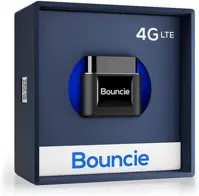 Top Pick
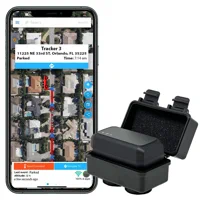 Best Value
Bottom Line
Bouncie is the better tracker for most car owners. It costs less per year, never needs charging, and adds vehicle diagnostics and driver scoring that Optimus doesn't offer. The $8 flat monthly fee with no tiers or contracts keeps things straightforward.
Optimus earns its spot when you need portability, an SOS button, or tracking on something without an OBD-II port. The included IP67 magnetic case and unlimited geofences make it a solid pick for trailers, equipment, and personal safety. For readers weighing other OBD-II options, our Bouncie vs Family1st comparison covers a similar portable-versus-plugged-in decision.
FAQ
Is Bouncie or Optimus better for tracking a car?
Bouncie is better for dedicated car tracking. It plugs into the OBD-II port, draws power from the vehicle, and adds diagnostics and driver scoring that Optimus lacks.
How much does Bouncie cost compared to Optimus per year?
Bouncie costs $163 for the first year ($67 device plus $96 in monthly fees). Optimus on the annual plan costs $216 ($25 device plus $191 in subscription fees). On the monthly plan, Optimus reaches $265 for the first year.
Does Optimus have a panic button?
Yes. The Optimus 2.0 has a physical SOS panic button that sends an alert with GPS coordinates to all linked contacts when pressed. Bouncie doesn't have this feature.
Can I use Bouncie without a car battery?
No. Bouncie draws all its power from the vehicle's OBD-II port. If the car battery is dead or the vehicle is off for extended periods, Bouncie stops transmitting.
Which GPS tracker updates location faster?
Optimus can update as fast as every 10 seconds when configured to the fastest setting. Bouncie updates every 15 seconds with no option to change it. However, Optimus at 10-second intervals drains its battery in about 2 to 3 days.
Does Optimus work internationally?
Optimus works in the United States, Canada, Mexico, and Puerto Rico. It doesn't support tracking outside of North America.
Can I track a trailer with Bouncie?
Not directly. Bouncie requires an OBD-II port, which trailers don't have. Optimus is the better choice for trailers since its magnetic case attaches to any metal surface without wiring or a diagnostic port.