The Pebblebee Clip 5 is the best rechargeable Bluetooth tracker in 2026. It charges via USB-C, lasts 12 months per charge, and runs on both Apple Find My and Google Find Hub. At $35 with no subscription, it costs less per year than replacing CR2032 batteries in a traditional tracker.
Rechargeable Bluetooth trackers eliminate the one recurring annoyance of item tracking: hunting for CR2032 batteries. In our testing of five rechargeable models over the past year, two stood out as genuine improvements over disposable-battery trackers.
- Pebblebee Clip 5 — USB-C rechargeable, 12-month battery, dual-network (Find My + Google Find Hub), $35
- Pebblebee Card 5 — Qi wireless charging, 18-month battery, 1.8mm wallet-thin, $35
- Ekster Tracker Card — solar-powered, never needs a cable, credit card form factor, $40
- Rechargeable trackers save $3-6 over 3 years vs CR2032 models that need annual battery swaps
- No ecosystem lock-in — all featured trackers work with both iPhone and Android
Best Rechargeable Bluetooth Trackers Compared
| Tracker | Charging | Battery / Charge | Network | Waterproofing | Price |
|---|---|---|---|---|---|
| Pebblebee Clip 5 | USB-C | 12 months | Find My + Google Find Hub | IP67 | $35 |
| Pebblebee Card 5 | Qi wireless | 18 months | Find My or Find Hub | IP66 | $35 |
| Ekster Tracker Card | Solar | Indefinite (with light) | Bluetooth + crowd GPS | Not rated | $40 |
| Orbit Card | USB | ~3 months | Bluetooth / Find My | Not rated | $30 |
| Orbit x Glasses | USB | ~1 month | Apple Find My | IPX6 | $33 |
The Pebblebee models lead this category by a wide margin. Both offer mainstream network support, long battery life per charge, and real waterproofing. The Ekster earns a spot for its unique solar approach. The two Orbit products are included for completeness, but their short battery cycles and limited networks make them harder to recommend in 2026.
Why Choose a Rechargeable Tracker Over Replaceable Batteries?
Three reasons: convenience, cost, and waste reduction.
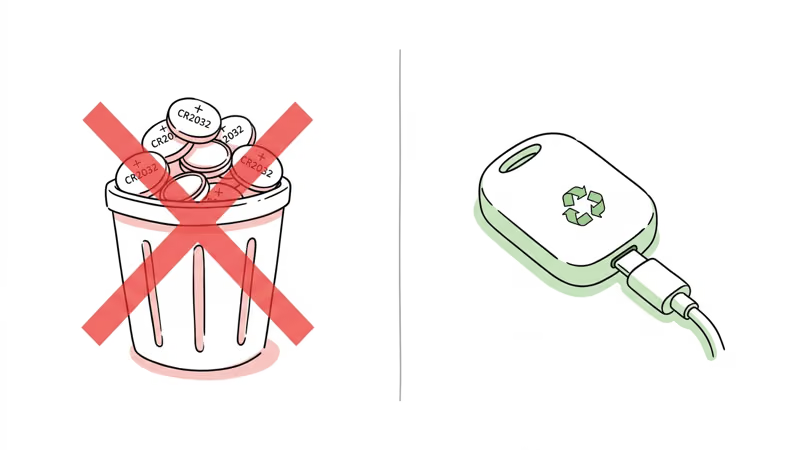
Convenience is the biggest win. A CR2032 tracker like the AirTag 2 or Tile Pro needs a new coin cell every 12-18 months. That means remembering to buy the right battery, prying the tracker open, and swapping it without losing the tiny cover. A rechargeable tracker plugs into a USB-C cable you already own.
In our Pebblebee Clip 5 review, we noted that the entire charging process takes about an hour once a year. Plug it in before bed, and it’s done by morning.
Cost differences are small but real. A CR2032 battery costs $0.75-$1.50 depending on brand and quantity. Over three years, a tracker that needs annual swaps costs $2.25-$4.50 in batteries on top of the device price. A rechargeable tracker costs nothing beyond the initial purchase and a few cents of electricity.
Environmental impact adds up at scale. The EPA classifies coin cell batteries as household hazardous waste. An estimated 3 billion button batteries are sold globally each year according to Pebblebee’s sustainability page. If you track multiple items, switching to rechargeable eliminates 5-10 dead batteries per household per year.
Our battery life comparison across 12 trackers shows exactly how long each model lasts and what replacement costs look like year over year.
Pebblebee Clip 5: Best Overall Rechargeable Tracker
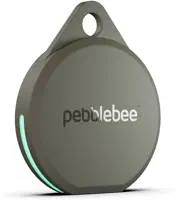
The Clip 5 is the rechargeable tracker we recommend to most people. It charges via USB-C, lasts 12 months per charge, and runs simultaneously on Apple Find My and Google Find Hub.
 Top Pick
In our testing, the Clip 5’s dual-network support proved to be its strongest feature. Most trackers lock you into one ecosystem. The Clip 5 pings off both Apple’s 2 billion devices and Google’s 3 billion Android phones at the same time. In mixed households where family members use different phones, everyone can help locate a lost item.
At 38mm square and 11g, the Clip 5 is barely noticeable on a bag.
The 130 dB siren is the loudest of any Bluetooth tracker we’ve tested, and the built-in LED strobe helps locate items in dark spaces. The one weakness: no UWB Precision Finding. You find the Clip 5 by ringing it and listening. If you need directional arrows pointing you to a lost item, an AirTag 2 at $29 handles that better.
For everything else, the Clip 5’s rechargeable battery and cross-platform network make it the stronger pick. Our Chipolo vs Pebblebee comparison covers how the Clip 5 stacks up against Chipolo’s replaceable-battery models.
Pebblebee Card 5: Best Rechargeable Wallet Tracker
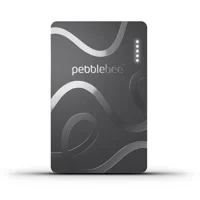
The Card 5 solves a different problem: tracking a wallet without adding bulk. At 1.8mm thick, it sits behind credit cards and disappears. We carried one in an everyday wallet for several weeks and forgot it was there.
 Best Value
Wireless charging sets the Card 5 apart from every other wallet tracker. Drop it on any standard Qi pad overnight, the same one you already use for your phone. No proprietary cables, no prying open a tracker case. Pebblebee’s documentation confirms that a full charge takes about 2 hours and lasts up to 18 months.
The 18-month battery life per charge is the longest of any wallet-form tracker available. For context, the Chipolo CARD Spot (a non-rechargeable competitor) lasts about 2 years but requires buying a new card when the battery dies. The Card 5’s rechargeable design means the $35 you spend is a one-time cost. Our full Pebblebee Card 5 review covers thickness comparisons, network performance, and real-world wallet fit testing.
One important difference from the Clip 5: the Card 5 supports Find My or Google Find Hub, not both simultaneously. You choose one network during setup. A factory reset lets you switch later, but you can’t run both at once.
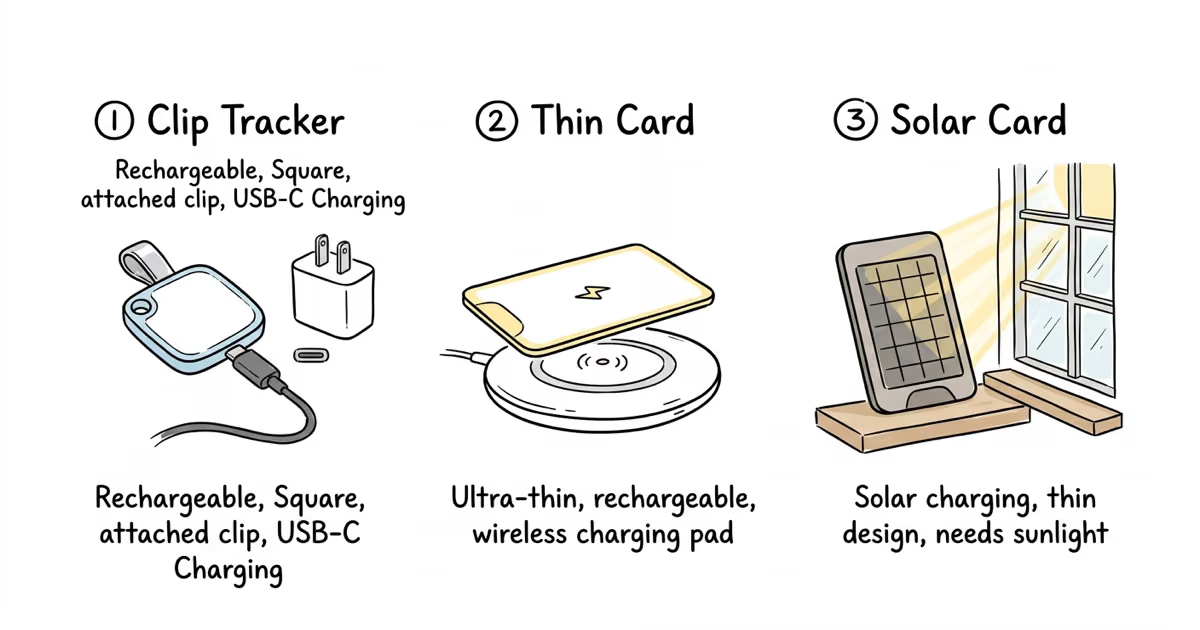
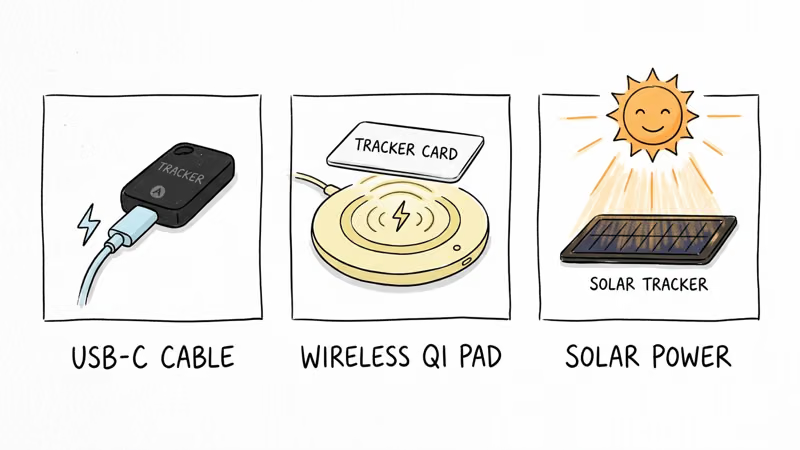
Solar, Wireless, and Other Charging Methods
Not every rechargeable tracker uses a cable. The Ekster Tracker Card charges via a small solar panel on its face, and two Orbit models use USB charging in compact form factors.
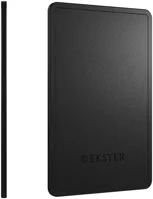
The Ekster’s solar approach sounds appealing: leave it near a window or under a desk lamp, and it charges itself. Ekster’s official product page states that 3 hours of sunlight provides enough charge for 2 months of use. In practice, a wallet that lives in your pocket most of the day gets limited light exposure.
If you leave your wallet on a desk near a window during work hours, the solar panel works well enough. But if your wallet stays in a bag or back pocket, you’ll need to place the card in sunlight deliberately.
The bigger limitation is the Ekster’s network. It uses its own Bluetooth + crowd GPS network, which is far smaller than Apple Find My or Google Find Hub. For nearby finding (ringing your wallet across the room), it works fine. For locating a lost wallet across town, the crowd network coverage falls short of what Pebblebee offers.
The Orbit models fill niche roles. The Orbit Card ($30) is a USB-rechargeable wallet tracker with a loud 90 dB ring, but its 3-month battery cycle means frequent charging. The Orbit x Glasses ($33) targets eyewear with a tiny 28mm form factor and Apple Find My support, but a 1-month battery life makes it impractical for most users.
How Much Do You Save by Going Rechargeable?
The savings are real but not dramatic. Here is a 3-year total cost breakdown.
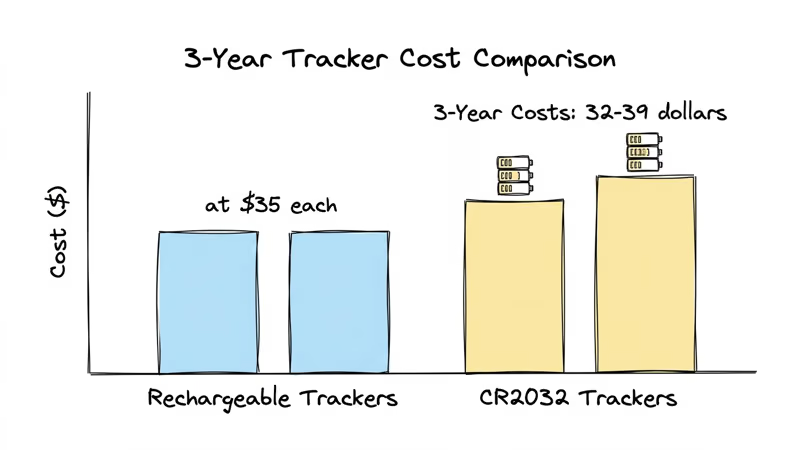
| Tracker | Device Cost | Battery Cost (3 yr) | Total 3-Year Cost | Cost Per Year |
|---|---|---|---|---|
| Pebblebee Clip 5 | $35 | $0 (USB-C) | $35 | $11.67 |
| Pebblebee Card 5 | $35 | $0 (Qi) | $35 | $11.67 |
| AirTag 2 | $29 | $3-4.50 (2-3 CR2032s) | $32-33.50 | ~$11 |
| Tile Pro | $35 | $3-4.50 (3 CR2032s) | $38-39.50 | ~$13 |
| Chipolo Pop | $28 | $1.50-3 (1-2 CR2032s) | $29.50-31 | ~$10 |
The cost difference is $3-6 over three years. Choose rechargeable for the convenience of never buying CR2032s and reducing e-waste, not for the savings.
Where rechargeable trackers lose: if the internal battery degrades after 3-4 years, the tracker becomes e-waste. A CR2032 tracker like the AirTag 2 or Tile Pro can run indefinitely with $1.50 battery swaps. For a deeper look at how battery type affects long-term ownership, our Tile vs Pebblebee comparison breaks down that trade-off in detail.
Bottom Line
The Pebblebee Clip 5 is our top rechargeable Bluetooth tracker pick. USB-C charging, 12-month battery life, and simultaneous Find My + Google Find Hub support make it the most capable rechargeable option at $35. For wallet tracking, the Pebblebee Card 5 matches it with Qi wireless charging and 18 months per charge.
If you’re open to all battery types, our best Bluetooth trackers roundup covers the full field. For rechargeable only, the two Pebblebees are the clear winners in 2026.
FAQ
Which rechargeable Bluetooth tracker is the best in 2026?
The Pebblebee Clip 5 is the best overall rechargeable tracker. It charges via USB-C, lasts 12 months per charge, and works on both Apple Find My and Google Find Hub simultaneously. At $35 with no subscription, it offers the best combination of battery life, network coverage, and value.
How long does a rechargeable tracker battery last per charge?
It varies by model. The Pebblebee Card 5 leads at 18 months per charge. The Pebblebee Clip 5 lasts 12 months. The Ekster Tracker Card charges via solar and lasts indefinitely with regular light exposure. Orbit models last 1-3 months per charge.
Can you use a rechargeable tracker with Apple Find My?
Yes. The Pebblebee Clip 5 works with Apple Find My and Google Find Hub at the same time. The Pebblebee Card 5 supports Find My or Find Hub, but you choose one at setup. The Orbit x Glasses Tracker also supports Apple Find My.
Are rechargeable trackers more expensive than regular trackers?
Slightly. The Pebblebee Clip 5 costs $35, compared to $29 for an AirTag 2 or $28 for a Chipolo Pop. Over 3 years, rechargeable trackers save $3-6 in battery costs, making the total ownership cost roughly equal.
How do you charge a Pebblebee Clip 5?
Plug it into any USB-C cable. A full charge takes about an hour and lasts approximately 12 months. The Find My and Find Hub apps send low-battery alerts before the tracker runs out, so you have time to charge it before it goes dark.
Do rechargeable trackers lose battery capacity over time?
All lithium-ion batteries degrade with charge cycles. After 3-4 years and multiple charge cycles, a rechargeable tracker may hold less charge per cycle. Pebblebee has not published degradation data for the Clip 5 or Card 5. In practical terms, with only 1-2 charge cycles per year, degradation should be minimal within the first 5 years.
Is a solar-powered tracker better than USB-C rechargeable?
Not for most people. The Ekster Tracker Card's solar panel works well if the card gets regular light exposure, but a wallet stored in a pocket or bag limits charging. USB-C models like the Pebblebee Clip 5 charge reliably in about an hour regardless of conditions. Solar is best as a secondary charging method, not a primary one.